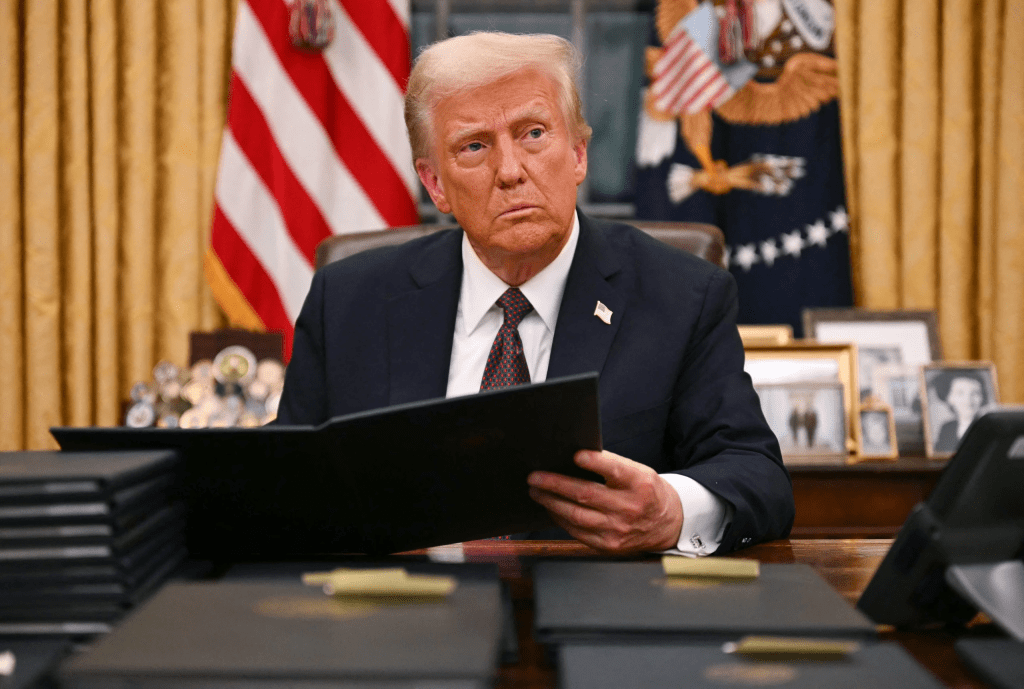
Washington, D.C., June 16, 2025—President Donald Trump’s resounding 2024 election victory, securing both an electoral landslide and the popular vote, has become a rallying point for supporters amid widespread protests against his policies. From Los Angeles to Philadelphia, demonstrations like the recent “No Kings Day” marches have decried Trump’s immigration crackdowns and military deployments, with some labeling him authoritarian. His defenders, however, argue that his democratic mandate—bolstered by a historic win—affirms his leadership, casting protests as misguided attacks on a president who is anything but a monarch.
In November 2024, Trump won 312 electoral votes to Vice President Kamala Harris’s 226, flipping every swing state, including Pennsylvania, Michigan, and Arizona. For the first time since 1988, a Republican also claimed the popular vote, with Trump garnering 50.2% (78 million votes) to Harris’s 47.8% (74 million), per final tallies from the Associated Press. This dual victory, a rarity in recent decades, has emboldened supporters who view it as a clear endorsement of Trump’s “America First” agenda. At a Mar-a-Lago rally, Trump declared, “The people have spoken—louder than ever.”
The protests, peaking with an estimated 4-6 million participants on June 14, targeted Trump’s mass deportation program and the deployment of Marines to secure federal assets in Los Angeles. Organizers, including the 50501 Movement, argue that these policies reflect an overreach unchecked by Congress or courts, likening Trump’s style to that of a “king.” In response, supporters point to the election results as proof of democratic legitimacy. House Speaker Mike Johnson (R-LA) stated, “The voters chose Trump overwhelmingly. Protesters don’t get to rewrite the ballot box.”
The scale of Trump’s win has reshaped political narratives. Republicans secured 53 Senate seats and a 235-200 House majority, giving Trump a strong legislative foundation. Supporters argue this reflects public demand for his policies, including border security and energy expansion. A Rasmussen Reports poll shows 55% of Americans approve of Trump’s immigration measures, with 60% in battleground states like Texas. “He’s delivering what he promised—a great president, not a dictator,” said a Phoenix voter at a pro-Trump rally.
Critics, however, contend that a democratic victory does not justify unchecked power. Democratic leaders like Senator Elizabeth Warren (D-MA) warn that Trump’s defiance of court orders, such as a recent injunction against ICE raids, threatens the rule of law. Protests have drawn diverse crowds—immigrants, students, and civil rights advocates—who argue that dissent is a democratic right, not a rejection of the election. In Seattle, where 70,000 marched, organizer Maria Torres said, “We’re not denying his win; we’re demanding accountability.”
The unrest, marked by sporadic violence in Los Angeles and Atlanta, has deepened divisions. Trump’s team dismisses the protests as “sore loser antics,” noting that only 3% of demonstrations turned violent, per FBI data. Yet, incidents like a shooting in Utah and a vehicular assault in Virginia have raised fears of escalation. Legal battles loom, with California challenging the military’s role in domestic enforcement, citing violations of the Posse Comitatus Act. A federal judge’s ruling is expected this week.
As Trump pushes forward with deportations and economic reforms, his electoral mandate remains a flashpoint. Supporters see a president fulfilling a clear voter directive, while protesters view his actions as a test of democratic checks and balances. With more demonstrations planned, the nation grapples with a question: does a landslide victory grant unfettered authority, or does it demand greater scrutiny? For now, Trump’s backers celebrate a leader they call “great,” while critics vow to hold him accountable—not as a king, but as a president.