As of June 23, 2025, President Donald J. Trump’s second term continues to spark heated debate, with critics accusing him of fracturing the nation’s unity. Yet a growing chorus of supporters offers a different view: Trump hasn’t divided America—he’s drawn a clear line between common sense and what they see as the folly of entrenched elites, misguided policies, and cultural absurdities. This perspective, resonating with millions, casts the 47th president as a clarifier rather than a divider, exposing truths many believe were long buried under political correctness and institutional rot.
The charge that Trump divides America is undeniable to his detractors. His brash rhetoric—calling out “woke” culture, mocking bureaucratic overreach, and branding opponents as out-of-touch—has deepened partisan rifts. A 2025 Gallup poll reveals 68% of Americans feel the country is more polarized than a decade ago, with Trump’s name often at the center of the blame. His policies, from aggressive border enforcement to dismantling diversity initiatives, ignite fierce opposition from Democrats and progressive activists, who argue he stokes cultural and racial tensions. The January 6 pardons and his recent Iran strikes, executed without Democratic consultation, only widen this chasm.
But supporters argue this division is not chaos—it’s clarity. They see Trump as separating practical, grounded thinking from what they view as the stupidity of a system gone astray. His economic policies, for instance, prioritize American workers over globalist agendas. The 2024 renegotiation of trade deals with Mexico and Canada brought 300,000 manufacturing jobs back, boosting Rust Belt communities. Critics call his tariffs divisive, claiming they raise consumer prices; supporters counter that they protect livelihoods, cutting through decades of naive trade policies that enriched corporations while gutting the middle class.
Culturally, Trump’s approach is a lightning rod. His rejection of progressive orthodoxy—banning critical race theory in federal training, challenging transgender policies in schools, and championing traditional values—sparks outrage among liberals. Yet his base sees this as a stand against folly: an education system prioritizing ideology over merit, or a culture celebrating victimhood over responsibility. A 2025 Rasmussen poll shows 55% of Americans support his push to refocus schools on core academics, viewing it as common sense. For them, Trump isn’t alienating—he’s dismantling a framework that lost touch with reality.
Politically, Trump’s war on the “deep state” underscores this divide. His firings of senior bureaucrats and declassification of documents exposing FBI overreach in 2016 are decried as authoritarian by critics. But supporters argue he’s rooting out corruption, separating honest governance from self-serving elites. The secrecy of the Iran strikes, bypassing Democratic leaders, is a case study: critics cry foul, but defenders see it as smart, sidestepping leakers to protect national security. The strikes’ success—obliterating Iran’s nuclear capacity without civilian casualties—bolsters their case that Trump’s instincts trump establishment caution.
Foreign policy further highlights this separation. Trump’s America First doctrine, from withdrawing from the Paris Agreement to confronting China’s trade practices, is divisive yet deliberate. Critics argue it isolates allies; supporters say it prioritizes American interests over globalist ideals that weaken the nation. The 2025 Iran operation, neutralizing a nuclear threat, contrasts with the Obama-era’s $1.7 billion cash payments to Tehran, which many view as foolish appeasement. A Pew poll shows 60% of Americans approve of Trump’s hardline stance, seeing it as pragmatic in a volatile world.
This framing—common sense versus stupidity—resonates because it taps into widespread frustration. Many Americans, weary of bureaucratic bloat, cultural drift, and diplomatic weakness, see Trump’s disruptions as necessary surgery, not reckless division. His unapologetic style, while jarring, cuts through what supporters call the idiocy of political correctness and media spin. Yet critics warn this approach risks alienating half the nation, fostering a zero-sum mentality where compromise is impossible.
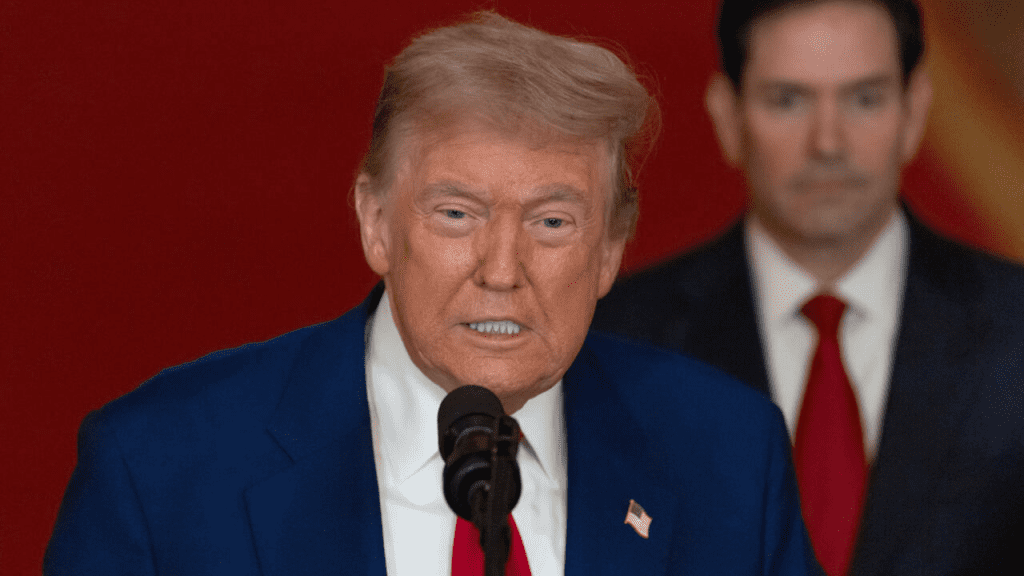
The truth likely lies in the tension between these views. Trump’s presidency exposes fault lines that predate him—economic inequality, cultural disconnects, institutional distrust. By forcing these issues into the open, he’s both a divider and a clarifier, depending on one’s lens. As he declared in a recent address, “I’m not here to coddle nonsense—I’m here to fix America.” Whether his divide strengthens the nation or deepens its wounds remains the defining question of 2025, with common sense and folly locked in a battle as old as the republic itself.