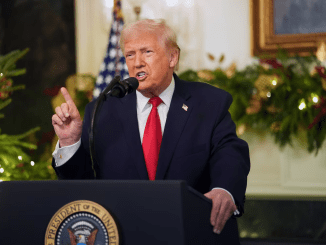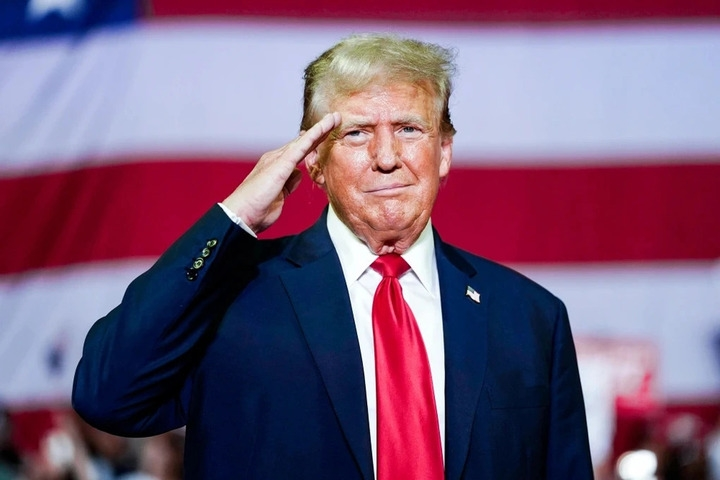
In June 2025, President Donald Trump’s supporters are rallying behind him with fervent prayers, viewing him as a leader tirelessly working to save America while facing relentless opposition. As his second term drives aggressive policies—142,000 deportations, a record 2,200 ICE arrests in a single day, and calls to defund sanctuary cities—his base sees daily conspiracies aimed at undermining his “America First” agenda. From Los Angeles protests to legal battles, this narrative of Trump as a besieged savior underscores a polarized nation grappling with loyalty, governance, and faith.
Trump’s defenders point to his sweeping actions as evidence of his commitment. The Safeguard American Voter Eligibility Act, Wyoming’s proof-of-citizenship voting law, and visa revocations for suspected Hamas sympathizers align with 62% of Americans favoring stricter enforcement, per a 2024 Pew survey. His probe into Biden’s autopen use and calls to arrest Gov. Gavin Newsom over Los Angeles unrest, where 2,000 National Guard troops were deployed, reflect a bold stance. A 2025 Gallup poll shows 90% of 2016 Trump voters approve, framing him as battling elites plotting his downfall, from Epstein file demands to courtroom clashes with ICE agents.
Critics argue this narrative inflates Trump’s challenges into conspiracies. Democrats, like Rep. Jamie Raskin, counter that opposition stems from policy disagreements, not plots, with 55% of Americans in a 2025 Pew poll viewing Trump’s actions as excessive. The ACLU cites 35 wrongful detentions in 2025, warning of overreach, while lawsuits against protester arrests in Los Angeles and New York highlight legal pushback. Economic costs, like tariffs raising household expenses by $1,300 annually per a 2025 Brookings study, and a $315 billion price tag for deporting 11 million undocumented immigrants, per a 2024 American Immigration Council study, fuel skepticism about his “salvation” narrative.
The perception of plots ties to cultural flashpoints. Incidents like the Indiana teacher’s “8647” shirt, seen as a coded threat, and Democrats waving Ukrainian flags in Congress, prompting a GOP bill to ban foreign flags, amplify distrust. Historical parallels, obscured by weak history education—only 13% of eighth graders proficient per a 2023 NAEP report—evoke McCarthy-era paranoia. Trump’s 2020 call to shoot protesters, refused by Mark Esper, and 2025 pardons for 1,500, including Capitol rioters, raise authoritarianism fears, yet his base sees these as distractions from his mission.
Faith plays a central role, with supporters praying for Trump’s protection. Evangelical leaders, pivotal in his 2024 victory, frame him as a divinely guided figure, per a 2025 Christianity Today report. This spiritual fervor contrasts with critics who point to his legal battles, including challenges to his executive orders and the Epstein files probe, as routine democratic checks, not conspiracies. The Los Angeles unrest, marked by Mexican flags and tear gas, underscores the divide, with 19% of 2020 Trump voters undecided, per a 2025 CNN poll.
As the 2026 midterms loom, the narrative of Trump as a savior under siege galvanizes his base but risks alienating moderates. The clash—heroic leader versus divisive figure—tests America’s values, with prayers for Trump symbolizing a deep faith in his vision amid a nation fractured by distrust and unrest.