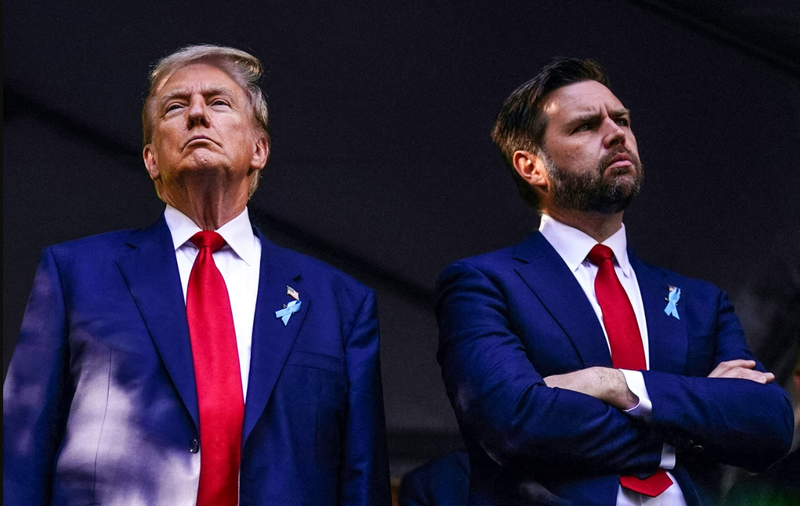
As President Donald Trump’s second term gains momentum, a growing faction of supporters is rallying behind a bold vision: four more years of Trump followed by eight years of Vice President J.D. Vance. The sentiment, passionately voiced by loyalists, reflects confidence in Trump’s “America First” agenda and Vance as his natural successor. Since January 20, 2025, Trump’s policies—deporting 158,000 undocumented immigrants, securing a $26 billion budget surplus, and generating $113.3 billion in tariff revenue—have solidified his base, with a July 2025 Gallup poll showing 46% approval.
Vance, 40, has emerged as a key figure, championing populist policies like the HALT Fentanyl Act and supporting Trump’s crackdown on sanctuary cities. His 2016 memoir, Hillbilly Elegy, and Senate tenure have made him a relatable voice for working-class voters, positioning him as a 2028 and 2032 contender. Supporters see continuity in Vance’s alignment with Trump’s vision, including banning Chinese land purchases and dismantling DEI programs, as seen in Columbia University’s $221 million settlement.
Critics, including Democrats like Senator Elizabeth Warren, warn that a Trump-Vance dynasty threatens democratic norms, citing Trump’s legal battles, like his $16 million 60 Minutes settlement, and Vance’s defense of controversial policies. The 22nd Amendment bars Trump from a third term, but some speculate about constitutional challenges or Vance as a proxy. A July 2025 Rasmussen poll shows 38% of Republicans favor amending term limits for Trump.
The Trump-Vance succession plan underscores a polarized America, with supporters dreaming of 12 years of populist governance. Opponents fear it consolidates power in a single ideology. As 2028 looms, Vance’s rising star and Trump’s enduring influence will shape the GOP’s future trajectory.