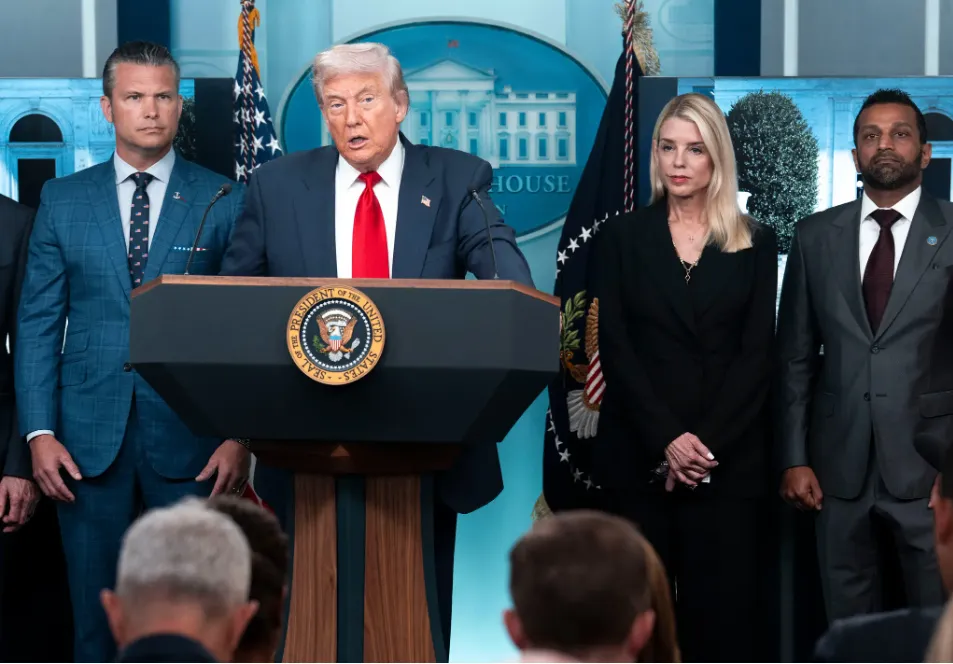
On August 11, 2025, President Donald Trump announced plans to potentially seize control of New York, Chicago, and other major cities, mirroring his controversial federalization of Washington, D.C.’s police force. Citing rising crime and “incompetent” Democratic leadership, Trump vowed to restore “law and order” by deploying federal resources, including the National Guard, to these urban centers. The statement, made during a press conference, escalates tensions with blue-state governors and mayors who have opposed his policies.
Trump’s focus on New York and Chicago follows his recent executive order placing D.C.’s police under federal control, a move critics call an overreach of executive power. He singled out Chicago’s mayor and Illinois Governor J.B. Pritzker, labeling the city a “disaster.” Data, however, shows Chicago’s violent crime rate has declined significantly since 2022, casting doubt on Trump’s claims. New York’s leadership, including Governor Kathy Hochul, has vowed to resist any federal intervention, citing state sovereignty.
Legal experts warn that extending federal control over local police could face constitutional challenges, as policing is traditionally a state function. Democrats accuse Trump of targeting political adversaries, noting his mention of other blue cities like Baltimore and Oakland. Supporters, however, argue that federal intervention is justified to curb urban crime, which they claim Democratic policies have exacerbated.
The threat has sparked protests in New York and Chicago, with activists warning of militarized policing and eroded civil liberties. As Trump’s administration prepares for potential action, the nation braces for a showdown between federal and state powers, with profound implications for governance and public safety.