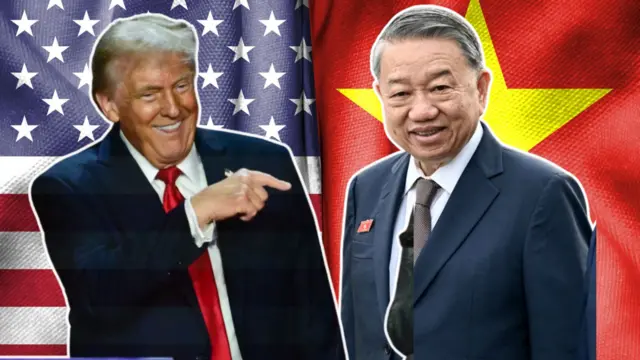
In a significant move for U.S. trade policy, President Donald Trump announced on July 2, 2025, a new trade agreement with the Socialist Republic of Vietnam, marking a pivotal step in his administration’s push to reshape global commerce. The deal, finalized after direct talks with Vietnam’s General Secretary To Lam, imposes a 20% tariff on all Vietnamese goods entering the U.S. and a 40% tariff on transshipped products, while granting U.S. exporters unprecedented zero-tariff access to Vietnam’s markets. Hailed by Trump as a “Great Deal of Cooperation,” the agreement aims to address trade imbalances and curb transshipping practices, but it also raises questions about its impact on both nations’ economies.The announcement comes just days before the expiration of a 90-day pause on Trump’s “reciprocal” tariffs, which had threatened to impose duties as high as 46% on Vietnamese imports. Vietnam, the sixth-largest source of U.S. imports with $137 billion in goods last year, has seen its trade deficit with the U.S. balloon to $123 billion, making it a prime target for Trump’s trade agenda. The new 20% tariff, double the current rate, aims to level the playing field, while the 40% transshipping tariff targets goods, often Chinese, rerouted through Vietnam to evade U.S. duties. This practice, long criticized by Trump’s trade advisors like Peter Navarro, has been a sticking point in bilateral relations, with Vietnam accused of acting as a conduit for Chinese products.In exchange, Vietnam has agreed to open its markets fully to U.S. goods, a historic concession that eliminates tariffs on American exports. Trump highlighted the potential for U.S. SUVs, or “Large Engine Vehicles,” to thrive in Vietnam, a market of 100 million people with growing consumer demand. This zero-tariff access could boost U.S. industries like automotive, agriculture, and technology, which have struggled to penetrate Vietnam’s tightly controlled market. The deal follows weeks of intense negotiations, with Vietnamese officials, including Prime Minister Pham Minh Chinh, actively engaging U.S. businesses like Nike and Gap to secure support. The agreement also aligns with Vietnam’s recent commitments to purchase $3 billion in U.S. agricultural goods, signaling a broader economic partnership.The trade deal has sparked mixed reactions. For American producers, particularly in industries like catfish farming and furniture, which have faced fierce competition from Vietnamese imports, the tariffs offer relief. The Catfish Farmers of America, for instance, has long decried Vietnam’s “predatory economic practices.” Shares of companies reliant on Vietnam’s manufacturing, such as Nike and Lululemon, rose modestly after the announcement, reflecting optimism about continued access to Vietnam’s low-cost production hub. However, the higher tariffs could increase costs for U.S. consumers, as companies may pass on the added expense of importing apparel, electronics, and furniture—key Vietnamese exports.Critics warn that the deal could strain Vietnam’s export-driven economy, which relies on the U.S. for 30% of its GDP. Economists at OCBC Bank estimate that Trump’s tariffs could shave 1.2 percentage points off Vietnam’s 2025 growth, potentially jeopardling Hanoi to strengthen ties with China, a move that could undermine U.S. strategic interests in the region. The 40% transshipping tariff, while aimed at curbing trade fraud, raises enforcement challenges, as distinguishing between Vietnamese-made and transshipped goods requires rigorous oversight. Some analysts question whether the deal is fully finalized, noting that Vietnam’s government described it as a “framework” for further negotiations, leaving room for uncertainty.The agreement also carries geopolitical weight. Vietnam, a key U.S. partner in countering Chinese influence in Southeast Asia, has balanced economic ties with both powers. Trump’s deal, while economically advantageous for the U.S., risks pushing Vietnam closer to Beijing if trade disruptions hit too hard. The administration’s broader tariff strategy, which includes paused levies on countries like Japan and the EU, reflects a high-stakes gamble to redraw global trade rules before the July 9 deadline.As Trump touts the deal as a victory for American workers, its long-term impact remains uncertain. For now, it underscores his commitment to an “America First” trade policy, leveraging tariffs to open foreign markets while protecting domestic industries. Whether this deal strengthens U.S.-Vietnam ties or sows economic discord will depend on its implementation and Vietnam’s ability to adapt to a new trade reality.