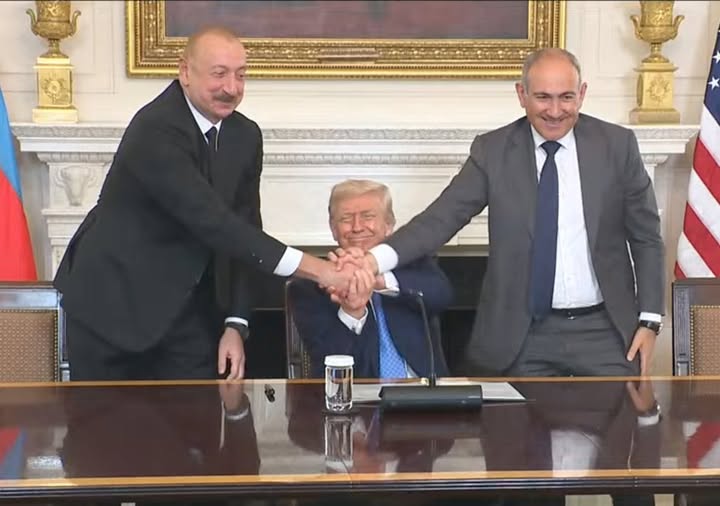
On August 8, 2025, President Donald Trump hosted a landmark White House summit where Armenian Prime Minister Nikol Pashinyan and Azerbaijani President Ilham Aliyev signed a peace agreement, ending a 35-year conflict over Nagorno-Karabakh. The deal, hailed as a diplomatic triumph, establishes the “Trump Route for International Peace and Prosperity,” a 20-mile transit corridor through Armenia connecting Azerbaijan to its Nakhchivan exclave. The U.S. secures exclusive development rights, boosting regional trade and energy exports while sidelining Russia’s influence in the South Caucasus.
The conflict, rooted in the late 1980s, saw two wars and countless skirmishes, with Azerbaijan reclaiming Nagorno-Karabakh in 2023, displacing 100,000 ethnic Armenians. Trump’s mediation, building on Biden-era frameworks, resolved key sticking points, including the Zangezur Corridor, by offering U.S. oversight to ensure Armenian sovereignty. Both leaders praised Trump, with Aliyev and Pashinyan endorsing him for a Nobel Peace Prize. The agreement also includes U.S. bilateral deals with both nations for energy, trade, and technology cooperation, lifting prior restrictions on Azerbaijan’s defense ties.
Critics, including Armenian diaspora groups, argue the deal sidesteps issues like displaced Armenians’ right to return. Russia, once a regional mediator, faces diminished clout. The peace deal, if sustained, could reshape the Caucasus, but its success hinges on ongoing U.S. engagement. Trump’s “America First” approach now balances global peacemaking, raising questions about his broader foreign policy goals.