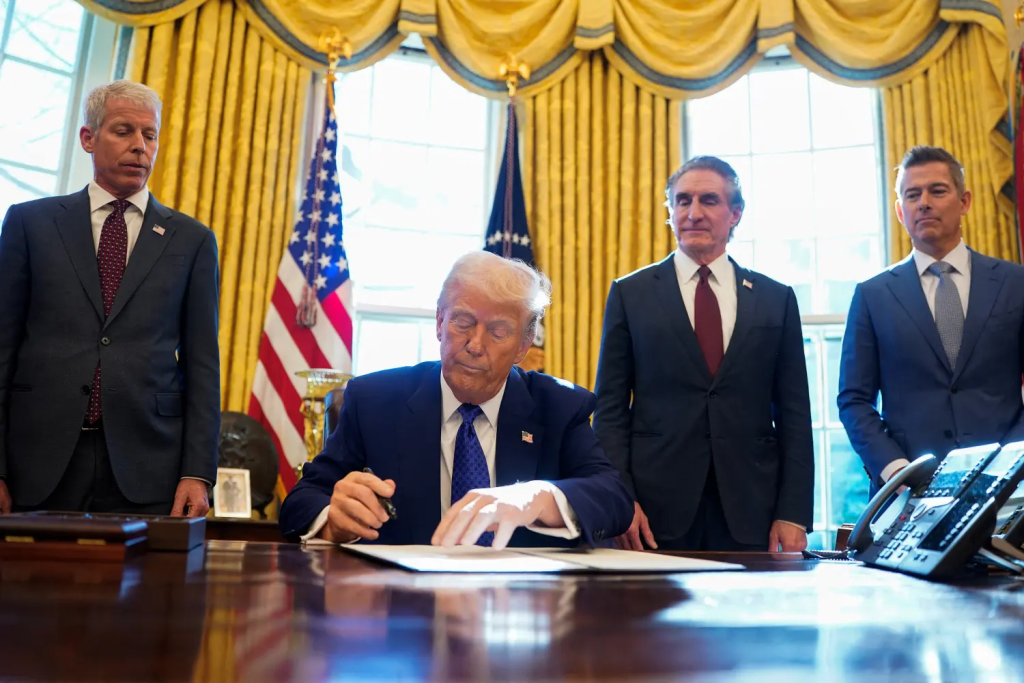
In a flurry of executive actions and legislative proposals, the Trump administration has announced ambitious plans to reshape U.S. immigration enforcement and economic policy. The agenda includes hiring 10,000 additional Immigration and Customs Enforcement (ICE) agents, fully funding the border wall, defunding Planned Parenthood, and eliminating taxes on Social Security benefits, tips, and overtime pay. These moves, touted as fulfilling campaign promises, have sparked intense debate, with supporters praising their boldness and critics warning of far-reaching consequences.
The plan to bolster ICE with 10,000 new agents signals a dramatic escalation in immigration enforcement. The agency, tasked with deportations and border security, has faced scrutiny for its methods, with critics labeling it overly aggressive and supporters arguing it’s essential for national security. The administration aims to prioritize the deportation of undocumented immigrants, particularly those with criminal records, though officials have hinted at broader enforcement actions. This expansion would significantly increase ICE’s workforce, which currently stands at roughly 20,000 personnel. The move aligns with President Trump’s long-standing pledge to crack down on illegal immigration, a cornerstone of his political platform. Proponents argue it will deter illegal crossings and restore order, while opponents warn it could strain communities, overwhelm detention facilities, and divert resources from other law enforcement priorities.
Funding for the U.S.-Mexico border wall, another signature Trump initiative, is also moving forward. The administration has secured commitments from Congress to allocate billions for the project, which Trump claims will curb illegal immigration and drug trafficking. Construction stalled during the Biden years due to funding disputes and legal challenges, but the new Republican-controlled Congress appears poised to greenlight the funds. Critics argue the wall is an ineffective and costly symbol, pointing to studies showing that barriers often redirect rather than stop migration flows. Environmentalists also raise concerns about its impact on wildlife and border ecosystems. Nevertheless, the administration insists the wall is a critical component of border security, with Trump himself describing it as “bigger and better than ever.”
On the domestic front, the decision to defund Planned Parenthood has reignited a decades-long culture war. The organization, which provides reproductive health services, including abortions, to millions of low-income women, has been a perennial target for conservative lawmakers. The administration plans to redirect federal funds to community health centers, arguing they offer similar services without performing abortions. Planned Parenthood and its supporters decry the move as an attack on women’s healthcare, noting that federal funds already cannot be used for abortions under existing law. The defunding could disrupt services like cancer screenings and contraception access, particularly in underserved areas, while galvanizing both pro-life and pro-choice activists ahead of future elections.
Perhaps the most headline-grabbing proposal is the elimination of taxes on Social Security benefits, tips, and overtime pay. Aimed at boosting the financial security of retirees, service workers, and blue-collar employees, the policy has broad populist appeal. Social Security benefits are currently taxable for higher-income retirees, and removing this tax could provide relief to millions of seniors. Similarly, exempting tips from taxation targets service industry workers, such as waiters and bartenders, who rely heavily on gratuities. The overtime tax break aims to reward workers who put in extra hours, particularly in industries like manufacturing and construction. Economists warn, however, that these tax cuts could balloon the federal deficit, potentially requiring offsets like spending cuts or other revenue measures. The administration has yet to release a detailed plan for implementation, but Trump has framed the policy as a direct boost to the middle class.
These policies reflect the administration’s aggressive approach to governance, leveraging executive power and a receptive Congress to enact sweeping changes. Supporters view them as a fulfillment of Trump’s America First agenda, prioritizing border security, traditional values, and economic relief for working-class Americans. Critics, however, see a dangerous overreach, warning of strained social services, deepened cultural divides, and fiscal irresponsibility. Legal challenges are already being prepared, particularly against the Planned Parenthood defunding and ICE expansion, with courts likely to play a pivotal role in determining the policies’ fate.As the nation braces for these changes, the Trump administration’s agenda is reshaping the political landscape. Whether these policies will deliver promised results or deepen national divisions remains to be seen, but their impact will undoubtedly reverberate for years to come.