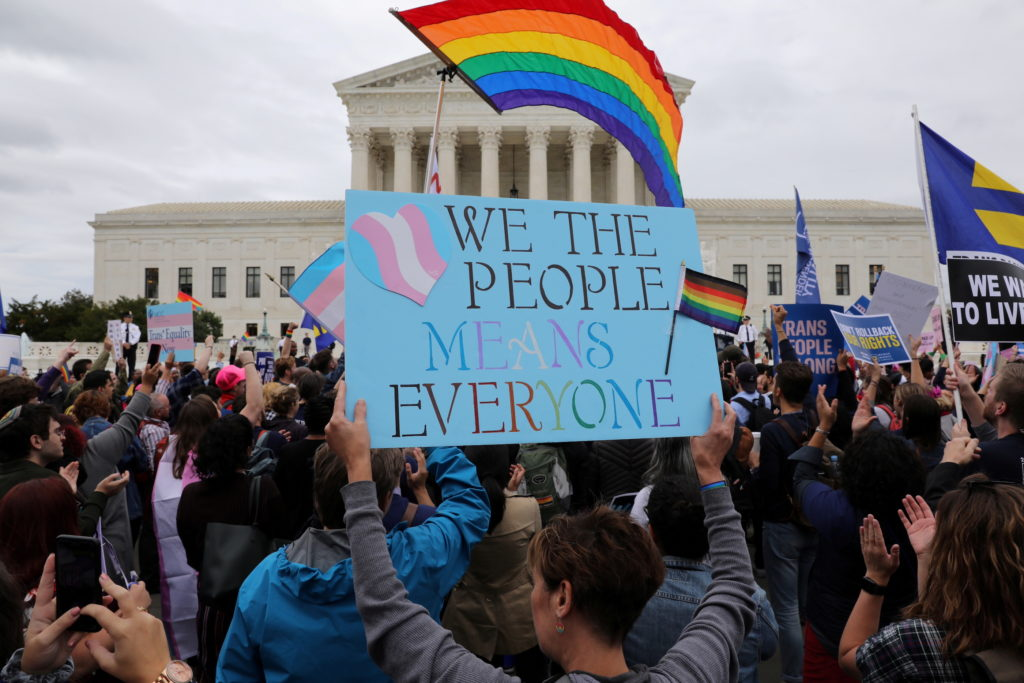
In June 2025, NBC News reported a growing number of transgender Americans are considering leaving the United States, citing fears over President Donald Trump’s executive orders targeting their rights. From Denver to Los Angeles, families and individuals are spending tens of thousands to relocate to countries like New Zealand and Canada, driven by policies restricting gender-affirming care, sports participation, and passport gender markers. As Trump’s second term intensifies cultural battles, the reported exodus prompts reflection on America’s values and the message it sends to those seeking safety abroad.
The trend, though not yet a mass movement, reflects mounting anxiety. A Denver family, spending $65,000-$80,000 to move to New Zealand, aims to protect their 9-year-old trans daughter from a “hostile climate,” per NBC News. In Los Angeles, a father of a trans teen likened Trump’s policies to an attempt to “erase” trans people, per the Los Angeles Times. Trump’s orders—banning trans military service, defunding hospitals providing youth transition care, and enforcing binary sex definitions—face legal challenges but have chilled trans communities. A 2025 Pew survey shows 55% of voters believe trans rights have “gone too far,” fueling the push.
Advocates like Sydney Duncan of Advocates for Trans Equality caution that relocation remains rare, with most trans people staying to fight for rights. The U.S. Trans Survey, with 92,329 respondents in 2022, found 94% of those who transitioned were more satisfied with life, underscoring the stakes. Yet, 39.4% of trans youth live in states banning gender-affirming care, per the Williams Institute, and 932 anti-LGBTQ incidents, over half targeting trans people, were reported in 2024 by GLAAD. For those leaving, like Alexia Nunez, who sought asylum in Canada after passport restrictions, the U.S. feels unsafe.
Critics of the exodus narrative, aligned with Trump’s 90% approval among 2016 voters per a 2025 Gallup poll, argue it exaggerates the threat. They point to economic contributions—undocumented immigrants, often conflated in debates, add $79.7 billion annually, per a 2024 Center for American Progress study—and question why trans Americans don’t stay to engage politically. A 2025 AP VoteCast found 51% oppose bans on youth gender-affirming care, suggesting room for dialogue. Trump’s focus on trans issues, targeting less than 1% of the population, is seen by some as a distraction from economic woes, like tariffs raising household costs by $1,300 annually, per a 2025 Brookings study.
Historical parallels, obscured by weak history education—only 13% of eighth graders proficient per a 2023 NAEP report—evoke past migrations, like Jewish exoduses during persecution. Trump’s 2020 call to shoot protesters and 2025 pardons for 1,500 Capitol rioters raise fears of authoritarianism, pushing some to leave. Yet, legal battles, like Maine’s challenge to Trump’s sports ban, show resilience, with 19% of 2020 Trump voters undecided, per a 2025 CNN poll.