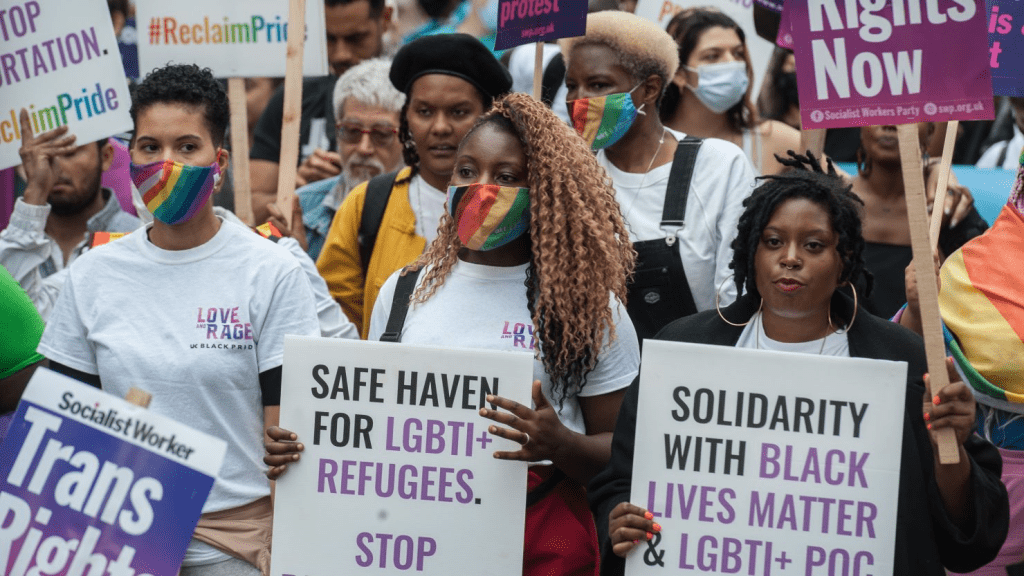
A provocative sentiment has emerged in America’s ongoing culture wars: the argument that transgender individuals, celebrated during Pride Month, cannot demand acceptance from others when they have altered their own identities. This view, voiced by conservative activists and amplified by President Donald Trump’s base in June 2025, challenges the push for transgender rights and inclusion. As the nation grapples with polarized views on identity, free speech, and societal norms, the statement reflects deeper tensions over authenticity, personal choice, and public expectations in a divided America.
The critique hinges on the idea that transitioning—whether through medical, social, or legal means—implies a rejection of one’s original self, thus undermining demands for universal acceptance. Supporters of this view, aligned with Trump’s “America First” agenda, argue that individual freedom includes the right to withhold endorsement of identities they see as inconsistent. A 2025 Gallup poll shows 71% of Americans support free speech over mandated inclusivity, with 90% of 2016 Trump voters backing his cultural policies, like the push to replace Pride Month with Veterans Month. Incidents like the Indiana teacher’s “8647” shirt controversy fuel perceptions of progressive overreach.
Transgender advocates, including Rep. Alexandria Ocasio-Cortez, who holds a 46% favorability rating per a 2025 AtlasIntel poll, counter that the argument misrepresents their lived experiences. Transitioning, they argue, is an act of embracing one’s true identity, not rejecting it. A 2024 Gallup survey notes 7.6% of U.S. adults identify as non-heterosexual, with 1.1% transgender, contributing $1.7 trillion to the economy, per a 2024 UCLA study. Critics of the sentiment, backed by the Human Rights Campaign, warn it fosters discrimination, especially amid 2025 policies like visa revocations and 142,000 deportations targeting vulnerable groups. The ACLU cites 35 wrongful detentions in recent sweeps, framing the rhetoric as part of a broader cultural rollback.
The debate intersects with Trump’s aggressive agenda. Policies like the Safeguard American Voter Eligibility Act and the American Entrepreneurs First Act, barring noncitizens from SBA loans, resonate with those prioritizing traditional values. The deployment of 2,000 National Guard troops to Los Angeles deportation protests and Trump’s call to defund sanctuary cities amplify this stance. Yet, critics draw historical parallels to past exclusionary tactics, with only 13% of eighth graders proficient in U.S. history per a 2023 NAEP report, suggesting limited awareness of such precedents. The 2020 call to shoot protesters, refused by Mark Esper, underscores fears of authoritarianism.
Legally, the debate tests free speech boundaries. The Supreme Court’s 1989 Texas v. Johnson ruling protects expressive acts, but conservative lawmakers push for policies limiting transgender protections, citing parental rights and religious freedom. A 2025 Pew poll shows 55% of Americans view Trump’s cultural policies as excessive, with moderates wary of alienating the 19% of youth identifying as nonbinary or transgender, per a 2024 Trevor Project survey. Economic pressures, like tariffs raising household costs by $1,300 annually per a 2025 Brookings study, complicate the focus on cultural issues.
As the 2026 midterms loom, the trans acceptance debate galvanizes Trump’s base but risks further division. Supporters see it as defending personal convictions, while critics argue it dehumanizes a marginalized group. The clash—individual freedom versus collective inclusion—reflects a nation wrestling with its values, with no resolution in sight.