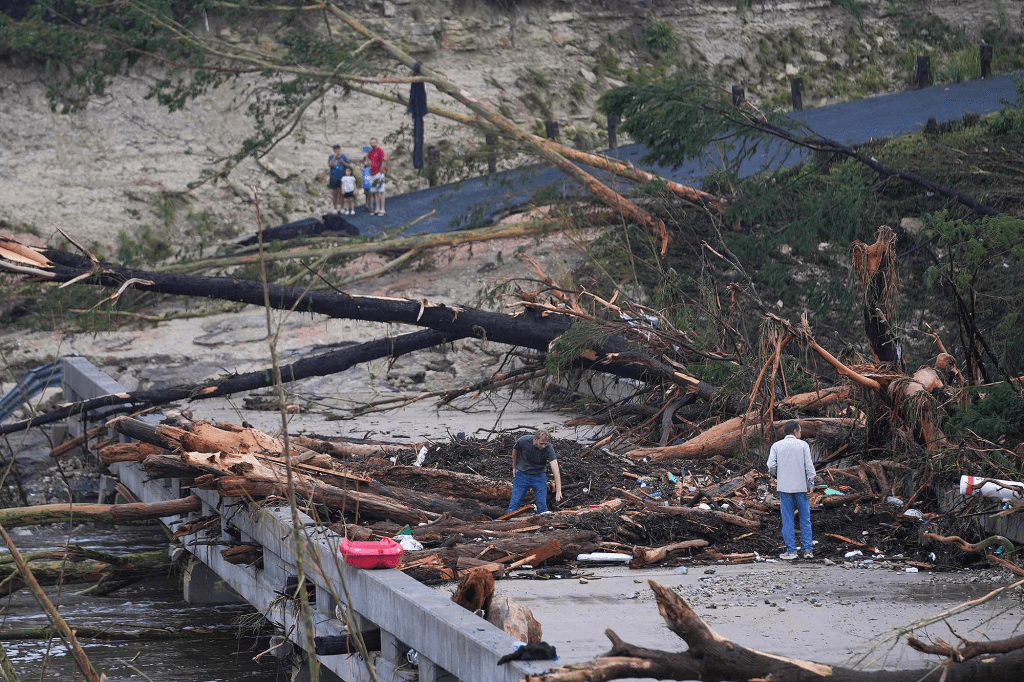
The devastating floods that swept through Texas over the July 4th weekend have left a trail of heartbreak, with at least 51 lives lost, including 15 children, many of them young girls from Camp Mystic. As rescue efforts continue to locate dozens still missing, a firestorm of criticism has erupted, with some pointing fingers at the Trump administration’s cuts to the National Oceanic and Atmospheric Administration (NOAA) and the National Weather Service (NWS). These reductions, driven by the Department of Government Efficiency (DOGE) under Elon Musk’s influence, are being blamed for inadequate forecasting that may have left communities unprepared for the catastrophic deluge.
The floods, triggered by the remnants of Tropical Storm Barry, saw the Guadalupe River surge 30 feet above its normal height, overwhelming summer camps and rural communities in Kerr County. Local officials have admitted they were caught off guard, with forecasts from the NWS predicting only 3-6 inches of rain in the Concho Valley and 4-8 inches in the Hill Country. In reality, the region was pummeled with unprecedented rainfall, leading to what the NWS later called a “particularly dangerous” flash-flood emergency. By the time the warning was issued at 5:23 a.m., it was too late for many, including campers swept away in the early morning hours.
Critics argue that the tragedy was exacerbated by significant cuts to NOAA and the NWS, which have lost nearly 600 staff members and faced a 30% budget reduction since the start of the year. These cuts, part of the DOGE initiative to streamline federal agencies, included the dismissal of experienced meteorologists and radar specialists, as well as reductions in critical programs like weather balloon launches and storm research labs. Former NWS directors warned in May that such cuts would lead to “needless loss of life,” a prediction that seems hauntingly prescient in the wake of the Texas floods. The San Antonio and San Angelo NWS offices, both critical to the affected region, were reportedly understaffed, with key positions like senior hydrologist and warning coordination meteorologist left vacant.
The Trump administration has pushed back against the criticism, with Homeland Security Secretary Kristi Noem describing the NWS’s notification system as “ancient” and in need of upgrades. She emphasized that efforts are underway to modernize the technology, but skeptics argue these reforms are too little, too late. The administration’s broader agenda, influenced by the conservative Project 2025 playbook, seeks to downsize NOAA and privatize some of its functions, raising concerns about the reliability of future forecasts. Private companies like AccuWeather, which issued earlier warnings about the Texas floods, rely heavily on NOAA’s data, underscoring the agency’s indispensable role.
Meteorologists, however, caution against oversimplifying the tragedy. Some, including experts interviewed by WIRED, argue that the NWS forecasts were accurate given the available data, with weather balloons launched in Texas on Thursday indicating a risk of extreme rainfall. The storm’s intensity, they say, was an outlier, with rainfall rates exceeding 1,000-year benchmarks. Yet, the absence of key staff and resources may have hindered the ability to escalate warnings sooner, leaving local officials and residents with insufficient time to evacuate.
The human toll is undeniable. Families are grieving the loss of children, with parents of Camp Mystic campers still awaiting news of their missing daughters. Rescue operations have saved over 800 people, but the rising death toll and stories of children clinging to trees in raging waters have shaken the nation. Texas Governor Greg Abbott has pledged relentless search efforts, while President Trump has promised federal aid, though questions linger about the administration’s commitment to rebuilding the agencies it has slashed.As the nation mourns, the Texas floods have ignited a broader debate about the cost of cutting scientific expertise. NOAA’s role in forecasting and climate research is vital, especially as climate change intensifies extreme weather. The loss of experienced staff and funding could have far-reaching consequences, particularly with hurricane season looming. For now, the focus remains on recovery, but the tragedy serves as a stark warning: undermining the nation’s weather services may carry a deadly price.