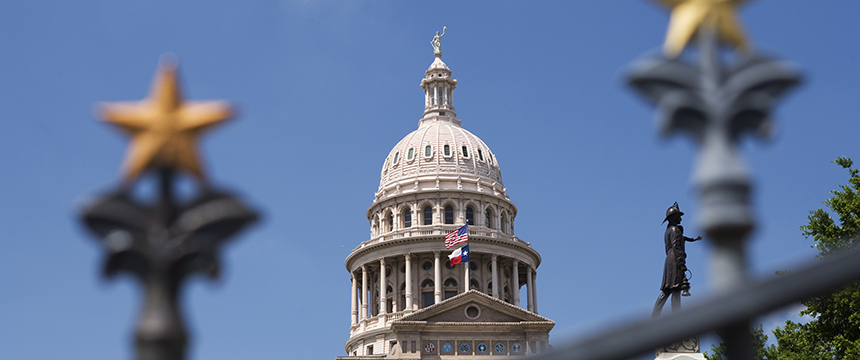
In a bold move that has sent ripples through national and international circles, Texas Governor Greg Abbott signed Senate Bill 17 (SB 17) into law on June 26, 2025, prohibiting citizens, governments, and entities from China, Russia, Iran, and North Korea from purchasing land in the state. Effective September 1, 2025, the legislation marks Texas as the latest state to enact such restrictions, citing national security concerns as the driving force. The law, championed by Republican lawmakers, has sparked intense debate, with supporters praising it as a safeguard for American sovereignty and critics warning of discriminatory overreach.
The new law, authored by State Senator Lois Kolkhorst and carried in the House by Representative Cole Hefner, targets countries listed as national security threats in the 2025 Annual Threat Assessment by the U.S. intelligence community. It bans these nations’ governments, companies headquartered in these countries, and their citizens—unless they are U.S. citizens or lawful permanent residents—from acquiring real property, including agricultural land, commercial properties, residences, and mining or water extraction sites. The Texas Attorney General’s office is empowered to investigate violations, which are classified as felonies, and can force the sale of properties through court-ordered receivership. Short-term leases of less than one year are exempt, as are purchases for primary residences by legal U.S. residents.
Proponents argue the law is a critical step to protect Texas’s strategic assets. Kolkhorst, speaking at a press conference, called SB 17 “the strongest national security bill in the nation,” emphasizing the need to shield food supplies, infrastructure, and military sites from foreign adversaries. Hefner echoed this, stating, “We cannot allow oppressive regimes to dictate our economy or supply chains.” The legislation was spurred by high-profile incidents, including a 2021 attempt by a Chinese firm, owned by a former military officer, to purchase 140,000 acres near Laughlin Air Force Base for a wind farm. Though that deal was blocked, it fueled fears of espionage, particularly given China’s growing presence in U.S. drone and solar markets.
Data from the U.S. Department of Agriculture shows foreign entities own about 5.7 million acres in Texas, with China accounting for roughly 3.6% of that—less than 1% of total foreign-held U.S. farmland. Russia, Iran, and North Korea collectively own under 3,000 acres nationwide. Despite these modest figures, supporters like Michael Lucci of State Armor Action argue that even small strategic purchases near military bases pose risks. The recent arrest of two Chinese nationals for attempting to smuggle biological pathogens into the U.S. further amplified concerns about foreign influence.
Critics, including Democratic Representative Gene Wu and the American Civil Liberties Union of Texas, warn that the law risks racial profiling and economic harm. Wu, who immigrated from China, argues it could fuel anti-Asian hate, noting, “Nobody knows the difference between Chinese, Japanese, or Vietnamese when attacks happen.” Advocacy groups like Asian Texans for Justice draw parallels to historical anti-Asian laws, such as the 19th-century Alien Land Laws, and fear the bill’s broad language could target legal immigrants or visa holders. A similar Florida law, challenged in federal court for violating the Equal Protection Clause and Fair Housing Act, suggests potential legal battles ahead for Texas.
The bill’s passage, approved by the Texas House on May 9, 2025, with an 86-59 vote, included a controversial amendment allowing the governor to add countries to the banned list, raising concerns about unchecked executive power. While supporters like Representative Nate Schatzline argue this ensures swift action against emerging threats, opponents like Sarah Cruz of the ACLU call it “unconstitutional overreach” that could arbitrarily target nations or communities.
As Texas joins 25 other states with similar restrictions, the law reflects a broader national push to curb foreign land ownership amid geopolitical tensions. While its defenders see it as a bulwark against espionage and economic control, critics fear it alienates immigrant communities and undermines Texas’s business-friendly reputation. With legal challenges looming and public opinion divided, SB 17 underscores the complex interplay of security, identity, and rights in an increasingly polarized America. The nation now watches to see how this law will reshape Texas’s landscape.