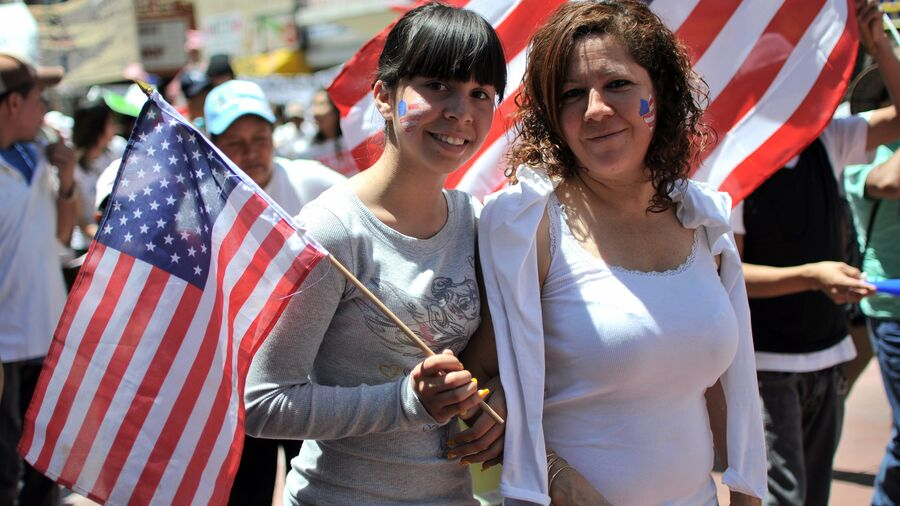
A Mexican American woman’s impassioned declaration—“This is our land, you can’t take that away from us!”—has ignited a firestorm of reactions amid escalating immigration debates. The statement, made during a heated community forum in San Diego, comes as President Trump’s expanded ICE operations sweep through major U.S. cities. Her words, rooted in historical grievances, have reopened wounds over land, identity, and belonging, highlighting the complex legacy of the U.S.-Mexico border and the conquests that shaped it.
The woman’s claim refers to the vast territories ceded by Mexico to the United States under the 1848 Treaty of Guadalupe Hidalgo, which ended the Mexican-American War. The treaty transferred modern-day California, Texas, Arizona, and other states—nearly half of Mexico’s territory at the time—to U.S. control. For some Mexican Americans, particularly in the Southwest, this history fuels a sense of enduring connection to the land, viewing it as culturally and ancestrally theirs despite the legal transfer over 175 years ago. Her statement struck a chord with those who feel marginalized by current immigration policies.
The context of her outburst is critical. ICE’s recent operations, targeting 3,000 daily arrests nationwide, have heightened fears in Latino communities. In San Diego, where the forum took place, residents voiced concerns about deportations splitting families and profiling citizens of Mexican descent. The woman, identified only as Maria, a third-generation American, spoke after sharing stories of relatives detained during ICE raids. Her claim was less a legal argument than an emotional assertion of cultural heritage, reflecting a sentiment shared by some Mexican Americans who feel their history is erased in the push for enforcement.
Critics, however, were quick to counter, pointing out that the U.S. acquired the territory through a ratified treaty, paid Mexico $15 million (roughly $500 million today), and granted citizenship to Mexicans who remained in the ceded lands. They argue that invoking historical claims ignores the reality of modern sovereignty and fuels division at a time when unity is needed. Some at the forum responded bluntly, noting that the conquest happened “a long time ago,” and current laws must govern. This perspective aligns with Trump’s rhetoric, which emphasizes legal immigration and national security over historical grievances.
The debate underscores a broader cultural clash. For many Mexican Americans, the Southwest’s pre-1848 history—when it was part of Mexico and, before that, indigenous lands—remains a living memory, reinforced by family stories and cultural traditions. Yet, others, including some Mexican Americans who support ICE, argue that focusing on past losses distracts from present-day challenges like crime and economic opportunity. Polls show 48% of Americans back Trump’s immigration policies, including some Latinos who prioritize legal pathways, revealing the community’s diverse views.
The incident has also spotlighted San Diego’s unique position. Just miles from the U.S.-Mexico border, the city is a cultural crossroads where tensions over immigration play out daily. Recent protests, some turning violent, have left local businesses damaged, adding to the strain. Maria’s statement, while divisive, reflects a deeper frustration with policies that feel like an attack on her community’s place in America.
As ICE operations continue, such moments are likely to recur, forcing the nation to grapple with its history and its future. Maria’s words, raw and unfiltered, remind us that the border is not just a line but a symbol of unresolved questions about identity and belonging. While the land’s ownership was settled long ago, the battle over its meaning endures.