Washington, D.C. – In a significant legal victory for the Trump administration, the U.S. Supreme Court on Monday, May 19, 2025, lifted a federal judge’s injunction that had blocked President Donald Trump from revoking the legal status of over 532,000 migrants from Cuba, Haiti, Nicaragua, and Venezuela. These migrants, who entered the U.S. under the Biden-era Cuba, Haiti, Nicaragua, and Venezuela (CHNV) humanitarian parole program, now face potential deportation as the administration moves to terminate their temporary legal protections. The decision, celebrated by Trump officials as a step toward stricter immigration enforcement, has sparked intense debate over its humanitarian and legal implications.
The CHNV program, launched by President Joe Biden in 2022 and expanded in 2023, allowed up to 30,000 migrants monthly from these four nations to enter the U.S. legally with work permits for two years, provided they had U.S.-based sponsors and passed vetting. Biden’s administration argued it reduced illegal border crossings by offering a legal pathway. However, Trump’s Department of Homeland Security (DHS), led by Secretary Kristi Noem, moved to end the program in March, ordering the roughly 532,000 participants to leave by April 24 or face deportation. DHS claimed the program fueled crime and lacked a path to permanent status.
U.S. District Judge Indira Talwani, an Obama appointee, halted the revocation in April, ruling that DHS’s blanket termination violated federal law by failing to provide case-by-case reviews. Talwani argued the migrants, who entered legally via air after vetting, deserved individualized assessments, as their sudden loss of status risked deportation to dangerous conditions. The First Circuit Court of Appeals upheld her ruling, prompting the Trump administration to appeal to the Supreme Court.
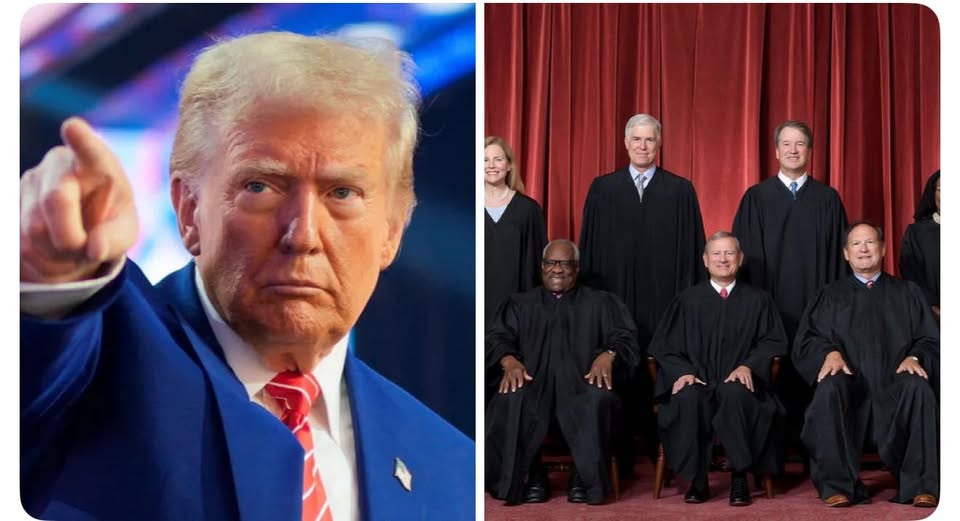
Solicitor General John Sauer argued before the justices that Talwani’s order overstepped judicial authority, asserting that immigration disputes should proceed through immigration courts, not district judges. In an 8-1 decision, with Justice Ketanji Brown Jackson dissenting, the Supreme Court vacated Talwani’s injunction, allowing DHS to proceed with revoking the migrants’ parole and work permits. The majority opinion, per curiam, did not address the program’s legality but ruled that Talwani lacked jurisdiction to issue a nationwide block. The case now returns to lower courts for further review.
White House Press Secretary Karoline Leavitt hailed the ruling, accusing “rogue” judges of obstructing Trump’s immigration agenda. “This is a win for the rule of law,” she said, vowing to continue mass deportation efforts. Posts on X echoed the sentiment, with users like
@EricLDaugh and
@realTrentLeisy calling it a “legal victory” that could make “many more” migrants eligible for deportation. DHS’s Tricia McLaughlin told Newsweek the program was an “unlawful scheme” that admitted “poorly vetted aliens,” straining resources.
Immigrant rights advocates decried the decision. Karen Tumlin of Justice Action Center called it a “devastating blow” to migrants who followed legal processes, warning of chaos for families and communities. The ACLU, which supported the lawsuit, urged Congress to protect the affected migrants, many of whom have built lives in the U.S. Boston City Council President Ruthzee Louijeune emphasized their contributions, noting they fill critical labor shortages.
The ruling’s immediate impact remains unclear, as lower courts will continue litigating the program’s fate. For now, the decision empowers Trump to advance his campaign promise of mass deportations, though logistical and legal hurdles persist. With over 500,000 lives in limbo, the nation braces for a contentious chapter in its immigration saga.