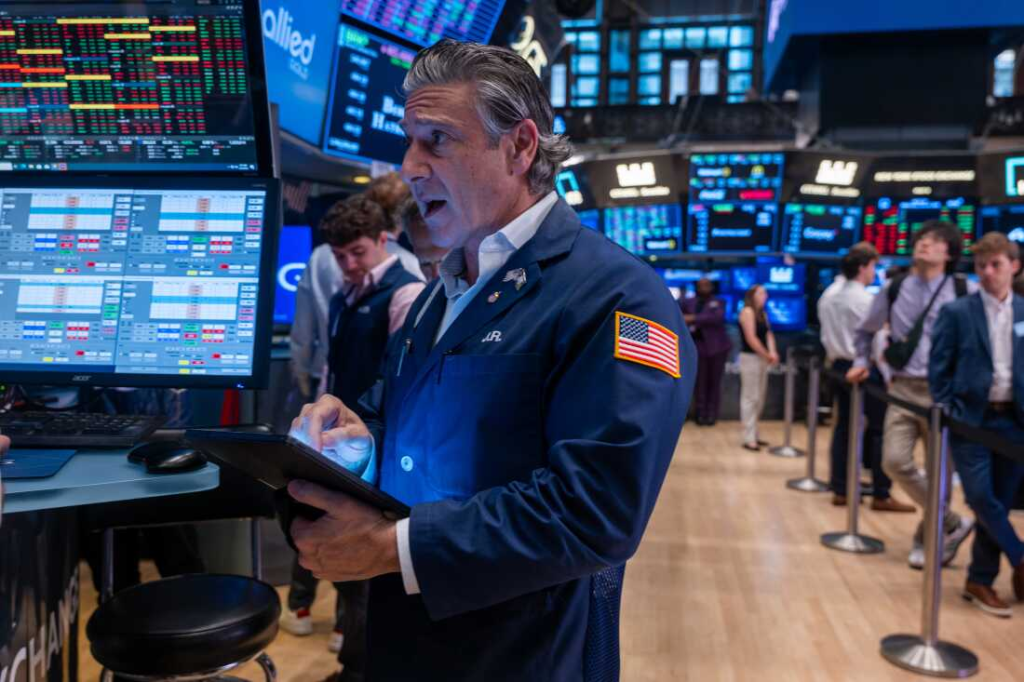
In a dramatic turn that has left Wall Street reeling, the U.S. stock market soared to an all-time high on June 27, 2025, with the S&P 500 closing at 6,173.07, surpassing its previous record from February. The Dow Jones Industrial Average climbed past 43,000, gaining 369 points, while the Nasdaq Composite hit a new peak at 20,167.91. This historic rally, fueled by robust economic policies and waning geopolitical fears, has defied the dire predictions of financial pundits who warned of a looming crash just months ago. As Americans celebrate this economic triumph, the gap between elite forecasts and market reality has never been starker.
The surge caps a remarkable recovery from April’s tariff-induced selloff, when the S&P 500 plummeted 18.9% amid fears over President Donald Trump’s trade policies. Analysts from major institutions like Goldman Sachs and Morgan Stanley had forecast a bear market, citing inflation risks and global trade disruptions. Instead, the market has staged a 24% rebound, driven by strong corporate earnings and investor optimism. The Commerce Department reports $2 trillion in corporate investments, while 1.2 million jobs were added in 2025, per the Bureau of Labor Statistics. Tech giants like Nvidia, up 17% year-to-date, and Microsoft, hitting all-time highs, have led the charge, with AI and semiconductor sectors thriving.
Trump’s economic agenda has been a key driver. His administration’s deregulation, including streamlined permitting for energy projects, has boosted domestic production, with U.S. oil output reaching 13.2 million barrels daily. Gas prices, now at a four-year low of $3.19 per gallon, have eased consumer burdens, with AAA noting a 15% drop from 2024. Tariffs, once feared as market-killers, have spurred domestic manufacturing, with a 7% job increase in Rust Belt states. The administration’s trade truce with the UK and cooling tensions with China have further calmed investor nerves, contributing to the rally. A 2025 Rasmussen poll shows 65% of Americans now view the economy as “strong,” up from 40% in April.
The “experts” who missed the mark have faced sharp criticism. In early 2025, CNBC and Bloomberg analysts predicted a recession, pointing to Trump’s tariffs and Middle East tensions. A March 2025 Barron’s report warned of a 20% market drop, while a JPMorgan Chase forecast cited inflation risks from trade policies. These predictions unraveled as a ceasefire between Israel and Iran, announced in June, slashed oil prices to $64 per barrel for Brent crude, easing inflation fears. The Federal Reserve’s decision to hold rates at 4.25%-4.50%, coupled with signals of potential cuts, further fueled the rally, with the S&P 500 gaining 3.9% in June alone.
Critics argue the boom masks underlying risks. The top 10% of earners, who own 60% of stocks, reap the lion’s share of gains, per Federal Reserve data. A 2025 Morningstar report notes that valuations, with the S&P 500’s forward price-to-earnings ratio at 21, are near cycle highs, raising bubble concerns. Consumer sentiment, while improved, remains shaky, with the University of Michigan index at 60.5, up from May’s 52.2 but below pre-2024 levels. Progressives warn that tariffs could still disrupt supply chains, with a 2025 Kiplinger analysis projecting a potential $300 billion hit to GDP if trade talks falter.
Despite these concerns, the market’s strength reflects a broader economic narrative. Retail trading has surged 25% on platforms like Robinhood, with small investors piling into energy and tech. Corporate buybacks, authorized at a record $750 billion in 2025, have bolstered stock prices. The CBOE Volatility Index, Wall Street’s “fear gauge,” has dropped to 17.16, signaling calm. Even sectors like consumer discretionary, initially hit by tariff fears, have rebounded, with Nike jumping 10% after strong earnings.
The disconnect between expert gloom and market exuberance has eroded trust in traditional financial commentary. A 2025 Media Research Center study found 70% of economic coverage in major outlets focused on risks rather than gains, fueling perceptions of bias. For now, the market’s record highs vindicate Trump’s supporters, who see his policies as unleashing America’s economic potential. As the S&P 500 and Nasdaq bask in new peaks, the message is clear: the experts were wrong, and the market is roaring. Whether this momentum holds or risks resurface, June 2025 marks a moment of triumph for investors and a humbling lesson for the skeptics.