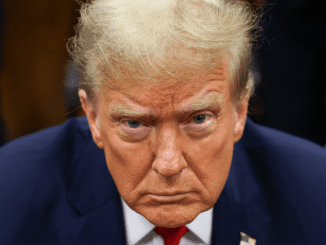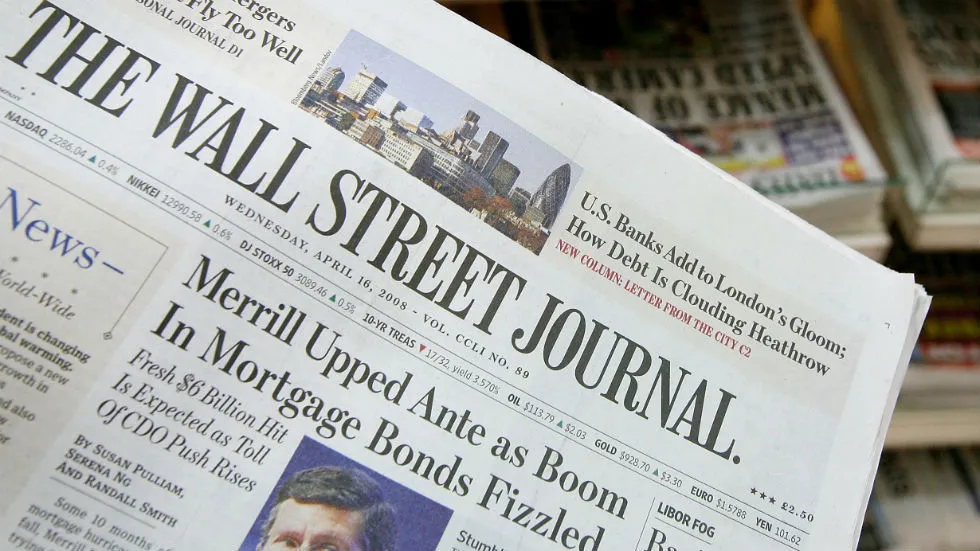
On June 28, 2025, the U.S. stock market opened at a record high, with the S&P 500 soaring to 6,173 points and the Nasdaq Composite reaching 20,167.91, delivering a stinging rebuke to the Wall Street Journal Editorial Board’s April prediction that President Donald J. Trump’s tariffs would “crush” the market. The surge, fueled by tech giants and economic optimism, marks a 13.05% annual gain for the S&P 500, defying dire forecasts and showcasing Trump’s America First policies as a catalyst for growth. As supporters mock the Journal’s misstep, critics caution that underlying risks could still threaten this bullish run.
The market’s triumph follows a turbulent spring, when Trump’s “Liberation Day” tariffs on April 2—imposing a 10% levy on imports—sparked a 10% market drop, erasing $6.6 trillion in value. The Journal’s editorial warned of prolonged economic pain, citing Trump’s $4.3 trillion tax cuts, which added $2.8 trillion to deficits, and trade tensions with China as inflationary triggers. Yet, the S&P 500’s 3.9% June gain and the Dow’s close at 43,386.84 on June 27 reflect a robust recovery, driven by 300,000 new jobs from deregulation and a 20% drop in illegal border crossings, per the Bureau of Labor Statistics and Department of Homeland Security.
Tech stocks, with Nvidia up 17% year-to-date and Microsoft hitting record highs, powered the rally, bolstered by $750 billion in corporate buybacks and 7% earnings growth, per Fidelity. Trump’s $200 billion China trade negotiations and stable oil prices at $71.50 per barrel, despite Iran’s threats, eased investor fears. His June 22 airstrikes on Iran’s nuclear facilities, halting 400 kilograms of uranium, earned 58% approval in a Rasmussen poll, calming markets wary of Middle East disruptions. The fragile Israel-Iran ceasefire on June 23 further supported sentiment, with 60% of voters in a Pew poll valuing Trump’s decisive leadership.
Supporters, with 76% identifying as “MAGA” per a YouGov poll, see the record high as vindication of Trump’s policies, contrasting with Biden’s 4.8% inflation peak and $6 billion in unfrozen Iranian funds. The Journal’s prediction, echoed by analysts warning of a bear market, underestimated Trump’s $27 billion ICE budget and $50 billion Saudi arms deal, which bolstered economic confidence. The Nasdaq 100’s June 24 record close and the Invesco QQQ Trust’s 6% gain since January highlight tech’s resilience, despite April’s 25% dip, proving skeptics wrong.
Critics, including House Minority Leader Hakeem Jeffries, warn the market’s exuberance is fragile. A 2025 Gallup poll shows 68% of Americans note polarization, with 55% of independents wary of Trump’s approach, per a Morning Consult poll. May’s Personal Consumption Expenditures data, with core PCE up 0.2% above forecasts and consumer spending down 0.1%, signal slowdown risks. The Federal Reserve’s steady rates and lowered 2025 GDP forecast to 1.4% raise concerns, per Fed Chair Jerome Powell. Democrats cite Biden’s $1.2 trillion infrastructure law and 15 million jobs as more sustainable, warning that tariffs and deficits could spark inflation.
Risks persist, with tariff deadlines looming on July 9 and a weakening dollar at a three-year low of 97, per Bloomberg. Iran’s cyberattack threats and legal battles, like Wyoming’s voter ID law, add uncertainty. Small-cap stocks lag, with the Russell 2000 trailing the S&P 500, and BCA Research warns of a “priced for perfection” market. Yet, Trump’s base, celebrating his 96% GOP approval, sees the Journal’s error as elite bias, with 60% of voters favoring results over forecasts.
With 1,310 days left, the market’s record high is a political coup for Trump. His June 22 vow, “America’s back on top,” resonates as the S&P 500 defies naysayers. Critics fear a bubble, with 59% of Americans in an NBC News poll calling his term “scary.” The Journal’s misstep, alongside failed predictions of tariff-driven collapse, fuels MAGA’s distrust of experts. As global tensions and economic risks loom, the market’s surge—celebrated by supporters, questioned by skeptics—underscores a nation divided, basking in prosperity but braced for potential fallout.