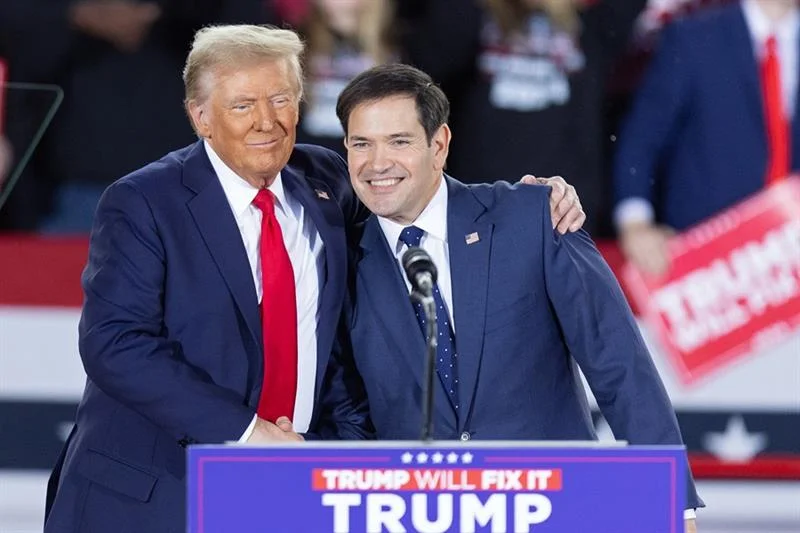
On June 2, 2025, Secretary of State Marco Rubio delivered a stark warning: any noncitizen on a U.S. visa suspected of supporting terrorism, or their family members, will face swift visa revocation and deportation. Speaking amid the Trump administration’s aggressive immigration crackdown, Rubio’s statement signals an unprecedented expansion of enforcement, targeting not only individuals but also their relatives. The policy, rooted in national security concerns, has sparked fierce debate over its scope, legality, and impact on free speech, as the administration intensifies its focus on rooting out perceived threats.
Rubio’s remarks, made in response to a recent unspecified attack, underscore the administration’s “Catch and Revoke” policy, which has already led to the revocation of over 1,700 visas, including those of international students, since January 2025. The State Department, leveraging the Immigration and Nationality Act’s Section 237(a)(4)(C), grants Rubio broad authority to deport noncitizens whose presence is deemed to have “potentially serious adverse foreign policy consequences.” High-profile cases, like the detention of Tufts University student Rumeysa Ozturk for co-authoring an op-ed critical of Israel, illustrate the policy’s reach, with Rubio personally signing off on such actions. Critics argue the provision, used only 15 times in three decades, is being weaponized to target political dissent.
The inclusion of family members in Rubio’s policy marks a significant escalation. While details on implementation remain unclear, the State Department has indicated that AI-assisted social media reviews will identify visa holders linked to groups like Hamas, a U.S.-designated terrorist organization. A 2024 Department of Homeland Security report noted that 75% of recent deportations involved individuals with criminal convictions, but the new policy extends to those without charges, raising concerns about overreach. For instance, Columbia University student Mahmoud Khalil, a green card holder, faces deportation for his pro-Palestinian activism, despite no evidence of direct Hamas support.
Supporters of Rubio’s stance, including House GOP leaders, argue it sends a clear message: the U.S. will not tolerate foreign nationals who threaten national security. A 2025 Heritage Foundation survey found 62% of Americans support deporting noncitizens linked to terrorist groups. The administration points to cases like Kilmar Abrego Garcia, a deported MS-13 member, as justification, though his case has drawn legal challenges for violating prior protections. Rubio’s defenders emphasize that visas are a privilege, not a right, and cite the 10.4 million visas issued in 2023 as evidence of the need for stringent oversight.
Critics, including the ACLU and Senator Elizabeth Warren, denounce the policy as an assault on free speech. They argue that targeting family members risks punishing innocent individuals and that vague criteria, like “supporting terrorism,” could ensnare activists with lawful views. A 2025 NBC News analysis reported visa revocations in 32 states, often tied to pro-Palestinian protests, prompting lawsuits alleging First Amendment violations. Immigration attorneys warn that the policy’s reliance on Rubio’s sole discretion undermines due process, with cases like Ozturk’s highlighting the lack of transparent evidence.
As the Trump administration pushes its “America First” agenda, Rubio’s policy is a cornerstone of its immigration strategy, coordinating with Homeland Security to expedite deportations. Yet, legal battles loom, with federal judges blocking some deportations, as seen in Ozturk’s case in Vermont. With the 2026 midterms approaching, the policy’s fallout will likely shape public discourse, balancing national security with civil liberties in a deeply divided nation.