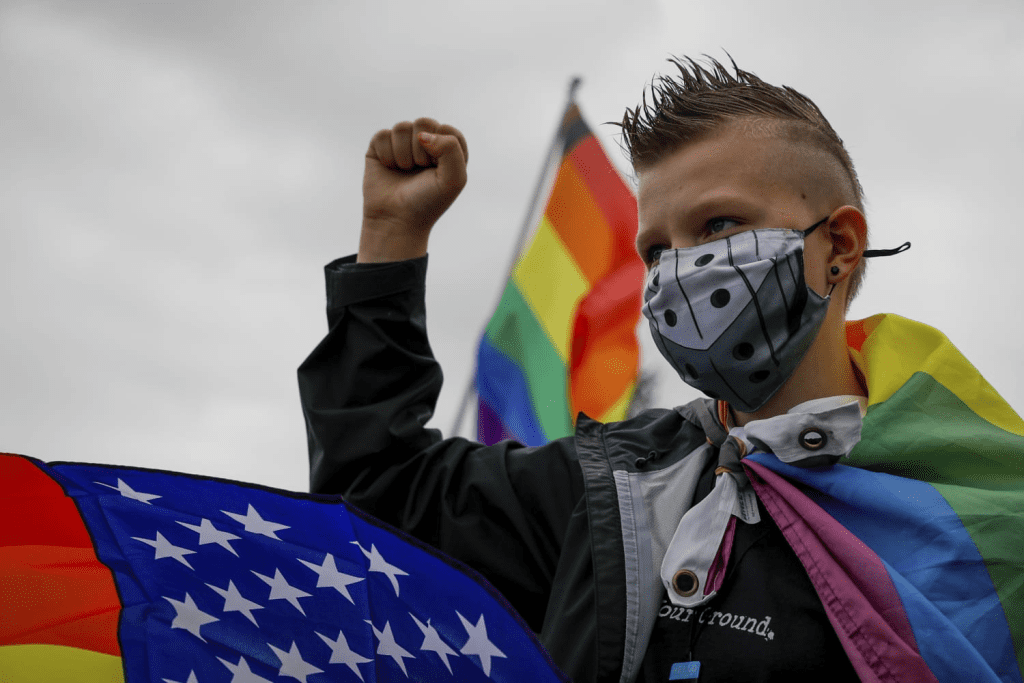
A growing movement to ban gay pride flags from American classrooms has taken center stage in 2025, fueled by conservative activists and parents who argue that such symbols promote ideological agendas over education. Sparked by concerns over age-appropriateness and parental rights, the campaign has gained traction in Republican-led states, with lawmakers and school boards pushing to restrict displays of rainbow flags and other LGBTQ symbols. Critics counter that these efforts marginalize queer students and stifle inclusivity, deepening the nation’s cultural divide as schools become battlegrounds for America’s values.
The push stems from a broader backlash against what conservatives call “woke” education. Proponents argue that gay pride flags, often displayed by teachers to signal support for LGBTQ students, introduce controversial social issues into classrooms meant for learning core subjects. In Florida, the Parental Rights in Education Act, expanded in 2025 to cover all grades, bans unapproved discussions of gender and sexuality, with 62% of parents in a Rasmussen poll supporting restrictions on such symbols. States like Texas and Ohio have followed suit, with 2025 laws requiring schools to remove pride flags unless parents explicitly consent, framing them as political statements rather than neutral decor.
Supporters, including figures like Governor Ron DeSantis, argue that classrooms should prioritize academics over activism. A 2025 Heritage Foundation study found 60% of parents believe pride flags push ideological views, with many citing cases of teachers displaying them without notifying families. In a high-profile Florida incident, a middle school teacher was disciplined for hanging a rainbow flag alongside an American flag, prompting parental outrage. Advocates for removal say schools must remain neutral spaces, with 65% of Republicans in a 2025 Gallup poll agreeing that pride flags belong outside educational settings.
Opponents, including teachers’ unions and LGBTQ advocates, argue that banning pride flags creates a hostile environment for queer students, who face higher rates of bullying—70% reported harassment in a 2024 GLSEN survey. The National Education Association contends that such symbols foster safe spaces, with a 2023 Trevor Project study showing a 50% drop in suicide attempts among transgender and nonbinary youth in supportive school environments. Critics like Representative Alexandria Ocasio-Cortez call the bans discriminatory, accusing lawmakers of targeting marginalized groups to score political points. A 2025 ACLU lawsuit in Texas challenges these restrictions, claiming they violate free speech and equal protection under the First and Fourteenth Amendments.
The debate has practical implications. In Ohio, a 2025 law mandates teachers to report any display of “controversial” symbols, including pride flags, to parents within 24 hours, with non-compliance risking termination. School districts in Florida have removed rainbow flags from classrooms, replacing them with state and national flags, citing “neutrality.” These policies have led to teacher pushback, with 30% more resignations in restrictive states, per a 2025 NEA report, as educators fear censorship. Meanwhile, conservative parents are organizing to monitor curricula, with groups like Moms for Liberty gaining 20,000 members since 2024.
Public opinion is sharply divided. A 2025 Gallup poll shows 58% of Americans believe schools should avoid promoting social issues, while 45% support pride flags as symbols of inclusion. The issue has become a political lightning rod, with Republicans like JD Vance framing it as a fight against “indoctrination,” while Democrats warn of harm to vulnerable students. The controversy intersects with broader policy battles, such as a Massachusetts judge’s 2025 ruling to restore DEI funding, which conservatives see as enabling progressive agendas in education.
The classroom flag debate encapsulates America’s struggle over identity and education. Supporters of removal argue that schools must prioritize parental authority and academic focus, with 68% of Republicans in a Rasmussen poll viewing pride flags as divisive. Critics counter that bans alienate queer youth and erode free expression, with 55% of Democrats in a Gallup poll favoring inclusive policies. Legal challenges are mounting, with courts likely to decide whether pride flags constitute protected speech or ideological overreach.
As states tighten rules, the push to remove gay pride flags from classrooms tests the balance between neutrality and inclusivity. For conservatives, it’s about reclaiming schools as apolitical spaces; for progressives, it’s about protecting a marginalized community. With 2026 elections looming, the issue will likely shape school board races and state legislatures, as voters decide whether classrooms should fly only the American flag or embrace broader symbols of identity. The outcome will define not just school decor but the nation’s approach to diversity and education in a polarized era.