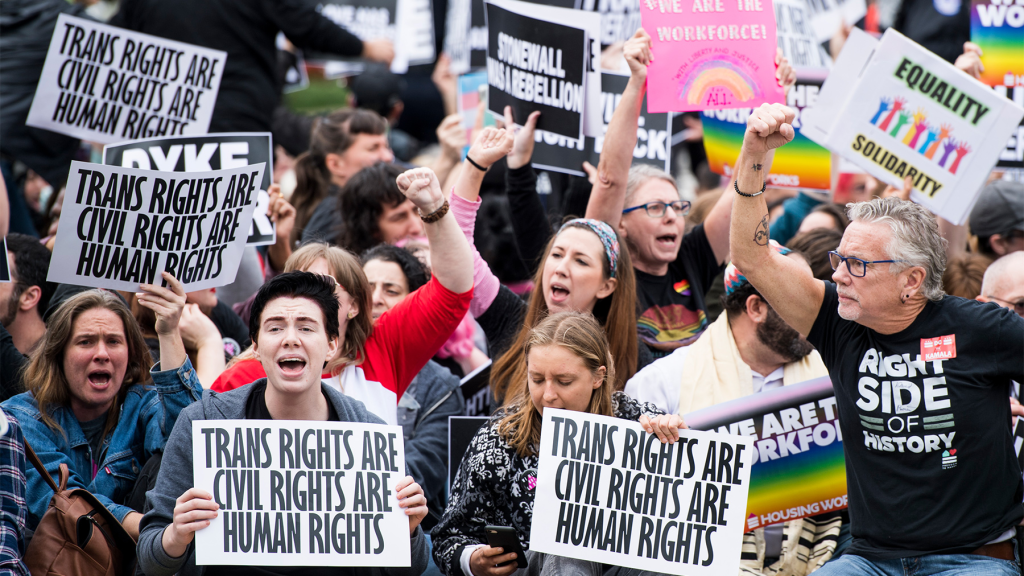
A provocative sentiment expressed on June 1, 2025, asserting that “changing your gender doesn’t deserve a special flag or a month-long celebration,” has reignited tensions over Pride Month, the annual commemoration of LGBTQ+ rights. The view, while acknowledging likely disagreement, reflects a persistent divide in American attitudes toward gender identity and its public recognition. As Pride events unfold nationwide, the comment underscores a broader cultural and political clash between individual liberties and collective celebration, with implications for policy and social cohesion.
Pride Month, established to honor the 1969 Stonewall riots, has expanded to celebrate diverse identities, including transgender and nonbinary individuals. The Progress Pride flag, incorporating colors for trans and marginalized communities, symbolizes this inclusivity, flying at federal buildings and embassies under past administrations. In 2025, however, President Donald Trump’s administration has barred such displays, citing a focus on “traditional values,” per a May 31 White House statement. This aligns with sentiments questioning the need for specific gender identity recognition, echoing a 2024 Pew poll where 59% of Americans said society has gone too far in emphasizing transgender rights.
Critics of the statement argue it diminishes the struggles of transgender individuals, who face disproportionate violence and discrimination. A 2025 Human Rights Campaign report documented 32 transgender deaths in the U.S., mostly among people of color, while 41% of trans adults reported suicide attempts, per the Trevor Project. Advocates like GLAAD’s Sarah Kate Ellis, quoted in The Washington Post, call Pride Month essential for visibility and combating legislative attacks, with 526 anti-trans bills introduced in 2024, per the ACLU. The celebration, they argue, fosters acceptance, with 71% of Americans supporting same-sex marriage, per Gallup.
Skeptics, however, view Pride’s focus on gender identity as excessive. A 2025 Rasmussen poll found 53% of Americans believe transgender issues receive too much public attention, with 65% opposing special flags at government facilities. Figures like Rep. Marjorie Taylor Greene have framed Pride as promoting a “radical agenda,” per Fox News, resonating with those who see month-long events as overshadowing other national priorities. The sentiment that gender changes don’t warrant unique recognition often ties to beliefs that personal decisions should remain private, with 48% of Republicans in a YouGov poll opposing public funding for Pride events.
The debate has political ramifications. Trump’s policies, including a May 2025 executive order restricting federal funding for gender-affirming care, reflect resistance to institutionalizing trans recognition, aligning with his 52% “right track” rating among supporters, per Rasmussen. Yet, backlash is evident: 54% of independents in a Pew poll support trans-inclusive policies, and Biden’s 2024 Pride proclamation, emphasizing equality, retains traction among Democrats, per NBC News. The flag itself—banned at some state capitols—has become a flashpoint, symbolizing either progress or overreach.
Both sides claim to champion freedom: one for self-expression, the other from perceived cultural mandates. The statement dismissing special flags or celebrations, while divisive, taps into a real sentiment among a significant minority. As Pride Month unfolds, the tension—between honoring identity and questioning its public elevation—will shape discourse, with no easy resolution in a nation where unity remains elusive.