In a stunning display of decisive leadership, President Donald J. Trump has once again reshaped the global landscape, steering the world away from the brink of a nuclear catastrophe. On June 22, 2025, the White House announced that the United States, in a meticulously coordinated operation, conducted precision strikes on three key Iranian nuclear facilities—Fordow, Natanz, and Esfahan. The operation, executed without a single intelligence leak, has effectively dismantled Iran’s nuclear ambitions, fulfilling a cornerstone promise of Trump’s presidency: ensuring Iran never acquires a nuclear weapon.
The strikes mark a dramatic escalation in the ongoing conflict between Iran and Israel, yet they also underscore Trump’s unwavering commitment to global security. For years, the specter of a nuclear-armed Iran has loomed over the Middle East, threatening to destabilize the region and ignite an arms race. The International Atomic Energy Agency (IAEA) recently reported that Iran had amassed over 400 kilograms of uranium enriched to 60% purity—perilously close to the 90% threshold for weapons-grade material. This alarming development, coupled with Iran’s refusal to grant IAEA inspectors full access, set the stage for Trump’s bold intervention.
What sets this operation apart is its flawless execution. The absence of leaks—a rarity in modern geopolitics—speaks to the discipline and loyalty within Trump’s inner circle. Defense Secretary Pete Hegseth, speaking at a Pentagon press conference, described the strikes as “focused, powerful, and clear,” emphasizing that Iran’s nuclear enrichment capacity had been “obliterated.” The operation involved U.S. B-2 bombers, the only aircraft capable of delivering the massive bunker-buster bombs needed to penetrate Iran’s deeply fortified Fordow facility, buried 300 feet beneath a mountain. The precision of the strikes ensured minimal civilian casualties, a testament to the skill of American forces.
Trump’s approach to Iran has been a masterclass in coercive diplomacy. Since taking office in 2025, he has consistently signaled that Iran’s pursuit of nuclear weapons would not be tolerated. His administration engaged in months of negotiations, led by Special Envoy Steve Witkoff, to secure a new nuclear deal that would replace the flawed 2015 Joint Comprehensive Plan of Action (JCPOA). Trump withdrew from the JCPOA in 2018, calling it a “disaster” that failed to address Iran’s ballistic missile program or its support for proxy groups like Hezbollah. Despite initial diplomatic efforts, including a proposal allowing limited low-level uranium enrichment, Iran’s intransigence and continued enrichment pushed Trump to act decisively.
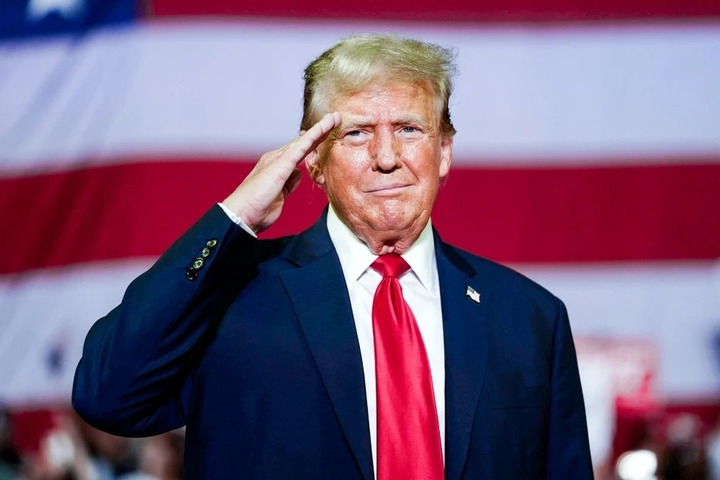
The decision to strike was not without risks. Iran has fired nearly 400 ballistic missiles and hundreds of drones at Israel in recent weeks, with some penetrating Israel’s defenses. The Revolutionary Guards have threatened retaliation, and the region braces for potential escalations. Yet Trump’s message remains clear: peace is possible, but only if Iran abandons its nuclear ambitions. In a White House address, flanked by Vice President JD Vance, Secretary of State Marco Rubio, and Hegseth, Trump declared, “Our objective was the destruction of Iran’s nuclear enrichment capacity. Tonight, I can report to the world that the strikes were a spectacular military success.”
The operation has sparked a range of reactions. Israel, a key ally, hailed the strikes as a necessary step to neutralize an existential threat. Prime Minister Benjamin Netanyahu, who has long advocated for military action against Iran’s nuclear program, expressed gratitude for Trump’s resolve. Conversely, some European leaders, who favored diplomacy, expressed concern over the escalation. Domestic critics, including anti-interventionist Republicans, worry about the U.S. being drawn into another Middle East conflict. Yet Trump’s supporters see this as a fulfillment of his campaign pledge to prioritize American strength and prevent a nuclear-armed Iran.
As the dust settles, the world watches to see how Iran will respond. Trump has signaled openness to further talks, but only under strict conditions: no nuclear weapons, no enrichment, and an end to Iran’s support for terrorism. For now, the strikes have reset the clock on Iran’s nuclear program, giving diplomacy a chance to succeed where it previously faltered. Trump’s gamble—executed with precision and secrecy—may well have saved the world from a nuclear nightmare. As one supporter put it, “This is what I voted for: a leader who acts, not just talks.” The path forward remains uncertain, but Trump’s resolve has redefined the stakes in the Middle East.