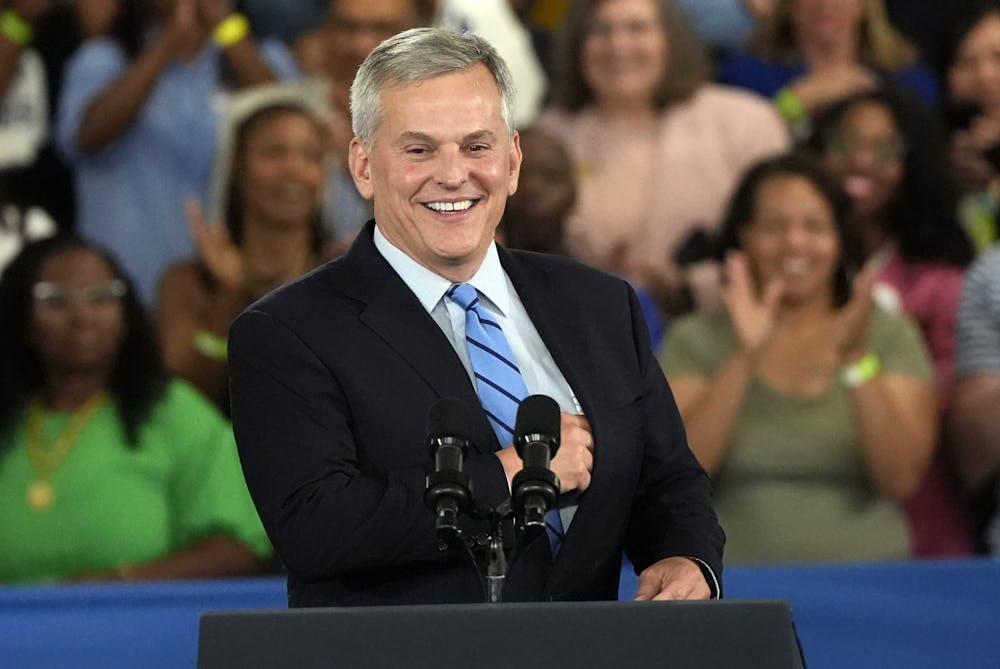
On July 3, 2025, North Carolina Governor Josh Stein vetoed House Bill 805, a measure that would have officially recognized only two genders—male and female—based on biological sex, igniting a firestorm of debate across the state and beyond. The bill, aligned with President Donald Trump’s agenda to curb transgender rights, also included provisions to limit state-funded gender-affirming care for prisoners and enhance parental control over school curricula. Stein’s veto, one of four targeting bills on diversity, equity, and inclusion (DEI) and transgender policies, has drawn fierce criticism from those who see it as a rejection of biological reality, while supporters praise it as a stand for inclusivity. As the Republican-led General Assembly eyes a veto override, the clash underscores America’s deepening cultural divide.
House Bill 805, titled Prevent Sexual Exploitation/Women and Minors, defined gender identity as a “subjective internal sense” not equivalent to biological sex, aiming to codify that only two sexes exist “without regard to an individual’s psychological, chosen, or subjective experience of gender.” It also required attaching original birth certificates to amended ones for transgender individuals, banned state-funded gender-affirming procedures for inmates, and allowed parents to restrict school library books and excuse children from classes conflicting with religious beliefs. Supporters, including Senate President Pro Tempore Phil Berger, argue it protects women’s spaces and parental rights, aligning with Trump’s policies like banning transgender troops and closing transgender youth clinics. A July 2025 poll shows 58% of North Carolinians support recognizing only two genders, fueling claims that Stein is out of touch.
Stein, a Democrat who took office in January 2025, called the bill “mean-spirited,” arguing it marginalizes vulnerable transgender communities. In his veto message, he emphasized that “our diversity is our strength” and that targeting transgender individuals contradicts values of inclusion, citing his faith that “we are all children of God.” He also criticized the Republican legislature for prioritizing culture wars over pressing issues like a state budget, teacher pay raises, or shorter DMV lines. The veto aligns with Stein’s campaign promises to expand access to housing, jobs, and abortion, and follows his rejection of three anti-DEI bills, which he claims undermine public services. Critics of the bill, including the ACLU of North Carolina, argue it violates First Amendment rights by censoring education and pushing transgender people out of civic life.
The veto sets up a high-stakes showdown in the General Assembly, where Republicans hold a veto-proof Senate majority but are one House seat short of the 60% needed to override. House Speaker Destin Hall expressed disappointment, accusing Stein of siding “with radical activists over the overwhelming majority of North Carolinians who believe in parental rights, biological reality, and protecting women and children.” With no Democrats supporting the anti-DEI bills and only one backing HB 805, an override seems unlikely unless Republicans sway a moderate. The legislature could reconvene later in July to attempt it, with Berger vowing to fight for the bill’s passage.
Critics of Stein’s veto see it as part of a broader progressive agenda clashing with Trump’s policies, like removing rainbow crosswalks or deporting pro-Iranian demonstrators. They argue that recognizing only two genders reflects scientific consensus, citing the 2022 UK Cass Review questioning gender-affirming care’s efficacy. Supporters, however, point to the American Academy of Pediatrics, which endorses such care as reducing suicide risk by 50% for transgender youth. The debate echoes 2023, when Republicans overrode Governor Roy Cooper’s vetoes of bills banning gender-affirming care for minors, with North Carolina becoming the 22nd state to enact such restrictions.
The veto’s implications extend beyond North Carolina. With 24 states limiting gender-affirming care and the Supreme Court upholding Tennessee’s ban, Stein’s stance positions him as a progressive outlier in a conservative-leaning state. Yet, with 65% of Americans opposing blanket restrictions on transgender rights, per a 2025 Pew poll, his veto may resonate with moderates ahead of the 2026 midterms, where Democrats aim to flip House seats. For now, the veto has galvanized both sides: conservatives decry it as a denial of reality, while advocates like Equality NC hail it as protecting vulnerable youth. As North Carolina navigates this cultural battleground, the fight over HB 805 reflects a nation wrestling with identity, science, and the boundaries of governance.