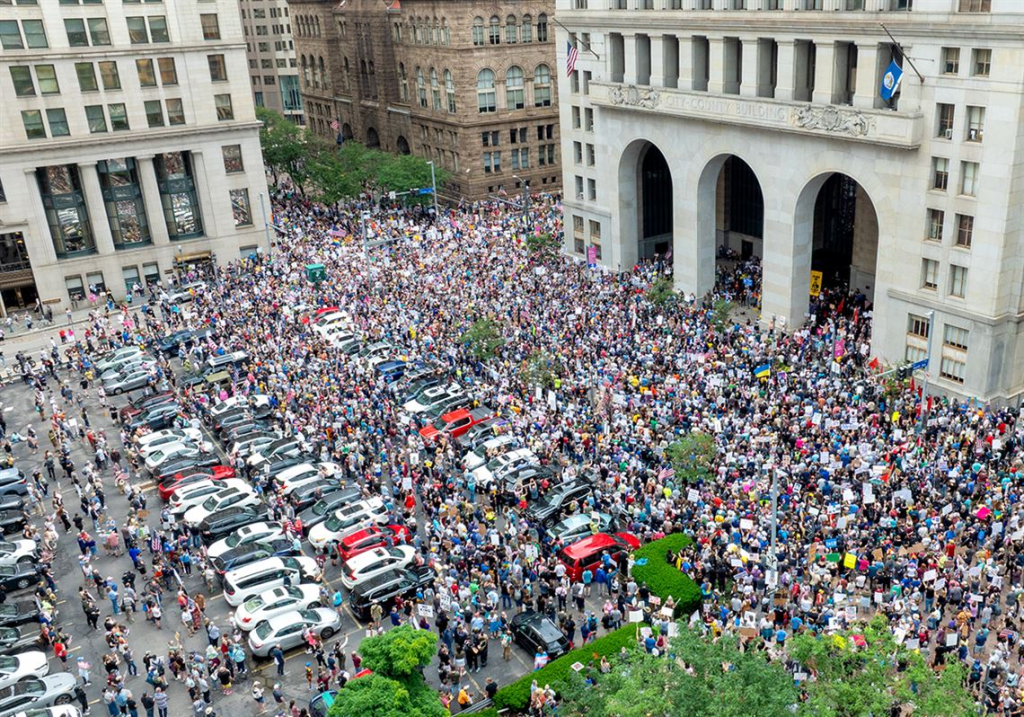
PITTSBURGH – As the specter of authoritarian overreach looms large under President Donald Trump’s second term, the “No Kings” movement roared back to life this weekend, drawing millions to streets across America in a defiant stand against executive excess and corruption. Organizers hailed October 18 as potentially “the single biggest day of protest in U.S. history,” surpassing even the June 14 rallies that mobilized up to 4.8 million against policies from border crackdowns to media suppression. With over 2,500 events planned in all 50 states, the demonstrations underscore a deepening national rift, fueled by government shutdown brinkmanship and billionaire influence in Washington.
In the Steel City, anticipation crackles around Downtown Pittsburgh’s City-County Building, where thousands are expected to converge from noon Saturday for the flagship rally. Coordinated by Indivisible Pittsburgh and partners like 50501, the event—echoing June’s massive turnout at Freedom Corner—promises speeches from local activists, union leaders, and civil rights veterans decrying Trump’s “would-be kings” agenda. “We’re here to take our democracy back, nonviolently but unyieldingly,” declared Tracy Baton, director of Indivisible Pittsburgh, pushing back against Republican smears labeling protesters as “pro-Hamas Marxists.” Additional rallies at Allegheny Commons Park and Shadyside aim to amplify the message, with permits secured and public safety teams on standby for what could swell beyond 10,000 participants.
Nationwide, the protests pulse with urgency. From New York’s Times Square to Los Angeles’ Pershing Square, crowds chant against healthcare rollbacks and oligarchic grabs, building on February’s Presidents Day actions. Lisa Gilbert of Public Citizen, a key planner, envisions turnout eclipsing Earth Day 1970’s 20 million, driven by fears over free speech erosion—only 7% of Americans feel it’s “completely secure,” per an ACLU poll. House Speaker Mike Johnson’s taunts, predicting Antifa chaos, have only galvanized turnout, with veterans and families joining the fray.
Yet beneath the banners lies unease: organizers brace for counter-demonstrations and potential clashes amid polarized rhetoric. Pittsburgh Public Safety spokesperson Emily Bourne assured “robust but respectful” policing, emphasizing peaceful assembly. For Baton, it’s a beacon of resilience: “Big lies invite the worst; we invite the best in us.” As dusk falls on these rallies, the question lingers: Can this tidal wave of dissent pierce the administration’s armor, or will it harden divides ahead of 2026 midterms? In Pittsburgh’s gritty heart, the answer unfolds one chant at a time.