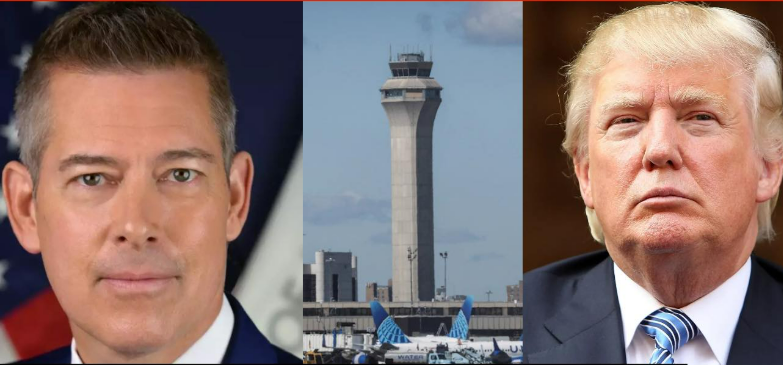
Newark, New Jersey, May 12, 2025 — Newark Liberty International Airport, one of the nation’s busiest hubs, was hit by yet another equipment outage on Sunday morning, marking the fourth known incident in recent weeks and intensifying concerns about the safety of air travel. The disruption, which led to a 45-minute ground stop for inbound flights, has sparked outrage among passengers and aviation experts, with many pointing the finger at Transportation Secretary Sean Duffy for failing to secure the nation’s airspace.
The latest outage, reported by the Federal Aviation Administration (FAA), involved a telecommunications issue at the Philadelphia TRACON facility, which manages Newark’s airspace. The failure, lasting around 90 seconds, severed radar and communication links between air traffic controllers and pilots, a scenario that has become disturbingly routine. Previous outages on April 28, May 2, and May 9 caused massive delays, with over 1,500 flights disrupted in the past month alone, according to FlightAware data. United Airlines, a major carrier at Newark, has already cut 35 daily round-trip flights to ease congestion, but the persistence of these incidents has shaken public confidence.
Duffy, speaking on NBC’s Meet the Press on Sunday, acknowledged the issue but insisted that flying remains safe, citing backup procedures that prevent collisions during outages. “Our mission is safety,” Duffy said, announcing plans to reduce flights at Newark for several weeks while upgrades are made, with a goal of full restoration by summer. He blamed the outages on “really old equipment,” noting that some parts are so outdated they must be sourced from eBay, and that the system relies on copper wires rather than modern fiber optics. However, critics argue that these explanations do little to address the immediate risks, especially given the frequency of the failures.
The FAA’s assurances have been met with skepticism. An air traffic controller at Newark told MSNBC on May 3, “It is not safe. It is not a safe situation right now for the flying public. Don’t fly into Newark.” This sentiment echoes a growing chorus of voices on social media, where passengers and aviation watchdogs have lambasted Duffy for what they see as negligence. One user on X wrote, “Once it happens the first time, it should not happen again!”—a refrain that captures the frustration over the lack of decisive action to prevent recurring outages.
Duffy’s leadership has come under fire, particularly in light of broader aviation safety concerns. The January 29 midair collision near Ronald Reagan Washington National Airport, which killed 67 people, exposed systemic vulnerabilities in air traffic control, including chronic understaffing and outdated infrastructure. The Newark outages, which have left controllers unable to see or communicate with planes for up to 90 seconds at a time, have heightened fears of another disaster. A controller who spoke anonymously to CNN described the April 28 incident as “the most dangerous situation you could have,” with 15 to 20 flights in the air during the blackout.
While Duffy has proposed a multibillion-dollar overhaul of the air traffic control system, including new fiber-optic lines and modern radar technology, the timeline for implementation—stretching into 2029—offers little comfort to travelers facing immediate risks. Critics argue that the FAA’s relocation of Newark’s controllers to Philadelphia last year, intended to alleviate staffing pressures, has instead exacerbated the problem, with bandwidth issues and understaffing compounding the technological failures. The FAA’s own 2022 safety report downplayed the risk of such outages as a 1-in-11-million chance, a prediction that now seems dangerously optimistic.
For many, the core issue is accountability. Duffy, as Transportation Secretary, bears ultimate responsibility for the safety of U.S. airspace, yet his response—reducing flights and promising future upgrades—feels inadequate to those who see these outages as preventable. With summer travel season looming and Newark preparing to host World Cup Finals next year, the pressure is on to ensure such failures don’t lead to catastrophe. Until then, the flying public is left questioning whether the skies are truly as safe as Duffy claims.