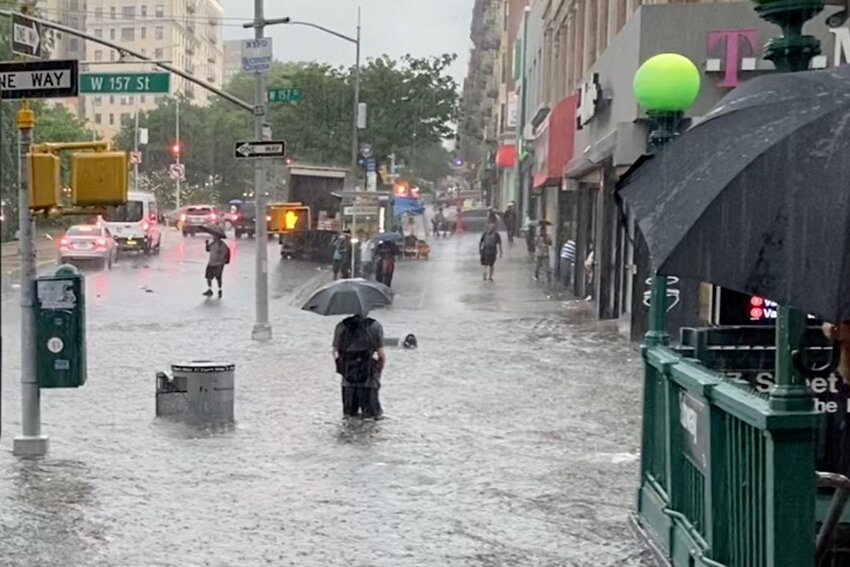
Heavy rainfall battered New York City on July 15, 2025, causing widespread flooding in subway stations across the five boroughs and plunging the nation’s largest transit system into chaos. Torrential storms overwhelmed aging infrastructure, with videos showing water cascading down station stairs and pooling on platforms, forcing the Metropolitan Transportation Authority (MTA) to suspend service on multiple lines, including parts of the 7, F, and G trains.
Commuters faced significant disruptions, with some stations, like Brooklyn’s Coney Island-Stillwell Avenue, reporting ankle-deep water. The MTA deployed pump trains and emergency crews, but persistent rain hampered efforts. Authorities warned of delays and urged residents to avoid non-essential travel as flash flood warnings remained in effect across the city. The National Weather Service reported up to four inches of rain in some areas, exacerbating the crisis.
City officials attributed the flooding to a combination of intense storms and outdated drainage systems, reigniting debates over infrastructure investment. Mayor Eric Adams emphasized ongoing efforts to modernize the subway, but critics argue decades of underfunding have left the system vulnerable to climate-driven weather events. Recent studies estimate the MTA needs $55 billion to fully upgrade its infrastructure, a figure dwarfing current budgets.
The flooding also disrupted businesses and stranded thousands, with some commuters wading through water to reach alternative transport. Environmental advocates called for urgent climate resilience measures, citing increasing storm frequency. Meanwhile, the MTA faces pressure to restore service swiftly as the city braces for more rain.
This latest deluge underscores New York’s struggle to adapt its transit system to extreme weather, raising questions about long-term solutions. As cleanup continues, residents and officials alike grapple with the reality of a city increasingly at the mercy of nature’s fury.