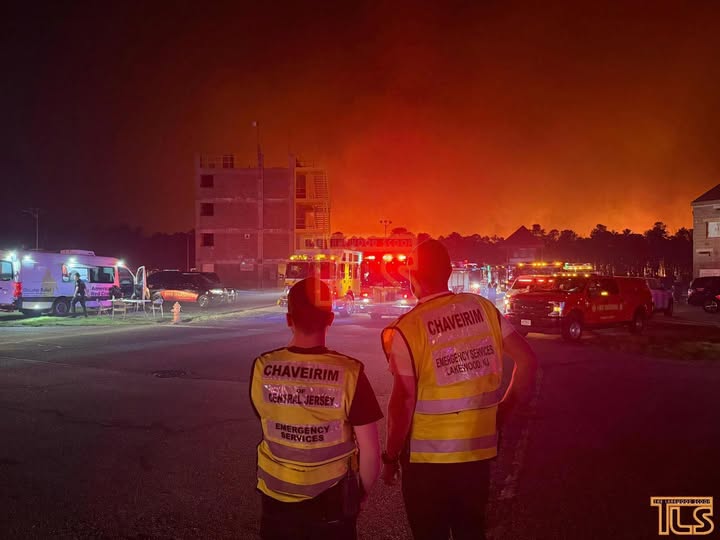
Ocean County, NJ – A raging wildfire in New Jersey’s Greenwood Forest Wildlife Management Area has sparked alarm as flames near the decommissioned Oyster Creek Nuclear Power Plant, prompting mass evacuations on April 23, 2025. The Jones Road Forest Fire, reported by Fox News via
@ExxAlerts, has consumed 8,500 acres, with only 10% containment, forcing 3,000 residents in Ocean and Lacey Townships to flee and threatening 1,320 structures.
Oyster Creek, shut down in 2018, still stores 1.2 million pounds of radioactive spent fuel in 67 dry casks. On April 22, embers ignited a small grass fire on the plant’s property, which was quickly extinguished. Holtec International, the plant’s owner, assured safety, stating the casks are designed to withstand extreme conditions like fire. New Jersey’s Department of Environmental Protection echoed this, confirming no risk even if flames reach the site. Personnel remain on-site with equipment ready, monitoring the situation.
The fire, fueled by drought and 25 mph winds, has disrupted the region significantly. The Garden State Parkway is closed for 17 miles between exits 63 and 80, and Route 9 is also shut down. Jersey Central Power & Light cut power to 25,000 homes and businesses near the Oyster Creek substation to protect firefighters. Evacuation shelters, including Southern Regional High School, are open for residents and pets.
On X, residents expressed alarm.
@TruthSerum444 reported flames near their home by Oyster Creek, criticizing limited evacuation routes, while
@alltoozac highlighted concerns about radioactive material on-site. Despite these fears, official statements emphasize the casks’ resilience, reducing the likelihood of a nuclear disaster.
The incident raises broader questions about nuclear waste storage. Oyster Creek’s proximity to Barnegat Bay and the Kirkwood-Cohansey aquifer, a key drinking water source, has long worried environmentalists, especially after past tritium leaks in 2010. With no permanent U.S. nuclear waste repository—efforts like Yucca Mountain remain stalled—decommissioned sites face prolonged risks, exacerbated by climate-driven wildfires. Oyster Creek’s decommissioning, delayed until 2029 for economic reasons, heightens these vulnerabilities.
While the immediate nuclear risk appears low, the wildfire underscores the need for better emergency planning and waste management solutions. As containment efforts continue, this event may spur renewed debate on nuclear safety in an era of escalating natural disasters.