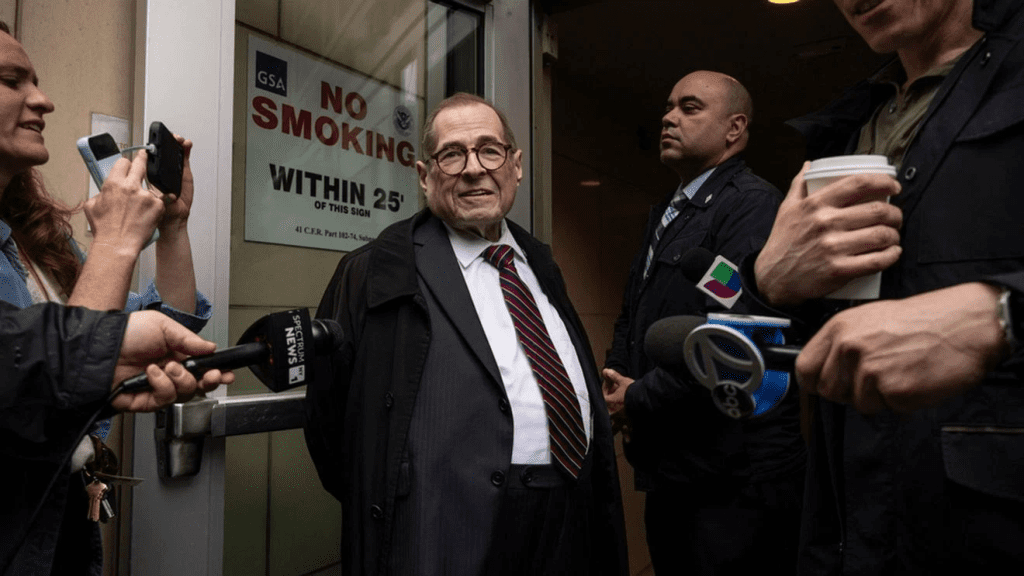
Rep. Jerry Nadler (D-N.Y.), a 34-year congressional veteran, announced he will not seek re-election in 2026, following a tumultuous year marked by a Department of Homeland Security (DHS) raid on his Manhattan office. The May 2025 incident, where DHS agents handcuffed a staffer and accused Nadler’s team of “harboring rioters” during an immigration court protest, drew fierce backlash. Nadler condemned the Trump administration’s “aggressive and heavy-handed tactics,” calling the raid a violation of legal protocols. The White House countered, claiming the operation targeted security threats, not Nadler personally.
Nadler, 78, cited President Biden’s leadership struggles as a catalyst for his decision, emphasizing the need for “generational change” in the Democratic Party. Critics, however, argue the raid and subsequent political pressure eroded his influence, especially after losing his Judiciary Committee chairmanship. The accusation of sheltering “illegal rioters” fueled conservative narratives, with some claiming Trump’s policies “broke” Nadler’s resolve.
The raid video, showing a tearful aide being detained, intensified scrutiny. Nadler and Rep. Jamie Raskin demanded an investigation, alleging DHS overreach. Supporters view Nadler’s exit as a strategic retreat to avoid a tougher re-election fight in a shifting district, while detractors see it as an admission of weakened clout.
Nadler’s departure marks the end of a storied career, from impeaching Trump twice to championing progressive causes. Yet, the raid controversy has left a lingering stain, raising questions about executive power and congressional autonomy. As Democrats regroup, Nadler’s exit signals a broader reckoning for the party.