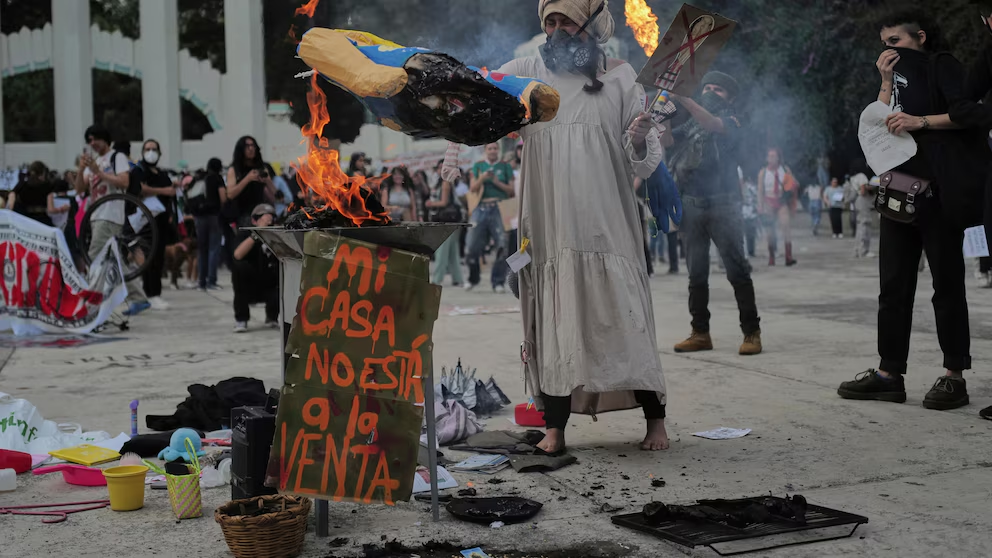
In a stunning display of irony, Mexico City erupted in chaos on July 4, 2025, as hundreds of protesters took to the streets to demand that Americans stop moving to their country. What began as a peaceful march against gentrification and mass tourism in neighborhoods like Condesa and Roma turned violent, with masked rioters smashing windows, looting businesses, and harassing tourists. The unrest, marked by graffiti reading “Get out of Mexico” and signs declaring “Gringos, stop stealing our homes,” reflects deep frustration over soaring rents and cultural displacement blamed on U.S. expatriates.
Since 2020, Mexico City has seen a surge of American “digital nomads” drawn by low living costs and lax visa rules, allowing stays of up to 180 days without a visa. This influx has transformed vibrant neighborhoods, with tortillerías giving way to wine bars and English-language cafes. Rents in Condesa and Roma have spiked 47% in five years, pushing longtime residents into poorer areas. Protesters, including young locals like 19-year-old student Michelle Castro, argue that the housing crisis, fueled by platforms like Airbnb, has made it impossible for many to afford their own city. An effigy of President Donald Trump was burned, symbolizing anger at perceived “American imperialism.”
The protests, which reached the U.S. Embassy, saw 15 businesses vandalized, including a Starbucks and a bank, with some rioters chanting xenophobic slogans like “Speak Spanish or die.” Mexico City’s government secretary, César Cravioto, condemned the violence, noting the city’s history as a migrant haven. Governor Clara Brugada acknowledged gentrification’s toll but denounced the protests’ nativist tone, vowing to bolster affordable housing. President Claudia Sheinbaum echoed this, condemning xenophobia while recognizing locals’ economic grievances.
The irony is inescapable: while Mexico has long sent millions of migrants to the U.S., both legally and illegally, some locals now decry Americans for “stealing” their homes. The protests mirror global backlash against overtourism, seen in cities like Barcelona and Rome, where locals also resent foreign-driven price hikes. Yet, the violent turn in Mexico City, including threats against “gringos,” has drawn criticism for echoing the anti-immigrant rhetoric some protesters might oppose in the U.S. context.
As U.S.-Mexico relations strain under Trump’s tariff threats and deportation plans, the riots highlight a growing binational tension. For Mexico City residents, the fight is about preserving their neighborhoods and identity. For American expats, it’s a wake-up call to navigate their presence with cultural sensitivity. The unrest underscores a universal truth: unchecked migration, even legal, can spark resentment when it disrupts local life. As both nations grapple with immigration’s complexities, the path forward demands dialogue, not destruction.