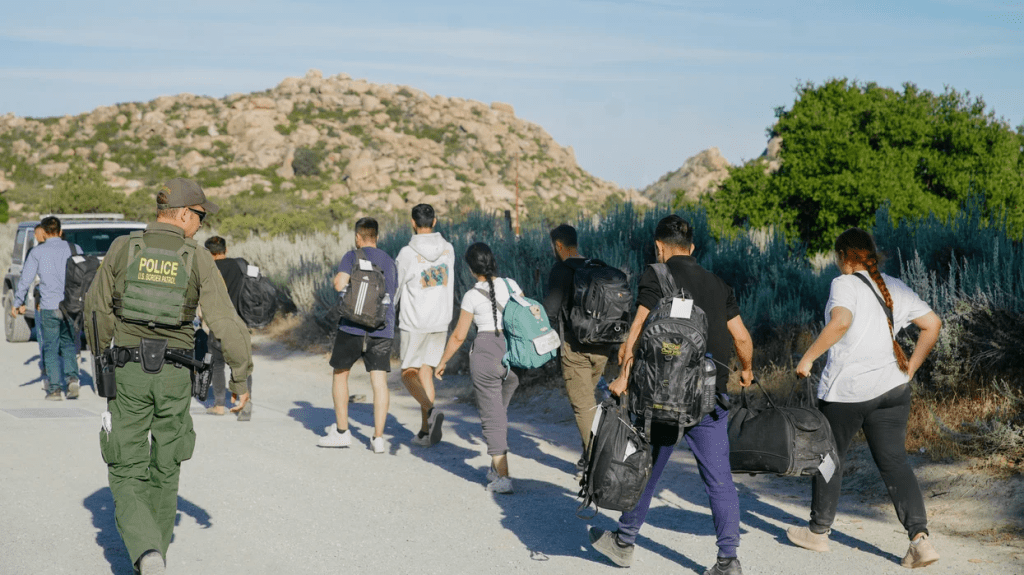
Los Angeles, June 17, 2025—As President Donald Trump’s mass deportation program intensifies, targeting millions of undocumented immigrants, a provocative argument is gaining traction: businesses that avoid hiring undocumented workers will be insulated from the economic fallout of deportations. With Immigration and Customs Enforcement (ICE) detaining 150,000 individuals since January, industries like agriculture, construction, and hospitality face labor disruptions. Supporters of the policy argue that legal hiring practices shield businesses, while critics warn of broader economic harm, highlighting a divisive issue reshaping America’s workforce.
Trump’s executive order, issued in January 2025, prioritizes the removal of undocumented immigrants, with ICE raids hitting workplaces in California, Texas, and Georgia. The administration contends that businesses employing legal workers—citizens or those with valid visas—face no risk of labor shortages. “Hire Americans, hire legally, and you’re fine,” said Acting ICE Director Thomas Homan at a recent press briefing. Supporters point to companies using E-Verify, a federal system to confirm worker eligibility, which report minimal disruption. A 2025 U.S. Chamber of Commerce survey found 68% of small businesses with legal workforces expect no impact from deportations.
Industries reliant on undocumented labor, however, are reeling. Agriculture, where 50% of U.S. farmworkers are undocumented per USDA estimates, faces acute shortages. In California’s Central Valley, farmers report unharvested crops, with losses projected at $3 billion this season. Construction firms in Texas, where 30% of workers are undocumented, have delayed projects, driving up costs. The National Restaurant Association warns that 15% of eateries could close without immigrant labor, as legal replacements are scarce. “We can’t find enough workers who’ll take these jobs,” said a Georgia restaurant owner.
Proponents of deportations argue businesses have long exploited undocumented workers for cheap labor, undercutting American wages. The Center for Immigration Studies claims illegal hiring depresses wages by 4-7% in low-skill sectors. By transitioning to legal workers, they argue, businesses could stabilize and boost local economies. In Arizona, where strict immigration laws have been in place since 2007, some firms adapted by investing in automation or offering higher wages, though initial costs were steep. A 2025 Labor Department report notes a 2% rise in wages for low-skill jobs in states with heavy ICE enforcement.
Critics counter that deportations threaten entire industries and inflate consumer prices. The American Farm Bureau estimates a 20% hike in produce costs if labor shortages persist. Small businesses, lacking resources for automation, face closure risks. In Los Angeles, protests against ICE raids—drawing 200,000 on June 14—highlight fears of economic and social upheaval. “This isn’t just about workers; it’s about communities,” said California Senator Alex Padilla, noting that deportations disrupt families and local economies. A 2025 Pew Research poll shows 46% of Americans worry about economic fallout from mass removals, though 52% support the policy.
The debate hinges on enforcement and adaptation. Businesses using E-Verify or hiring citizens may indeed weather the storm, but sectors ingrained with undocumented labor face a reckoning. Legal challenges, including a California injunction against certain ICE tactics, add uncertainty, while the administration explores expanding guest worker programs to ease transitions. For now, the message from deportation advocates is clear: hire legally, avoid pain. Yet, as raids continue and protests swell, the broader costs—economic, social, and political—suggest no easy fix for a nation divided over immigration.