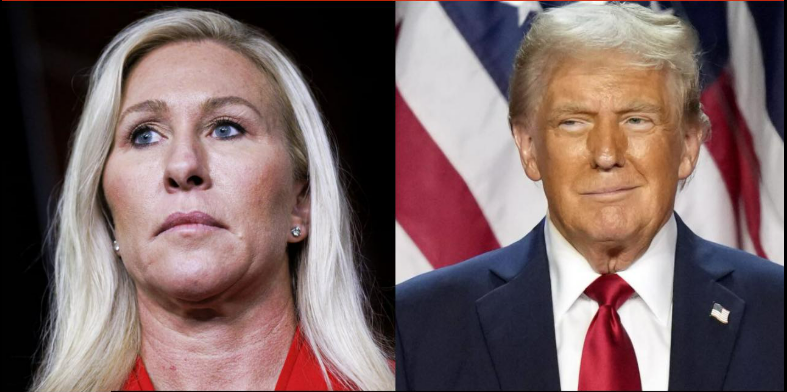
Washington, D.C. – At 2:58 AM +07 on Sunday, May 18, 2025, the timing of Representative Marjorie Taylor Greene’s recent stock purchases continues to spark controversy, as new details reveal the Georgia Republican bought between $21,000 and $315,000 in stocks just before President Donald Trump announced a 90-day pause on sweeping global tariffs on April 9. The announcement triggered a dramatic market rally, raising questions about whether Greene, a staunch Trump ally, had an insider advantage—a suspicion that has fueled calls for investigation and reignited debates over congressional stock trading.
Greene’s financial disclosure, made public on April 14, shows she purchased stocks in 19 companies, including tech giants like Apple, Amazon, and Tesla, as well as Nike, FedEx, and Palantir, on April 8 and 9. Each transaction ranged between $1,000 and $15,000, totaling an estimated $21,000 to $315,000. The market had been in freefall since Trump’s April 2 “Liberation Day” speech, which imposed a 10% baseline tariff and additional “reciprocal” tariffs on over 90 countries, causing stocks like Dell and Lululemon to drop 40% on average. Yet, hours before the pause, Trump posted on Truth Social, “THIS IS A GREAT TIME TO BUY!!!”—a message followed by a historic market surge, with the S&P 500 gaining 9.5% and Tesla jumping 18%.
The timing of Greene’s trades has drawn scrutiny. Democrats, including Rep. Gregorio Casar of Texas, have demanded an investigation into potential insider trading, with Casar stating on April 11, “We need to investigate whether K Street lobbyists or big firms were tipped off by Trump’s actions.” Sens. Adam Schiff and Ruben Gallego echoed this call on April 15, urging the SEC to probe possible market manipulation by Trump and his allies. Greene, however, insists her trades were handled by a financial advisor under a fiduciary agreement, telling Business Insider on April 15, “All of my investments are reported with full transparency.” She reiterated on April 16, “That’s something my portfolio manager does for me, and he did a great job.”
Greene’s portfolio saw immediate gains—Palantir rose 19%, Advanced Micro Devices 21%, and Apple 5% since the pause, though markets dipped again on April 10, with the S&P 500 falling 3.5%. Her earlier trades, including up to $750,000 in U.S. Treasury Bills between March 16 and 24, also shielded her from the initial tariff-induced market crash, which saw Nancy Pelosi reportedly lose $7 million. Critics argue that Greene’s well-timed moves, even if managed by an advisor, highlight the ethical gray area of congressional stock trading. Lawmakers have access to policy insights that can move markets, yet bills like The End Congressional Stock Trading Act, proposed in March, have stalled.
The controversy comes amid broader concerns about Trump’s governance. His tariff policies have drawn ire for economic instability—Moody’s downgraded the U.S. credit rating to Aa1 on May 16, citing rising debt—and his administration’s hiring of over 30 former Fox News employees, linked to a $787 million defamation settlement, has raised ethical questions. Greene’s trades, while legal, fuel perceptions of favoritism in a government already under scrutiny for transparency.
Greene’s defenders argue the accusations are baseless, with a spokesperson calling an investigation “utterly absurd” on April 11. But the optics remain troubling in a polarized climate where trust in institutions is fragile, especially as Trump’s allies, including Greene, wield significant influence.