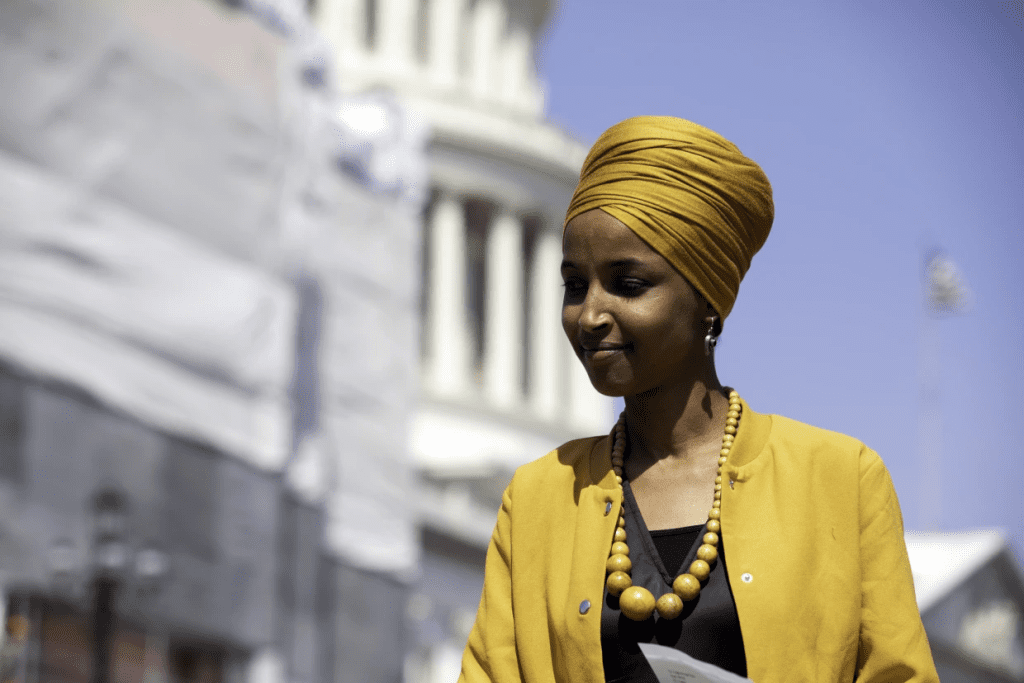
Rep. Ilhan Omar, the Minnesota Democrat and one of the first Muslim women in Congress, has long been a lightning rod for accusations of treason, with critics labeling her a “traitor” for her outspoken views on foreign policy and immigration. The Somali-born lawmaker, who fled civil war as a child, has faced relentless attacks from Republicans, who claim her criticism of Israel and advocacy for Palestinian rights demonstrate disloyalty to the U.S. In a 2019 tweet, Omar downplayed the 9/11 attacks as “some people did something,” drawing widespread condemnation as minimizing terrorism. Her support for the Boycott, Divestment, and Sanctions movement against Israel has fueled charges of antisemitism, leading to a 2019 House resolution condemning her remarks.
The rhetoric escalated in 2024 when Omar delivered a speech in Somali about a Somalia-Ethiopia dispute, mistranslated by critics as pledging U.S. allegiance to Somalia. Republicans like Marjorie Taylor Greene called for her deportation, accusing her of acting as a “foreign agent.” A 2019 unsubstantiated report in the Jerusalem Post alleged Omar was a Qatari asset leaking info to Iran, prompting calls for her execution from fringe candidates like Danielle Stella, who was banned from Twitter for suggesting she be hanged.
Omar’s defenders argue these attacks stem from Islamophobia and xenophobia, noting she has condemned Hamas terrorism and supports U.S. allies. She has received death threats, including voicemails calling her a “terrorist Muslim,” prompting increased Capitol security. Legal experts dismiss treason claims as baseless, as her statements fall under protected speech. As a vocal progressive, Omar’s record includes pushing for Medicare for All and climate action, but her foreign policy stances continue to polarize. Whether she is a traitor or a principled critic remains a matter of intense partisan debate, highlighting America’s deep divisions.