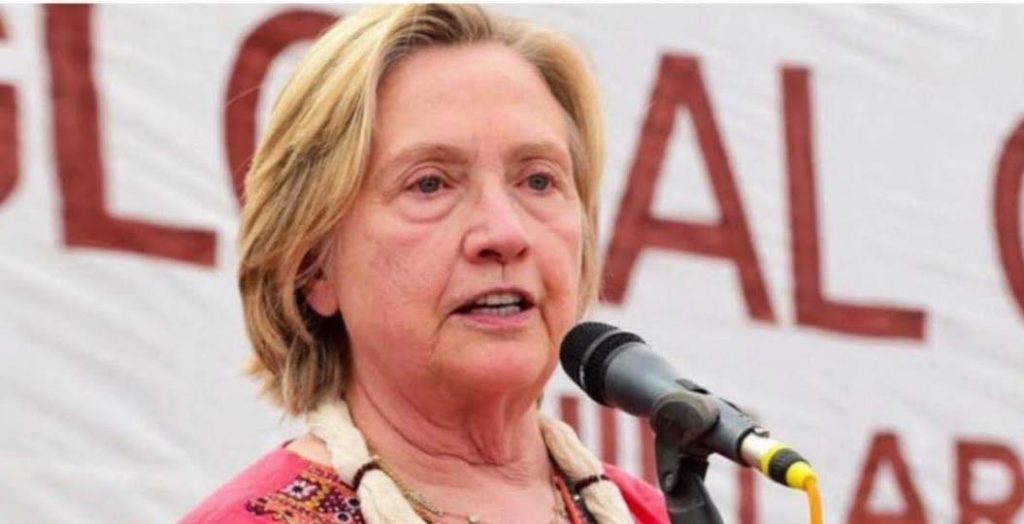
Washington, D.C. – On May 13, 2025, a claim surfaced on X alleging that Hillary Clinton publicly stated her disapproval of President Donald Trump’s proposed bill to eliminate taxes on tips and overtime pay. The unverified post by
@iAnonPatriot quickly gained traction, igniting discussions about the controversial tax relief measure. However, there is no credible evidence to confirm Clinton’s stance, raising questions about the claim’s authenticity amid an already polarized debate over Trump’s economic agenda.
Trump’s proposal, a key campaign promise from his 2024 reelection bid, aims to exempt tips and overtime earnings from federal income taxes, alongside eliminating taxes on Social Security benefits. On May 7, 2025, Senators Roger Marshall and Tommy Tuberville introduced the Overtime Wages Tax Relief Act, which would allow individuals to deduct up to $10,000 and married couples up to $20,000 of overtime income, phasing out for higher earners above $100,000 for individuals and $200,000 for couples. Trump reiterated his commitment during a Michigan rally on April 29, 2025, promising “the largest tax cuts in American history.” The bill, currently under review by the House Committee on Ways and Means, has been lauded by figures like Teamsters General President Sean M. O’Brien, who argued it would put “more money in workers’ pockets.”
The alleged statement from Clinton, a prominent Democratic figure, comes at a time when Trump’s economic policies are under scrutiny. A Reuters/Ipsos poll from late April 2025 showed only 36% of Americans approve of Trump’s economic stewardship, the lowest of his presidency. Clinton’s supposed disapproval, if true, would align with Democratic critiques of Trump’s tax cuts, which some argue disproportionately benefit higher earners and strain federal revenue. The Yale Budget Lab estimates that exempting overtime pay from income taxes could cost $1.34 trillion by 2034, while the Tax Foundation projects a $1.55 trillion loss if all overtime is untaxed, raising concerns about funding for programs like Social Security and Medicare.
However, no major news outlets, such as Reuters or Newsweek, have reported Clinton’s alleged statement. Her recent public comments, as noted in posts on X, focus on unrelated issues, with no mention of Trump’s tax bill. This casts significant doubt on the claim’s validity, suggesting it may be a fabrication or exaggeration meant to inflame partisan tensions. Clinton’s history of opposing Trump’s policies, such as her criticism of his 2017 Tax Cuts and Jobs Act for favoring the wealthy, could lend plausibility to the narrative, but without confirmation, it remains speculative.
The bill itself has sparked mixed reactions. Supporters argue it incentivizes hard work, particularly for service workers and hourly employees. Trump, in a September 2024 rally, called overtime workers “the hardest working citizens,” claiming the policy would boost their earnings. Critics, however, warn of unintended consequences. The Economic Policy Institute, in a March 13, 2025, report, labeled the proposal a “gimmick,” arguing it could encourage excessive hours, exacerbate inequities, and cost $866 billion over a decade, potentially benefiting high earners who might game the system by reclassifying income as overtime.
The unverified claim of Clinton’s disapproval highlights the broader challenge of misinformation in today’s political discourse. While the bill’s economic implications are real—potentially reducing revenue while offering relief to workers—the lack of evidence for Clinton’s stance underscores the need for skepticism toward unconfirmed viral narratives. As the Senate debates the bill, with a possible effective date in 2026 if passed, the focus should remain on its tangible impacts rather than unverified political rhetoric.