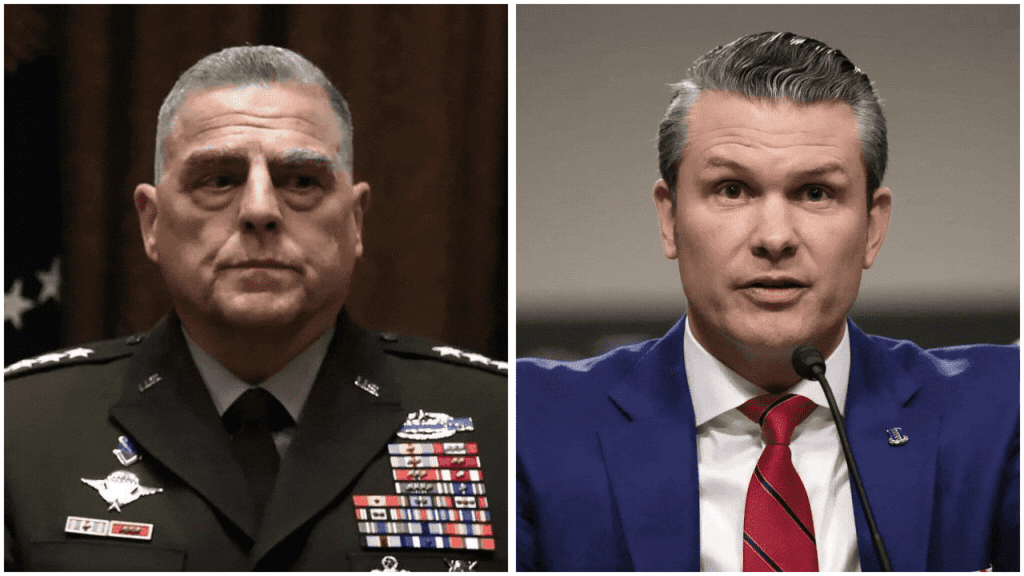
On January 28, 2025, Defense Secretary Pete Hegseth revoked the security clearance and protective detail of retired General Mark Milley, former Joint Chiefs of Staff chairman, and ordered a Pentagon inspector general probe to assess whether Milley’s actions warrant a demotion from his four-star rank. The move, confirmed by Pentagon spokesman John Ullyot, stems from allegations that Milley undermined the chain of command during Trump’s first term. Hegseth’s chief of staff, Joe Kasper, called such actions “corrosive to national security,” aligning with President Trump’s push for accountability. Milley’s portraits, honoring his roles as Army chief of staff and Joint Chiefs chairman, were also removed from the Pentagon.
The controversy centers on Milley’s 2020 calls to Chinese officials, assuring them of U.S. stability amid Trump’s post-election turmoil, which Trump labeled “treasonous.” Milley defended the calls as routine and coordinated, but critics argue they overstepped his authority. A preemptive pardon from President Biden on January 20, 2025, protects Milley from criminal prosecution, though a demotion remains possible. Critics, including Senator Jack Reed, condemn the move, noting ongoing threats against Milley from Iran over the 2020 Qasem Soleimani strike, arguing that removing his security endangers him and his family.
Supporters of Hegseth’s actions see it as a necessary stand against perceived disloyalty, while opponents warn it politicizes the military and risks chilling dissent. The investigation’s outcome could set a precedent for targeting retired officers.