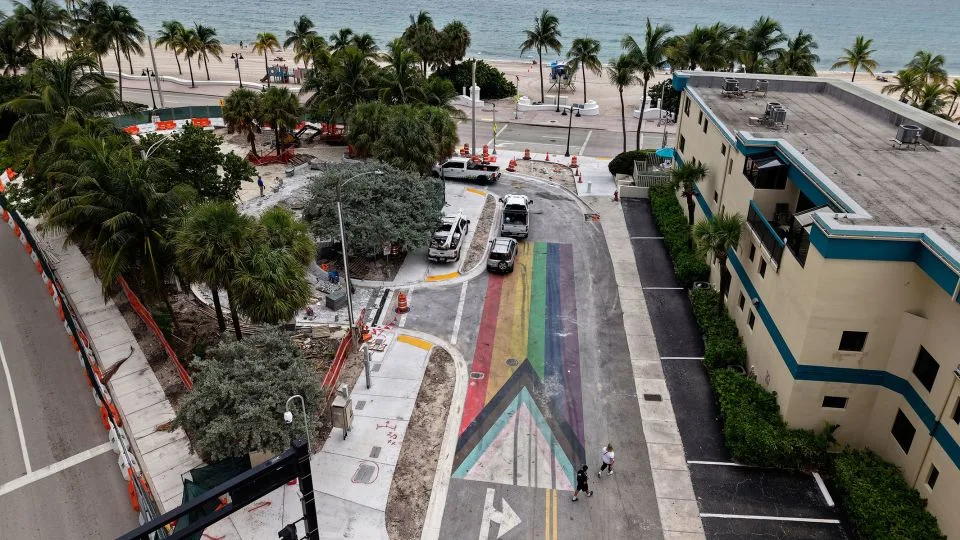
On August 9, 2025, Florida began removing Black Lives Matter (BLM) murals and rainbow-colored crosswalks celebrating LGBTQ+ pride, following a Florida Department of Transportation (FDOT) mandate under Senate Bill 1662, signed by Governor Ron DeSantis. The law bans political or social messaging on public roadways, citing safety concerns and compliance with federal traffic control standards. Cities like St. Petersburg, Orlando, and Sarasota have complied, painting over iconic installations, including a rainbow crosswalk near the Pulse nightclub, a memorial to the 2016 mass shooting. FDOT threatens to withhold millions in funding for non-compliant cities, impacting infrastructure projects like road repairs.
Supporters, including DeSantis, argue that public roads should prioritize safety over ideological displays, with U.S. Transportation Secretary Sean Duffy emphasizing that “taxpayers expect safe streets, not political banners.” Some residents agree, viewing the removals as a return to neutrality. However, critics, including Miami-Dade Mayor Daniella Levine Cava, call it an attack on marginalized communities, noting the crosswalks symbolized inclusivity. Fort Lauderdale’s city commission voted unanimously to appeal the order, risking funds to preserve their Pride flag mural. Protests erupted in Orlando, where activists repainted the Pulse crosswalk with chalk, only for FDOT to cover it again.
The policy has fueled calls for other states to follow suit, with proponents arguing it curbs divisive messaging. Opponents warn it erases cultural expressions and could spread, threatening community identity nationwide. As deadlines loom, the debate over public art’s role intensifies.