Palo Alto, CA – At 1:50 PM +07 on Sunday, May 18, 2025, Elon Musk’s decision to reject a $5 billion offer from Google to buy Tesla in 2013 stands as a pivotal moment in business history, one that continues to shape the trajectory of the electric vehicle (EV) industry. Musk’s gamble, made at a time when Tesla was teetering on the brink of collapse, has since propelled the company to a valuation of over $800 billion, cementing his reputation as a visionary willing to risk it all for a sustainable future.
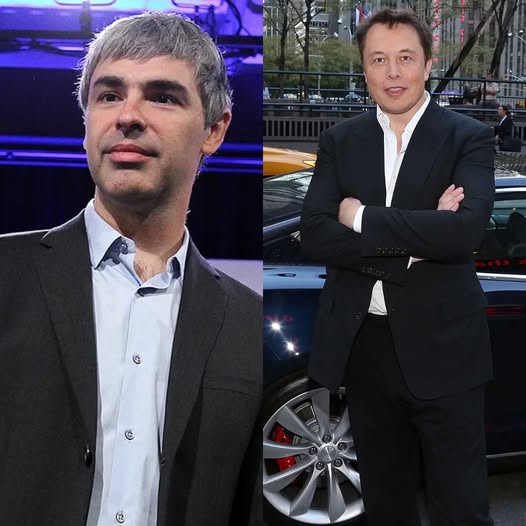
In early 2013, Tesla was in dire straits. The company had delivered fewer than 3,000 Model S sedans, its first mass-market vehicle, and faced production bottlenecks and cash flow issues, with losses mounting to $396 million in 2012, per SEC filings. Amid this turmoil, Google—then led by CEO Larry Page—saw Tesla’s potential to disrupt the automotive and energy sectors. According to Walter Isaacson’s 2023 biography Elon Musk, Google offered $5 billion to acquire Tesla, with Musk retaining a leadership role. The deal also included a $1 billion penalty if Google backed out, a sign of its seriousness.
Musk, however, declined. He believed Tesla’s mission to “accelerate the world’s transition to sustainable energy” was too critical to abandon. “I couldn’t sell out on the mission, even if it meant losing everything,” Musk later reflected in a 2015 interview with Bloomberg. At the time, Tesla’s survival was uncertain—its stock price hovered around $35, and Musk had personally invested $100 million, risking his fortune after selling PayPal. A single misstep could have bankrupted him, especially with SpaceX also facing challenges following a 2013 rocket explosion.
The decision to reject Google’s offer was a turning point. By mid-2013, Tesla turned its first quarterly profit of $11 million, driven by Model S sales and a $10 million deal to supply powertrains to Mercedes-Benz, per a 2013 Reuters report. Musk’s focus on innovation—introducing the Supercharger network and scaling production—began to pay off. Tesla’s stock soared, reaching $200 by 2015, and the company went on to dominate the EV market, delivering 1.81 million vehicles in 2023, per Tesla’s annual report.
Today, Tesla’s market cap exceeds $800 billion, a staggering leap from its $5 billion valuation in 2013, per Yahoo Finance data on May 18, 2025. The company’s success has forced traditional automakers like Ford and GM to accelerate their EV strategies, with global EV sales reaching 14 million in 2024, per the International Energy Agency. Musk’s gamble not only preserved Tesla’s independence but also catalyzed a broader shift toward sustainable energy, aligning with his vision to combat climate change—a priority he reiterated at the Saudi-U.S. Investment Forum on May 13, where Tesla secured billions from Aramco for global expansion.
Critics, however, argue Musk’s decision was reckless. Had Tesla failed, the EV revolution might have stalled, and Musk’s personal wealth—now over $400 billion, per Forbes—could have evaporated. Posts on X reflect this divide, with some users calling it “the greatest business decision ever,” while others label it “a reckless bet that could have doomed sustainable transport.” Musk’s move to Texas in 2020, relocating Tesla’s headquarters to Austin, further underscores his willingness to defy convention, a trait that has both fueled his success and drawn scrutiny, as seen in recent controversies like the Starlink-Dogecoin payment integration on May 15.
Musk’s rejection of Google’s offer remains a testament to his unwavering belief in Tesla’s mission. What could have been a footnote in tech history instead became a catalyst for an industry-wide transformation, proving that sometimes, the greatest risks yield the greatest rewards.