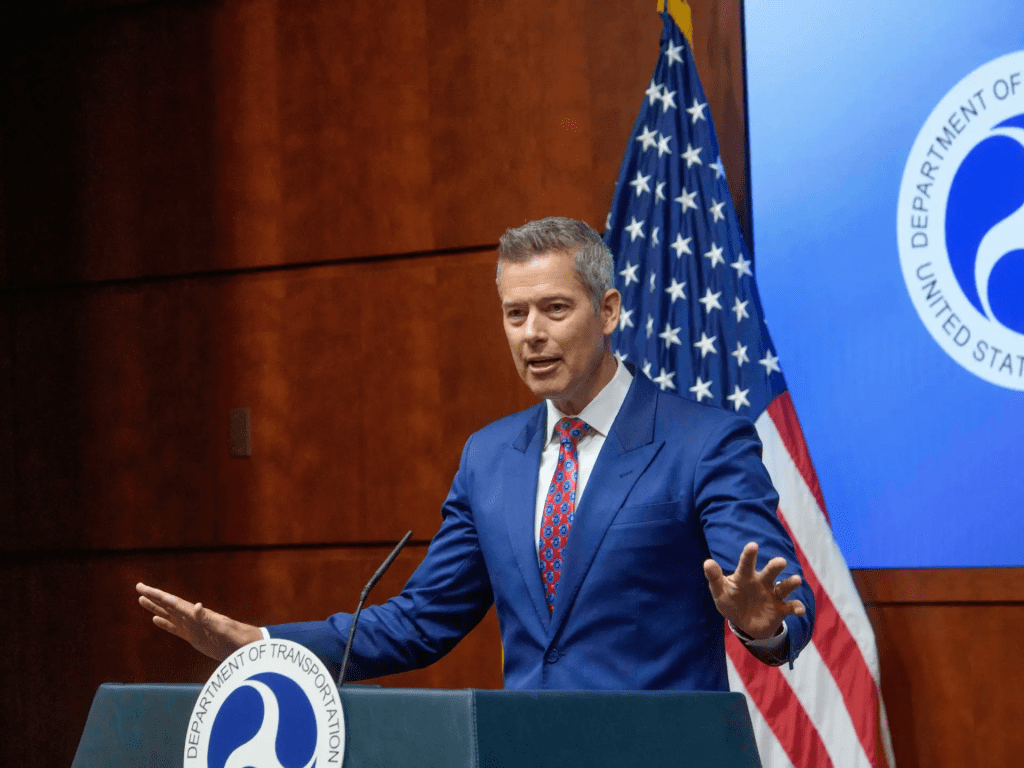
On August 1, 2025, U.S. Transportation Secretary Sean Duffy announced that 1,500 commercial trucks have been taken off American roads due to drivers failing to meet English language proficiency (ELP) requirements. The move, enacted under President Donald Trump’s April 28 executive order, rescinds a 2016 Obama-era policy that relaxed enforcement of ELP standards for commercial drivers. Duffy emphasized that drivers unable to read traffic signs or communicate with law enforcement pose a safety risk, citing a 2019 Colorado crash where a non-English-speaking trucker caused a deadly 28-vehicle pileup.
The Federal Motor Carrier Safety Administration now mandates that drivers who cannot sufficiently speak or read English be placed out of service, effective June 25. Duffy, speaking in Austin, Texas, on May 20, called the policy a “common-sense” step to prioritize safety, supported by groups like the Owner-Operator Independent Drivers Association. The Department of Transportation is also reviewing non-domiciled commercial driver’s licenses to curb fraud. Critics, including some Democratic lawmakers, argue the policy unfairly targets foreign drivers and could disrupt supply chains, with 720,000 foreign truckers operating in the U.S.
Supporters, including Texas Trucking Association president John Esparza, praise the enforcement, noting that clear communication is vital for highway safety. The policy has sparked debate, with some warning of economic impacts and others celebrating it as a victory for American truckers. As enforcement ramps up, the initiative underscores Trump’s “America First” agenda, with Duffy vowing to eliminate “bad actors” from the industry.