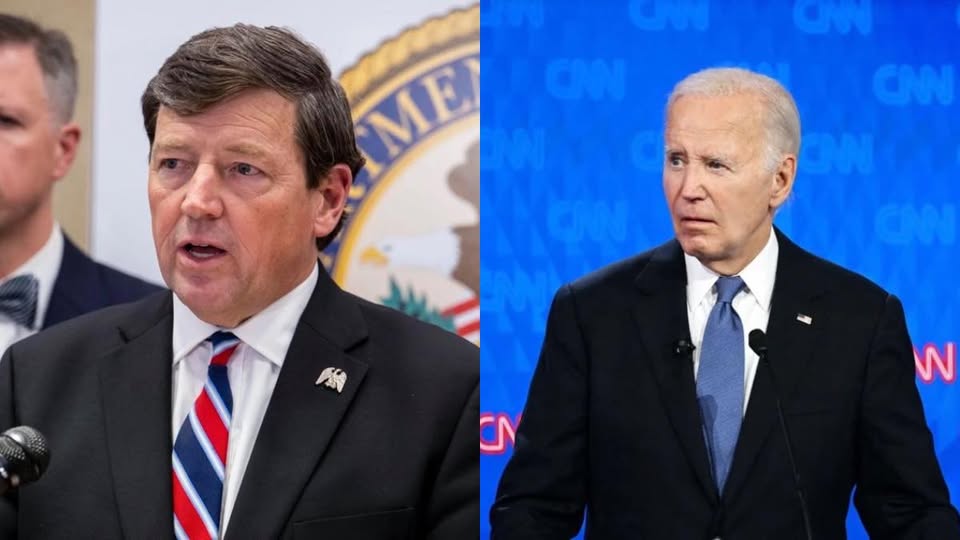
Washington, D.C. – In a bold move that has sparked intense debate, Ed Martin, the newly appointed U.S. Pardon Attorney under the Trump administration, announced on Tuesday an investigation into the sweeping pardons issued by former President Joe Biden during his final days in office. Speaking at a press conference, Martin emphasized the need to scrutinize these clemency grants to ensure the integrity of the American pardon system. “The integrity of the American Pardon system requires that we examine the Biden pardons and who did what. We will get to the bottom of it. Count on us,” he declared, signaling a thorough review of Biden’s actions.
Martin, who recently transitioned from interim U.S. Attorney for the District of Columbia to his new role, has been tasked with leading the Justice Department’s Office of the Pardon Attorney and the “Weaponization Working Group,” a team established to probe alleged political bias in the DOJ under Biden. His appointment follows the collapse of his nomination as D.C.’s top prosecutor, which faced bipartisan Senate opposition, notably from Sen. Thom Tillis (R-NC), over Martin’s defense of Jan. 6 defendants. Undeterred, President Donald Trump reassigned Martin to these high-profile roles, praising his commitment to investigating what Trump calls the “weaponization” of the federal government.
Biden’s pardons, issued on his last day in office in January 2025, have drawn sharp criticism from Republicans. The former president granted preemptive clemency to family members, including his son Hunter Biden, siblings James and Frank Biden, and sister Valerie Owens, as well as political figures like Dr. Anthony Fauci, retired Gen. Mark Milley, and members of the House Jan. 6 committee, such as former Reps. Liz Cheney and Adam Kinzinger. None of these individuals faced charges, but Biden cited “unrelenting attacks and threats” as justification, framing the pardons as a shield against potential retribution by the incoming Trump administration.
Martin’s investigation will focus on the scope, timing, and legality of these pardons, with some speculating it may explore allegations of corruption or abuse of power. In interviews with conservative media, Martin has suggested the pardons’ broad nature—covering actions over a 14-year period—raises questions about their intent. He has also dismissed Trump’s claim that Biden’s alleged use of an “auto-pen” to sign the pardons renders them invalid, stating, “I don’t think the auto-pen is necessarily a problem.” Instead, Martin appears intent on examining the “conduct surrounding the pardons and the Biden White House,” a process he says began during his tenure as interim U.S. Attorney.
The probe has ignited controversy, with critics arguing it represents a politicization of the DOJ. Biden’s defenders maintain that his pardons fall within the president’s constitutional authority and were a legitimate response to fears of politically motivated prosecutions. Legal experts note that presidential pardons are rarely overturned, though Martin’s inquiry could challenge their legitimacy by questioning Biden’s mental competency or alleging improper influence. Reports from The New York Times indicate Martin has already sent letters to Biden’s former aides, including ex-Chief of Staff Jeffrey Zients, and pardon recipients, seeking information about Biden’s decision-making process.
As Martin prepares to lead the investigation, he has vowed transparency, promising to charge “bad actors” where possible or publicly name those who cannot be prosecuted. This approach, however, risks violating DOJ policy against commenting on uncharged individuals, raising concerns about fairness. Meanwhile, Trump’s own pardon record, including his mass clemency for Jan. 6 rioters, has faced scrutiny, highlighting the contentious nature of presidential clemency.
With the investigation underway, the nation watches closely. Will Martin’s probe uncover evidence of misconduct, or will it deepen perceptions of a DOJ driven by political vendettas? As the Trump administration moves forward, the answers could reshape public trust in the pardon system and the Justice Department itself.