Washington, D.C. – A provocative claim has reignited debate over wealth inequality in the U.S.: a mere 2% annual tax on billionaires could fund solutions to homelessness, hunger, tuition-free public college, universal childcare, and the replacement of all lead pipes nationwide. According to a May 2025 analysis by the Institute for Policy Studies (IPS), this tax on the nation’s roughly 800 billionaires, whose collective wealth exceeds $5.8 trillion per Forbes, could generate $116 billion annually—enough to address these pressing issues without altering the lifestyles of the ultra-wealthy. The proposal, gaining traction on platforms like X, has sparked both hope and skepticism.
The IPS report details the breakdown: $11 billion to end homelessness by providing permanent supportive housing for 580,000 people; $12 billion to eradicate hunger for 41 million food-insecure Americans; $70 billion for tuition-free public college for 8 million students; $20 billion for universal childcare for 3 million families; and $3 billion to replace 9 million lead service lines, a public health priority. “This isn’t about punishing success,” said IPS analyst Sarah Anderson. “It’s about redistributing a fraction of wealth to solve crises that affect millions.”
The idea, championed by progressive lawmakers like Sen. Bernie Sanders, aligns with President Joe Biden’s now-defunct 2024 budget proposal for a 25% minimum tax on billionaires’ unrealized capital gains. Sanders, citing the report on X, argued that “billionaires won’t miss 2% of their fortunes” while society reaps transformative benefits. Posts from users like
@EcoJusticeNow and
@TaxTheRich2025 amplify the sentiment, with hashtags like #BillionaireTax trending. Critics, however, question the math and feasibility. The Tax Foundation estimates administrative costs and economic distortions could reduce revenue to $80 billion, potentially requiring years to achieve the promised outcomes.
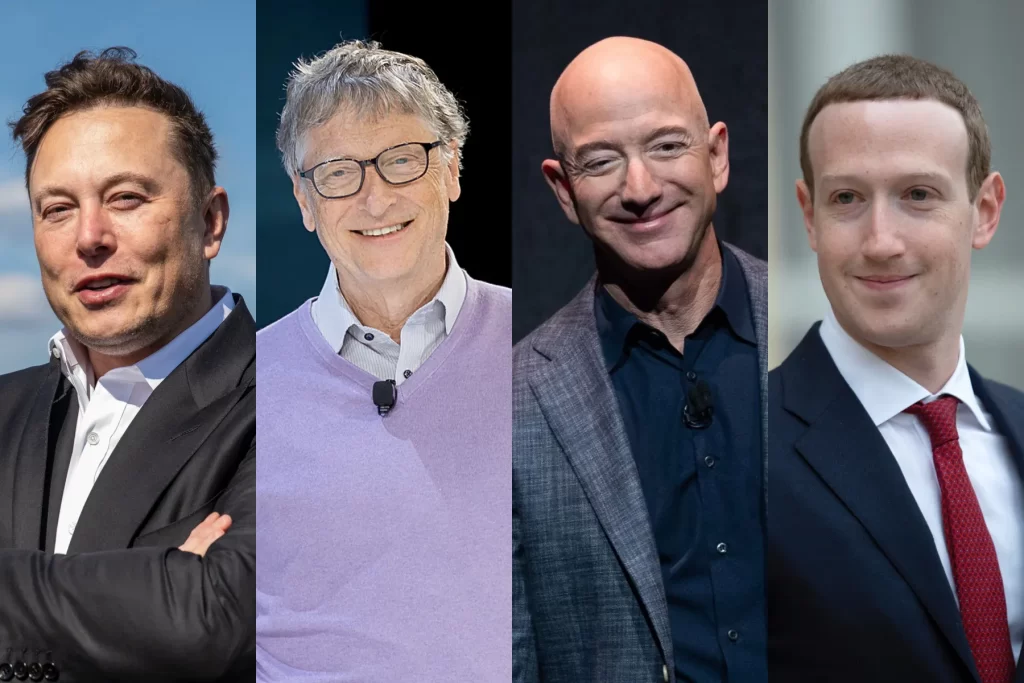
Opponents, including conservative think tanks and billionaire advocates, argue such a tax risks capital flight and stifled innovation. “Billionaires create jobs and drive growth,” said Grover Norquist of Americans for Tax Reform. “Taxing their wealth punitively could push them to relocate to lower-tax countries.” Elon Musk, whose $400 billion fortune would face a $8 billion hit, has not commented directly but previously called wealth taxes “a slippery slope” on X. Historical data from France’s short-lived wealth tax shows some millionaires left, though the impact on billionaires is less clear.
Proponents counter that the tax would barely dent billionaire lifestyles. A 2% levy on Jeff Bezos’s $220 billion net worth equals $4.4 billion—significant, but leaving him vastly wealthy. The IPS notes that billionaire wealth grew 88% from 2010 to 2020, far outpacing inflation, suggesting resilience to modest taxation. Public support is strong: a 2024 YouGov poll found 68% of Americans favor a wealth tax, including 55% of Republicans.
Logistical hurdles remain. Implementing a wealth tax requires valuing complex assets like private companies and art, a process the IRS is ill-equipped for without major funding. Legal challenges are also likely, as the Supreme Court’s 2024 ruling in Moore v. United States left open questions about taxing unrealized gains. Still, advocates argue the revenue could transform lives, citing 1.2 million children exposed to lead pipes and 44 million Americans burdened by student debt.
As the 2026 midterms loom, the billionaire tax debate is set to intensify. While progressives see it as a moral imperative, critics warn of economic fallout. For now, the idea remains a bold vision, challenging America to rethink wealth and responsibility.