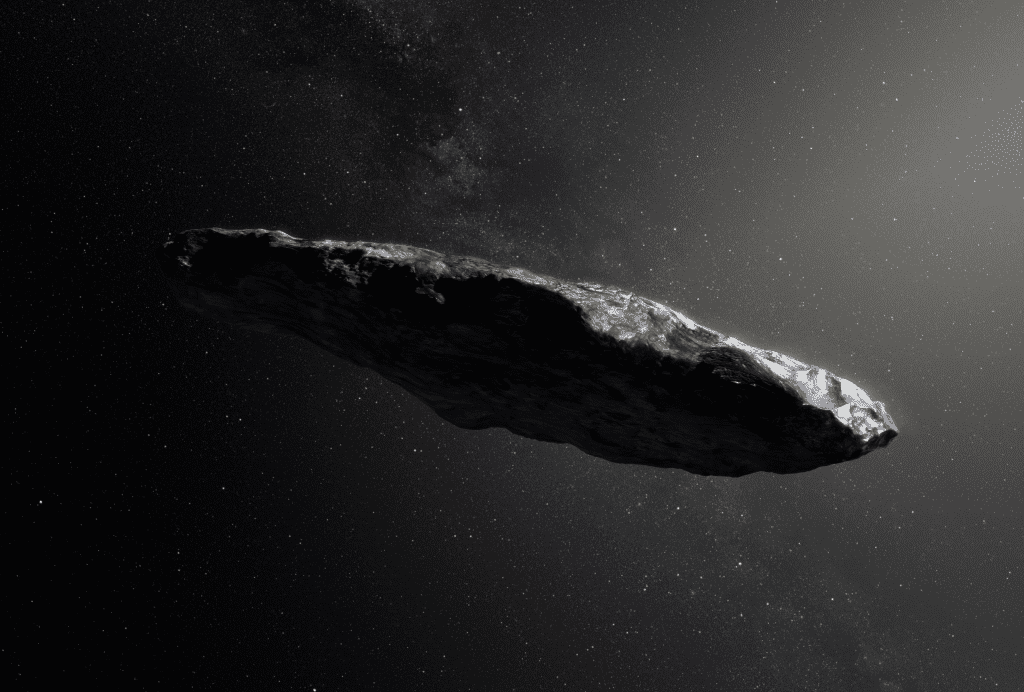
A provocative study published on July 16, 2025, by Harvard astrophysicist Avi Loeb and researchers Adam Hibberd and Adam Crowl suggests that 3I/ATLAS, a 7-mile-wide interstellar object discovered on July 1, could be an alien spacecraft with potentially hostile intentions. Detected by Chile’s ATLAS telescope, 3I/ATLAS is racing toward the sun at 130,000 mph, set to pass Venus, Mars, and Jupiter before reaching its closest point to Earth—149 million miles—on December 17. The study, not yet peer-reviewed, notes the object’s unusual trajectory, with a 0.005% chance of naturally aligning with three planets, and its lack of a comet’s typical coma, fueling speculation of artificial origins.
Loeb, known for claiming the 2017 object ‘Oumuamua was alien tech, argues 3I/ATLAS’s path may be deliberate, possibly hiding behind the sun in November to evade Earth’s telescopes. The paper warns of “dire consequences” if it’s a technological artifact, though it admits this is a thought experiment. NASA and experts like Samantha Lawler dismiss the claims as “nonsense,” citing evidence of a 15-mile-wide coma indicating a natural comet, possibly 3 billion years older than our solar system. The Vera C. Rubin Observatory’s images reinforce this, showing dust and water ice.
The debate reignites questions about extraterrestrial life, with Loeb’s team urging further study of 3I/ATLAS’s outgassing and electromagnetic signals. While most scientists lean toward a natural explanation, the object’s size and speed keep the alien hypothesis alive.