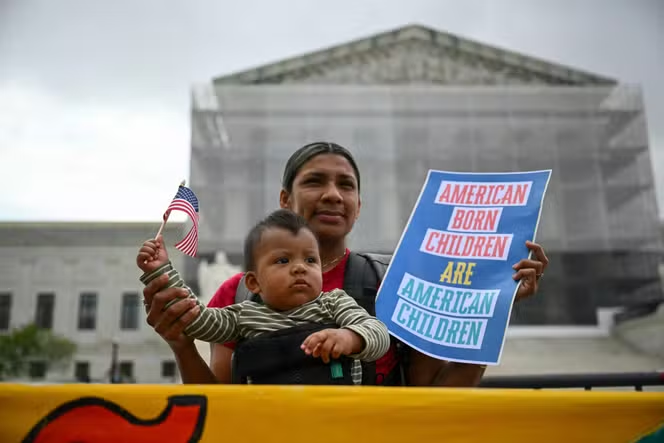
In a contentious turn, proposals to deport U.S.-born children of undocumented immigrants have surfaced in Congress, sparking fierce debate over the 14th Amendment’s guarantee of birthright citizenship. The idea, championed by some Republican lawmakers in 2025, aligns with President Donald Trump’s immigration crackdown but raises a stark question for his supporters: Is this what you voted for? As the nation grapples with the implications of stripping citizenship from American-born children, the policy’s legal, moral, and political ramifications are igniting a firestorm, challenging the core of America’s identity.The proposal stems from Trump’s January 20, 2025, executive order attempting to end birthright citizenship for children of undocumented immigrants, a move blocked by four federal judges as unconstitutional. The Birthright Citizenship Act of 2025, introduced by Senator Lindsey Graham and Representative Brian Babin, seeks to codify this change, limiting citizenship to children with at least one U.S. citizen or legal permanent resident parent. With 51 House cosponsors, the bill reflects growing GOP momentum, fueled by Trump’s 96% Republican approval, per a Rasmussen poll. Supporters argue it curbs “birth tourism” and reduces the 11 million undocumented population, which costs taxpayers $150 billion annually, per a Heritage Foundation estimate.The notion of deporting U.S.-born children emerged explicitly in comments by Trump and Border Czar Tom Homan. In a December 2024 NBC “Meet the Press” interview, Trump suggested deporting entire families, including citizen children, to avoid separation, echoing Homan’s stance that mixed-status families could be removed together. A 2025 Migration Policy Institute analysis warns this would swell the unauthorized population by 2.7 million by 2045, as 255,000 children annually would lose citizenship. Reports of at least seven U.S.-citizen children deported with parents in 2025, including a 4-year-old with cancer, have raised alarms about due process, with attorneys decrying “willfully misleading” claims that mothers chose deportation.Critics, including the ACLU, argue the policy violates the 14th Amendment, which grants citizenship to all born on U.S. soil, as affirmed in the 1898 Wong Kim Ark case. Lawsuits filed by 22 states and advocacy groups like LULAC assert that deporting citizen children creates a “permanent subclass” and flouts constitutional precedent. A 2025 Pew poll shows 58% of Americans favor a citizenship path over mass deportations, with 75% of Democrats opposing the policy. Critics warn of economic fallout—$116 billion in lost child-supporting income, per the Center for Migration Studies—and social harm, with 5.62 million citizen children at risk of family separation, per Brookings.Supporters counter that voters backed Trump’s immigration agenda, including his pledge for the “largest domestic deportation operation in history.” A 2025 Gallup poll shows 62% of independents support stricter enforcement, aligning with the GOP’s framing of undocumented immigrants as a burden. The Laken Riley Act, requiring detention for minor crimes, reflects this hardline stance, with ICE arrests doubling to 650 daily by March 2025. Proponents argue deporting citizen children with parents preserves family unity, though a PBS report highlights cases of children deported without medication or legal access, prompting federal judge rulings of “no meaningful process.”The debate tests Trump’s mandate. His economic wins—Dow at 45,000, gas at $3.19—bolster his case, but 60% of Americans in a Pew poll seek less divisive leadership. Deporting citizen children risks alienating moderates, with 45% of Republicans in a 2024 poll favoring Dreamer protections. Democrats, led by figures like Gavin Newsom, argue the policy punishes vulnerable families, with 12% of U.S. children having a noncitizen parent, per Boston University data. The child welfare system, already strained, could see 66,000 children enter foster care, costing $400 million annually, per Brookings.As Congress debates, the question lingers: Did Trump voters envision deporting American-born children? The policy’s legal hurdles—rooted in the 14th Amendment’s clear language—suggest courts may strike it down, with a Supreme Court ruling pending. Economically, a $300 billion GDP hit from deportations looms, per Brookings, while morally, the prospect of exiling citizen children challenges America’s values. With 2026 midterms approaching, Republicans are banking on enforcement fervor, but Democrats see a chance to rally against what they call a “cruel” overreach. The nation watches as this debate—over babies born on its soil—tests the heart of its constitutional promise and voter intent.