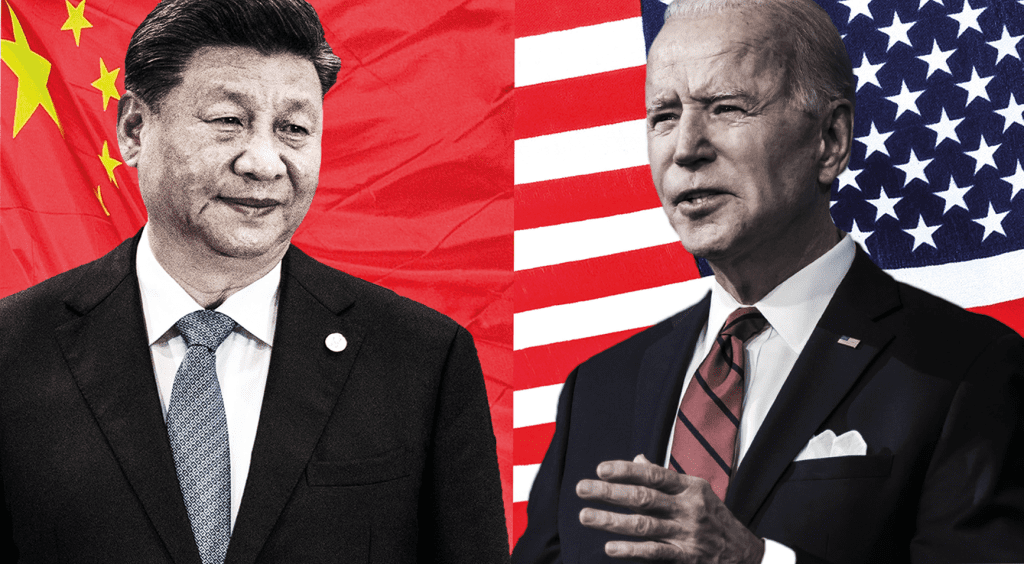
Washington, D.C. – On May 12, 2025, U.S. Treasury Secretary Scott Bessent revealed a startling admission from Chinese officials during closed-door trade talks, claiming they ignored their trade commitments under President Joe Biden because they perceived him as weak. The statement, which has sparked outrage among Trump supporters, comes amid a temporary rollback of tariffs between the U.S. and China, highlighting the contentious history of trade relations between the two economic giants.
According to Bessent, speaking at a press conference in Geneva, the Chinese delegation admitted that after Biden took office in January 2021, they disregarded obligations set forth in the 2020 Phase One trade deal signed under President Donald Trump. “In January 2020, President Trump produced a template—we had an excellent trade agreement with China—and the Biden administration chose not to enforce it,” Bessent stated. “The Chinese delegation basically told us that once President Biden came into office, they just ignored their obligations.” The Phase One deal required China to purchase an additional $200 billion in U.S. goods and services by the end of 2021, a target they failed to meet, importing only 58% of the committed amount, per a 2022 Peterson Institute for International Economics report.
The revelation aligns with long-standing criticisms of Biden’s foreign policy approach. A 2022 New York Times report detailed China’s failure to uphold World Trade Organization promises and the Phase One deal, with U.S. Trade Representative Katherine Tai accusing China of flouting global trade rules. Critics argue Biden’s reluctance to enforce the agreement—due to domestic political pressures and a focus on the COVID-19 pandemic—emboldened China. Posts on X reflect similar sentiments, with users like
@MAGAVoice claiming, “MAGA was right again,” and
@its_The_Dr stating, “Of course they did. Biden was weak.”
However, the narrative of Biden’s weakness requires scrutiny. While China’s shortfall in trade commitments is documented, Biden’s administration faced unprecedented challenges, including a global pandemic and economic recession, which disrupted trade flows. A 2022 Reuters report noted that China was never on pace to meet the $200 billion target, even before Biden took office, suggesting the deal’s ambitious goals may have been unrealistic from the start. Moreover, Biden maintained Trump-era tariffs on Chinese goods, with rates steady at around 20% throughout his term, per JPMorgan Chase data, indicating some continuity in applying pressure on Beijing.
Trump’s administration has seized on Bessent’s revelation to bolster its trade strategy. On May 12, the U.S. and China agreed to a 90-day tariff rollback, reducing U.S. tariffs on Chinese imports to 30% from 145%, while China lowered its duties on American goods to 10% from 125%, per a New York Times report. Trump, speaking at the White House, emphasized that the talks aim to “open up” China to American businesses, though he cautioned that a full deal would take time. The move follows weeks of economic strain, with U.S. GDP contracting in early 2025 as importers rushed to beat tariff hikes, and Chinese exports to the U.S. falling sharply in April, per CNN Business.
Critics of Trump’s approach argue that his tariffs have hurt American consumers, raising prices and contributing to inflation, a concern echoed in a 2022 Council on Foreign Relations analysis. Meanwhile, Biden’s defenders point to his efforts to counter China through technology restrictions and alliances like the Indo-Pacific Economic Framework, though a 2025 Brookings report criticized these as lacking staying power due to political motivations over sound diplomacy.
The admission from China, if accurate, underscores a broader geopolitical reality: perceptions of strength often dictate international behavior. Yet, the trade war’s complexity—spanning decades of policy failures, unrealistic commitments, and global economic disruptions—suggests neither administration can claim a monopoly on success. As negotiations continue, the focus should shift from political point-scoring to addressing systemic trade imbalances, ensuring that American workers and consumers aren’t caught in the crossfire of this ongoing economic rivalry.