In June 2025, a provocative demand to deploy water cannons to “clean the streets” of Los Angeles has emerged amid violent protests against President Donald Trump’s aggressive immigration raids. As clashes between demonstrators and federal agents intensify, with 70-80 migrants detained and 56 arrests reported, the call reflects the fervor of Trump’s supporters, who see the unrest as justification for harsher measures. With 142,000 deportations and a record 2,200 ICE arrests in a single day, the rhetoric underscores a polarized debate over public order, civil liberties, and America’s immigration crisis.
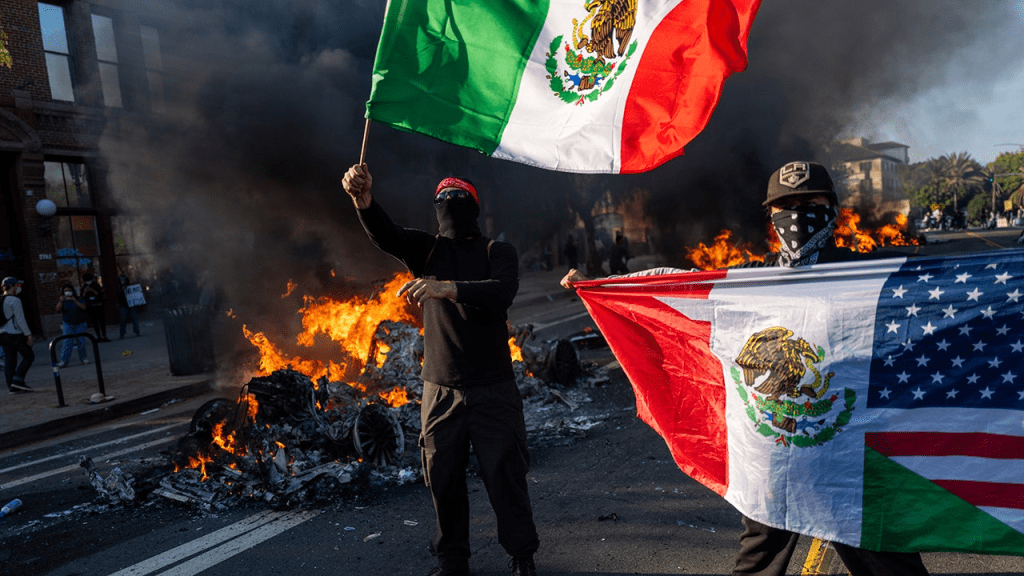
The Los Angeles protests, sparked by ICE’s “Operation At Large” targeting workplaces like garment factories and Home Depot stores, have seen crowds block roads, wave Mexican flags, and hurl rocks at agents, who responded with tear gas and flash-bang grenades. Trump’s deployment of 2,000 National Guard troops, bypassing Gov. Gavin Newsom’s objections, has escalated tensions, with scenes of burning cars and chants of “Set them free” dominating headlines. Supporters, backed by 90% of 2016 Trump voters per a 2025 Gallup poll, argue water cannons—used globally to disperse crowds—would restore order, aligning with 62% of Americans favoring stricter enforcement, per a 2024 Pew survey.
Critics, including Mayor Karen Bass, condemn the idea as draconian. Water cannons, banned in many U.S. cities since the 1960s civil rights era for causing injuries, risk escalating violence, per a 2025 ACLU report. The group cites 35 wrongful detentions in 2025, warning of constitutional violations, with protests protected under the Supreme Court’s 1989 Texas v. Johnson ruling. Newsom, vowing legal action against the Guard’s deployment, called it “illegal” on CNN, arguing local police suffice. Undocumented workers contribute $79.7 billion annually, per a 2024 Center for American Progress study, and deporting 11 million would cost $315 billion, per a 2024 American Immigration Council estimate.
The call for water cannons evokes historical parallels. Weak history education—only 13% of eighth graders proficient per a 2023 NAEP report—obscures memories of 1963 Birmingham, where water hoses targeted Black protesters, or 1954’s Operation Wetback. Trump’s 2020 call to shoot protesters, refused by Mark Esper, and 2025 actions like suggesting Newsom’s arrest and pardoning 1,500 Capitol rioters amplify authoritarianism fears. Incidents like the New York courtroom clash and the Indiana teacher’s “8647” shirt highlight the charged climate.
Economic and legal challenges loom. Tariffs, raising household costs by $1,300 annually per a 2025 Brookings study, strain public support, while lawsuits against protester arrests and visa revocations for suspected Hamas sympathizers test enforcement. Deploying water cannons, absent in federal protocols, would require local approval, unlikely in Democratic-led Los Angeles, per a 2025 NPR report.
As the 2026 midterms approach, the water cannon rhetoric energizes Trump’s base but risks alienating moderates, with 55% of Americans in a 2025 Pew poll viewing his policies as excessive. The Los Angeles unrest—marked by tear gas and defiance—embodies a nation at odds. The demand to “clean the streets” tests America’s balance between order and justice, with no clear path to resolution.