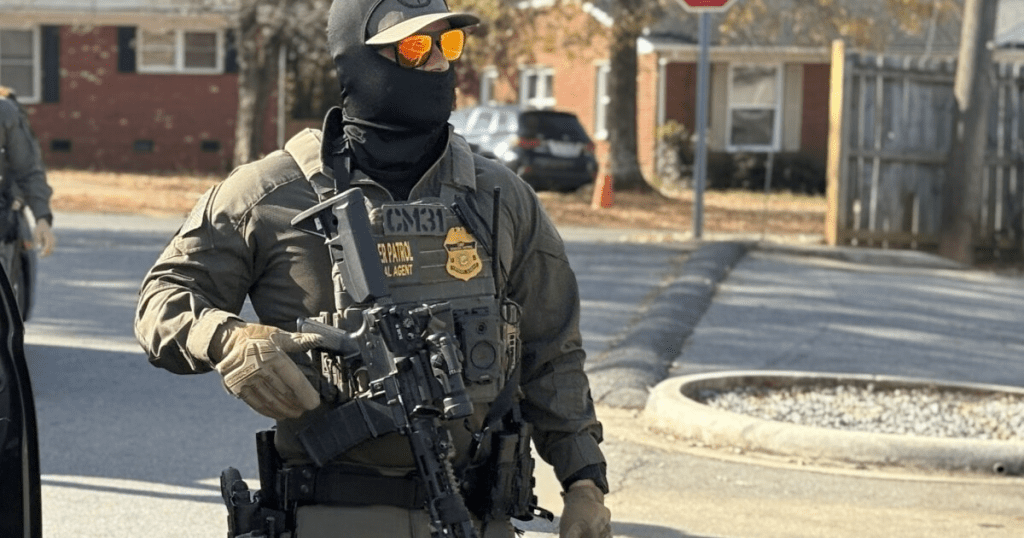
Charlotte, N.C. – A formidable convoy of approximately 30 U.S. Border Patrol vehicles descended on Charlotte early Sunday morning, November 16, 2025, igniting the Trump administration’s latest salvo in its mass deportation campaign. Dubbed “Operation Charlotte’s Web,” the federal surge targets undocumented immigrants with criminal records, fanning out across North Carolina’s largest city in a bid to “remove public safety threats,” according to a Department of Homeland Security statement.
The operation, which began in earnest Saturday, has already yielded 81 arrests by Sunday evening, per a senior Border Patrol commander. Agents, clad in tactical gear and backed by ICE support, zeroed in on high-density immigrant neighborhoods like Eastland Yards and NoDa, where witnesses reported chaotic scenes: unmarked vans screeching to halts, agents in riot helmets pursuing fleeing suspects on foot, and families barricading doors amid blaring sirens. One viral video captured the convoy—black SUVs and white Border Patrol rigs snaking through downtown—drawing cheers from pro-enforcement onlookers and gasps from residents.
DHS framed the raids as a response to over 1,400 ignored detainer requests from local jails, insisting the focus remains on “violent offenders, drug traffickers, and gang members” released under prior sanctuary-like policies. “Illegal aliens have no place in our communities,” echoed a DHS spokesperson, tying the effort to President-elect Trump’s mandate for 1 million annual removals. Yet, early tallies reveal collateral detentions: A Honduran-born U.S. citizen, Willy Aceituno, was manhandled into a vehicle and released only after flashing his passport—his car window shattered in the scuffle.
Local backlash has been swift and fierce. Charlotte Mayor Vi Lyles urged calm but slammed the tactics as “fear-mongering,” advising residents to film encounters and know their rights. Protests erupted Sunday night outside the DHS office on Tyvola Road, with hundreds chanting “Families over fear” and blocking traffic, leading to minor clashes. Governor Roy Cooper, a Democrat, dismissed the need for such “heavy-handed” action, noting North Carolina’s crime rates haven’t spiked due to immigration. Immigrant advocates decried it as “political theater,” warning of family separations and economic hits in a city where Latinos comprise 15% of the workforce.
As the convoy disperses for overnight staging, questions swirl: How long will “Charlotte’s Web” ensnare? With Trump’s January inauguration weeks away, this Queen City incursion signals a blueprint for blue strongholds nationwide—enforcement unbound, but at the cost of community trust.