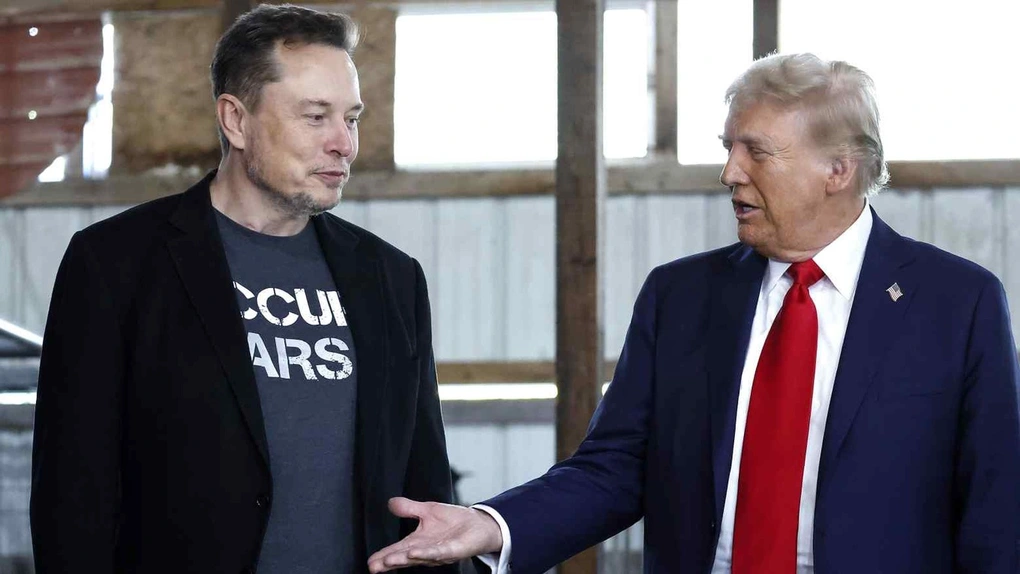
The 2024 U.S. presidential election, which saw Donald Trump return to the White House, has reignited concerns about the outsized influence of billionaires, with critics lamenting how one mogul’s purchase of a major platform allegedly swayed the outcome before retreating from public scrutiny. The sentiment, echoed in a passionate outcry—“I don’t like how a billionaire was able to buy a platform and change the outcome of an American election and then slither back into his hole”—captures growing unease about wealth’s grip on democracy, particularly following Elon Musk’s role in the campaign and his subsequent exit from the Department of Government Efficiency (DOGE) on May 28, 2025.
Musk, the world’s richest man, spent over $200 million supporting Trump, including $119 million to America PAC, which ran his ground game in swing states, per an Americans for Tax Fairness (ATF) report. His acquisition of Twitter (now X) in 2022 for $44 billion and its transformation into a pro-Trump megaphone amplified his influence, with posts on the platform often prioritizing MAGA narratives, according to a 2025 NPR analysis. A Financial Times report noted Musk’s daily $1 million voter giveaways in states like Pennsylvania drew Justice Department scrutiny for potentially violating vote-buying laws, further fueling claims he “bought” the election.
The ATF report, released April 2, 2025, revealed that 100 billionaire families spent $2.6 billion on the 2024 cycle—160 times the amount spent pre-Citizens United in 2010—drowning out ordinary voices. Musk’s spending, constituting one-sixth of total election funds, exemplifies this trend, with 70% of billionaire dollars backing Republicans. Critics argue this financial dominance, enabled by the Supreme Court’s 2010 ruling, allowed Musk to shape discourse and voter turnout, particularly in six swing states Trump flipped by a mere 263,000 votes, per The New York Times.
Musk’s brief DOGE tenure, where he claimed $500 billion in savings, ended abruptly after he criticized Trump’s $4 trillion tax bill as undermining his efficiency goals, per CBS News. His departure, decided at a “senior staff level” without Trump’s direct input, led some to view it as a strategic retreat to Tesla and SpaceX, especially as Tesla’s stock fell 25% since January, per Reuters. Critics, including Rep. Ro Khanna (D-CA), who warned of an “unholy alliance” of wealth and power, see Musk’s exit as dodging accountability for cuts that disrupted Social Security and veterans’ services, per a Brennan Center report.
Trump’s defenders, including White House spokesperson Kush Desai, argue Musk’s role was overstated, crediting Trump’s 52% “right track” Rasmussen poll rating to voter enthusiasm, not billionaire cash. They point to a 93% drop in border crossings as evidence of policy success, per CBP data. Yet, the perception that Musk “slithered back” to private life after tilting the election persists, with 54% of Americans in a May 2025 Pew poll believing billionaires have too much political sway.
The controversy underscores a democracy strained by wealth, with Musk’s platform control and campaign spending raising fears of oligarchic capture. As Congress debates campaign finance reform, the 2024 election’s billionaire shadow looms large, challenging the GOP’s “Make America Great Again” vision with questions of who truly shapes the nation’s future.