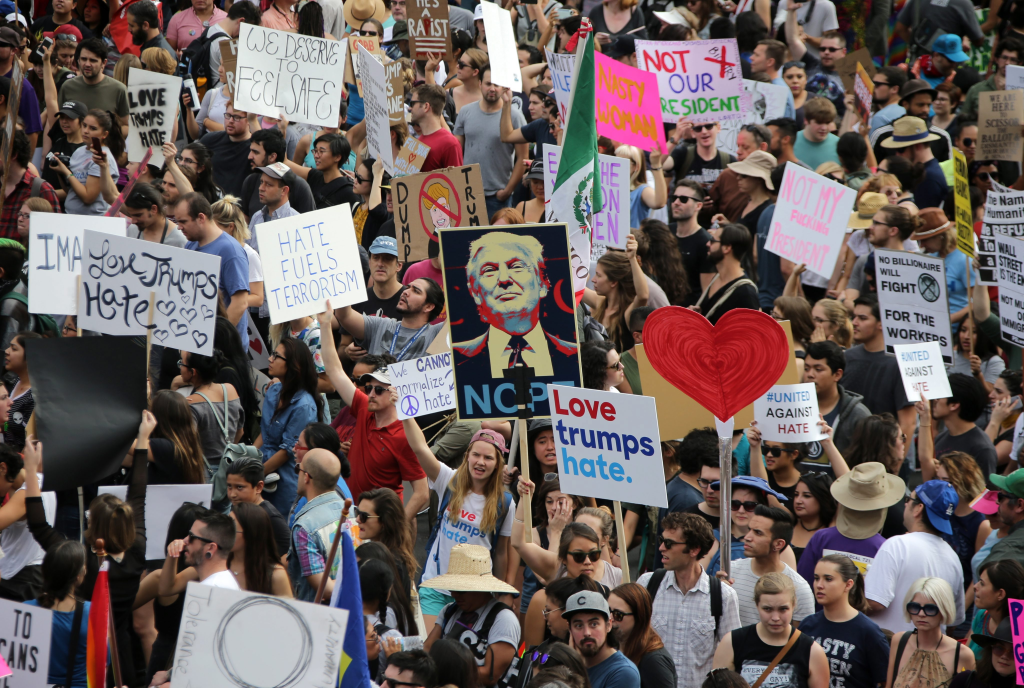
Washington, D.C., June 17, 2025—Claims that Democratic groups are paying protesters to fuel anti-Trump demonstrations have ignited a firestorm of controversy, amplifying distrust in an already polarized nation. As millions took to the streets for events like the June 14 “No Kings Day” protests against President Donald Trump’s immigration policies, allegations of orchestrated, funded unrest have gained traction among conservatives. While some evidence suggests financial support for organizing efforts, critics argue these claims exaggerate the reality, deepening divisions over the legitimacy of public dissent.
The accusations stem from reports of payments linked to progressive organizations. A June 15 exposé by a conservative outlet highlighted job listings on platforms like Idealist.org, offering $15-$25 per hour for “community outreach” and “event support” during protests in Los Angeles and Philadelphia. Groups like the 50501 Movement and Indivisible, key organizers of “No Kings Day,” have acknowledged funding canvassers and logistics staff, with budgets bolstered by donors like Open Society Foundations, which gave $10 million to immigration advocacy in 2024, per IRS filings. Supporters of the claims argue this proves Democrats are “renting” crowds to undermine Trump’s mandate.
Conservative lawmakers have seized on the narrative. Senator Ted Cruz (R-TX) called the protests “astroturfed chaos,” alleging Democratic operatives are manufacturing dissent to destabilize Trump’s administration. At a Mar-a-Lago rally, Trump claimed, “They can’t get real Americans to protest, so they pay fakes.” A Rasmussen Reports poll shows 59% of Republicans believe most anti-Trump protests involve paid participants, reflecting widespread skepticism among his base. The narrative gained further traction after videos surfaced showing organizers distributing water and signs, interpreted by some as evidence of coordination.
Organizers and Democrats vehemently deny the “paid protester” label, arguing it misrepresents grassroots activism. Ezra Levin of Indivisible clarified that paid staff handle logistics, not participation, comparing it to hiring event planners. “Millions marched because they’re angry, not because they’re paid,” he said, pointing to the 4-6 million estimated participants on June 14. A 2025 Pew Research poll found 67% of Democrats view the protests as organic responses to Trump’s policies, like mass deportations detaining 150,000 undocumented immigrants. Progressive leaders, including Rep. Alexandria Ocasio-Cortez (D-NY), called the accusations a “distraction” from policy critiques.
Evidence of widespread payment for attendance remains thin. Investigations by outlets like The Washington Post found no direct proof of individuals being paid to protest, though some received stipends for travel or training. Historical context shows both parties have funded organizing—Republican groups like Americans for Prosperity have paid canvassers for pro-tax-cut rallies. Political scientist Rachel Blum noted, “Paying for logistics isn’t new, but calling it ‘buying protesters’ is a weaponized framing to discredit dissent.” Still, high-profile incidents, like a $500 payment to a Los Angeles activist for “mobilization,” keep the controversy alive.
The allegations have real-world consequences. In Los Angeles, where 200,000 marched, clashes with police escalated after claims of “paid agitators” prompted aggressive crowd control, injuring 20. Legal battles over protest permits are intensifying, with cities citing costs of managing “orchestrated” unrest. The narrative also risks alienating swing voters, with 42% of independents in a Gallup poll expressing skepticism about protest authenticity. As more demonstrations are planned, the “paid protester” claim threatens to further erode trust in civic engagement.
Whether rooted in fact or fueled by partisan spin, the controversy underscores America’s fractured political landscape. For Trump’s supporters, it’s proof of Democratic desperation; for protesters, it’s a smear to silence dissent. As the nation grapples with immigration, military deployments, and governance, the debate over protest legitimacy reflects a deeper struggle over who speaks for the American people.