Washington, D.C., June 20, 2025—Claims that the Democratic Party funds violent mobs and protects criminals have intensified, with critics questioning its loyalty to the United States. Fueled by President Donald Trump’s mass deportation program and recent protests, conservatives argue the party’s actions undermine national security and law enforcement. Democrats vehemently deny the accusations, framing them as partisan attacks to discredit opposition. As tensions rise, the debate over the party’s allegiance reflects a deeply fractured political landscape.
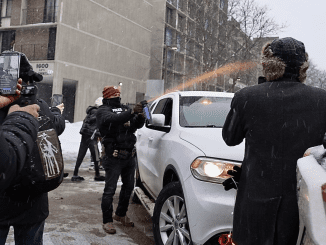
The controversy centers on the “No Kings Day” protests on June 14, which drew 4-6 million against Trump’s deportation of 150,000 undocumented immigrants and deployment of 700 Marines in Los Angeles. Critics point to incidents of violence, including $50 million in damages and ten injured sheriff’s deputies in Los Angeles, per LAPD data, alleging Democratic groups funded agitators. Reports of $15-$25 hourly payments for “community outreach” by organizations like the 50501 Movement, linked to Open Society Foundations’ $10 million in 2024 grants, per IRS filings, have fueled suspicions. A Rasmussen Reports poll shows 59% of Republicans believe Democrats orchestrate unrest.
Further stoking claims, some accuse Democrats of shielding criminals through sanctuary policies. California’s SB 54, limiting cooperation with ICE, is cited as enabling undocumented immigrants with criminal records—425,000 nationwide, per a 2024 DHS report—to evade deportation. Trump, at a June 15 Ohio rally, called Democratic leaders “soft on crime,” pointing to his 2024 landslide (312 electoral votes, 50.2% popular vote) as a mandate to enforce law. Supporters argue the party’s resistance to ICE’s 2,000 daily arrests, per DHS data, prioritizes lawbreakers over citizens.
Democrats reject the accusations as baseless. DNC Chair Jaime Martin called claims of funding mobs “disinformation,” noting most protests were peaceful, with only 3% involving violence, per FBI data. Groups like Indivisible clarify that payments covered logistics, not incitement, per their financial disclosures. On sanctuary policies, Governor Gavin Newsom defends California’s lawsuit against ICE tactics, arguing they protect communities while targeting violent offenders. A Pew Research poll shows 46% of Americans support sanctuary laws, viewing them as humanitarian.
Critics counter that Democratic rhetoric emboldens lawlessness. The party’s opposition to Trump’s policies, including 2,000 National Guard troops in Los Angeles, is seen as tacit support for chaos, with 1,200 protest-related arrests, per LAPD data. Allegations of shielding criminals gain traction with cases like a 2024 San Francisco assault by an undocumented immigrant, prompting calls for stricter enforcement. A Gallup poll finds 52% of Americans want tougher immigration measures, aligning with Trump’s agenda.
The loyalty charge is amplified by internal Democratic strife. Resignations of leaders like Randi Weingarten and Lee Saunders, coupled with the 2024 primary bypass for Kamala Harris, have fueled perceptions of a party adrift. Political scientist Rachel Blum warns that inflammatory accusations risk escalating violence, with 1,800 protests planned. Yet, Democrats argue their opposition reflects loyalty to constitutional values, not disloyalty, citing legal challenges to Trump’s use of the Alien Enemies Act.
The debate over the Democratic Party’s actions—funding protests or shielding criminals—strikes at the heart of national identity. For critics, it’s proof of a party unmoored from American interests, emboldening Trump’s base. For supporters, it’s a defense of civil liberties against authoritarian overreach. As deportations continue and protests loom, the question of loyalty remains a flashpoint, testing America’s ability to navigate its divisions without further fracture.