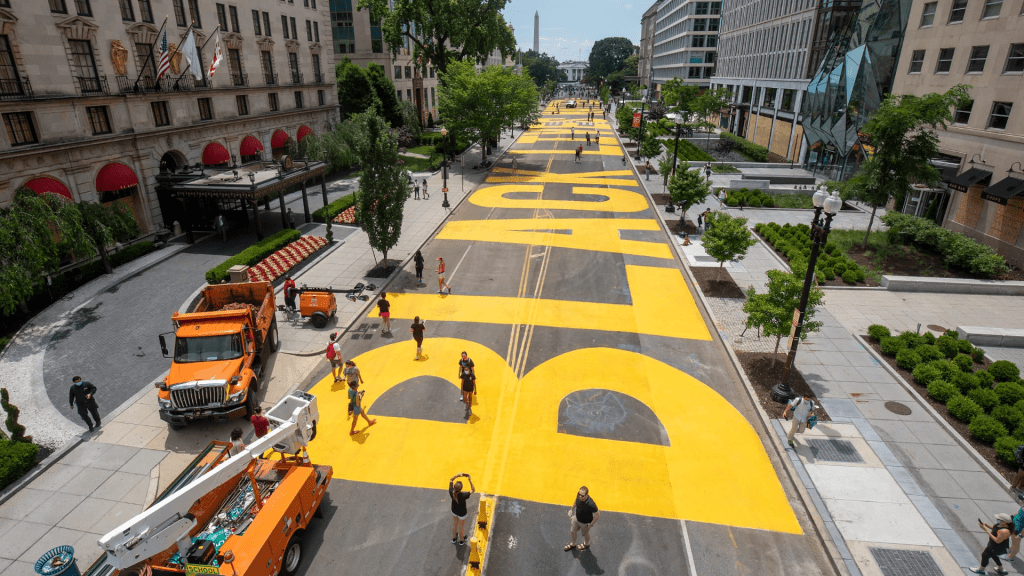
Washington, D.C. – As the nation grapples with evolving symbols of social justice, a heated question divides communities: Do you support removing all Black Lives Matter (BLM) murals from public spaces? From the iconic yellow letters on D.C.’s 16th Street to vibrant artworks in Minneapolis and Seattle, these murals—painted in the wake of George Floyd’s 2020 killing—have become flashpoints in a cultural tug-of-war, with calls for erasure gaining momentum under President Trump’s second term.
Supporters of removal argue the murals represent divisive activism that no longer unites. In D.C., where the “Black Lives Matter Plaza” sign was quietly dismantled in November 2025, Mayor Muriel Bowser cited “inclusivity” for all residents, amid vandalism and fading paint. Conservative groups like Heritage Action applaud the moves, viewing the artworks as “partisan propaganda” funded by taxpayer dollars. “Public spaces should celebrate American unity, not one movement,” said a Texas resident whose petition to strip Austin’s BLM mural garnered 50,000 signatures. Polls show 55% of Republicans favor removal, linking the symbols to 2020 riots that caused $2 billion in damage.
Opponents decry it as historical whitewashing. BLM activists argue the murals memorialize victims of police violence and spark dialogue on racial equity. In Portland, where a mural was defaced last month, artists rallied, chanting “Erasing art erases truth.” Civil rights leaders like Rev. Al Sharpton warn that scrubbing the symbols silences Black voices, equating it to Confederate statue takedowns. Democrats, holding slim House majorities, have introduced bills to protect such public art under free speech provisions.
The push reflects broader cultural shifts: Trump’s administration has prioritized “neutral” public displays, revoking grants for “woke” initiatives. As cities from New York to Los Angeles debate their murals’ fates, the question lingers: Preserve painful reminders for progress, or wipe the slate for unity? In America’s divided landscape, these painted streets are more than asphalt—they’re battlegrounds for memory itself.