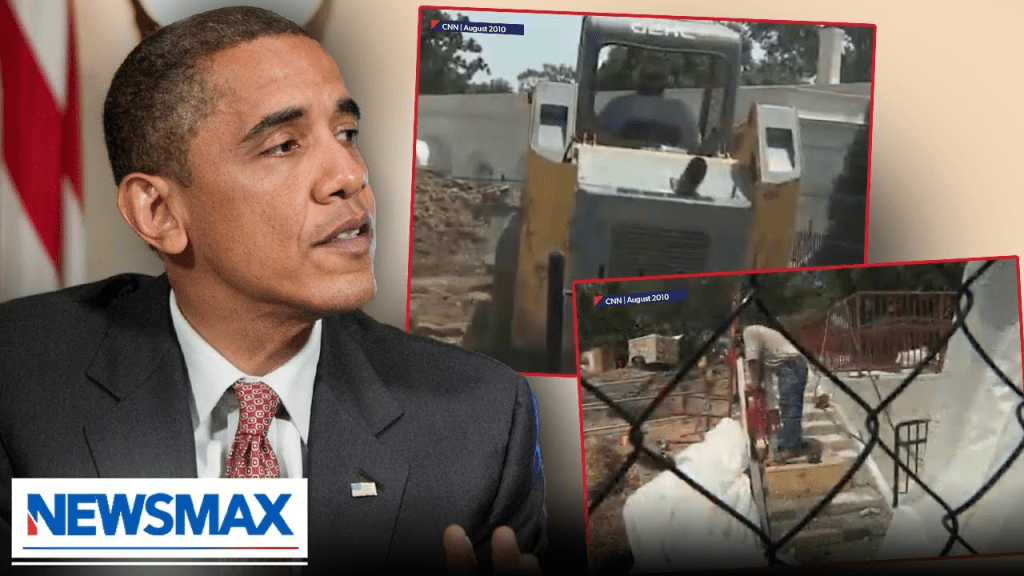
WASHINGTON, D.C. – As President Donald Trump’s $250 million privately funded ballroom addition to the White House draws fire from Democrats for its opulence amid the federal shutdown, a timely reminder emerges of the last major overhaul under Barack Obama: a $376 million infrastructure project that modernized the executive mansion’s aging systems, approved by Congress in 2008 during George W. Bush’s tenure.
The multi-year effort, which began in 2010, targeted the East and West Wings’ decades-old heating, cooling, electrical, fire-alarm, and security infrastructure, plagued by frequent failures. Workers replaced outdated equipment and upgraded unspecified protective measures, ensuring the building’s operational integrity without altering its historic facade. CNN reported the scope in September 2010, noting the funding predated Obama’s presidency, stemming from a Bush-era assessment of systemic vulnerabilities. The project, spanning four years, was essential maintenance, not cosmetic flair—unlike Trump’s East Wing expansion, which demolishes portions for a 650-seat venue.
The Obamas, entering office in 2009, eschewed the standard $100,000 taxpayer allowance for residence redecoration, opting for private funds. They hired decorator Michael S. Smith for the Oval Office and family quarters, absorbing all costs without public disclosure or donations. Michelle Obama’s initiatives, like converting the tennis court to a basketball hoop and planting a kitchen garden to promote healthy eating, were modest and self-financed, costing negligible sums compared to structural necessities.
Critics of Trump’s project, including Whoopi Goldberg on The View, decried it as tone-deaf excess during 800,000 furloughs and $11 billion weekly losses. Yet the Obama-era work, while costly, was congressionally mandated and non-partisan, predating his administration. Historians like the White House Historical Association note such upgrades are routine—Truman’s 1948-1952 rebuild ran $5.7 million ($60 million today)—ensuring the people’s house endures.
In today’s polarized climate, with Schumer’s 51-46 Senate blockade and 515,000 deportations, the comparison underscores fiscal scrutiny’s selectivity. Obama’s legacy: Prudent preservation. Trump’s: Private ambition. Both remind us—the White House belongs to history, not headlines.