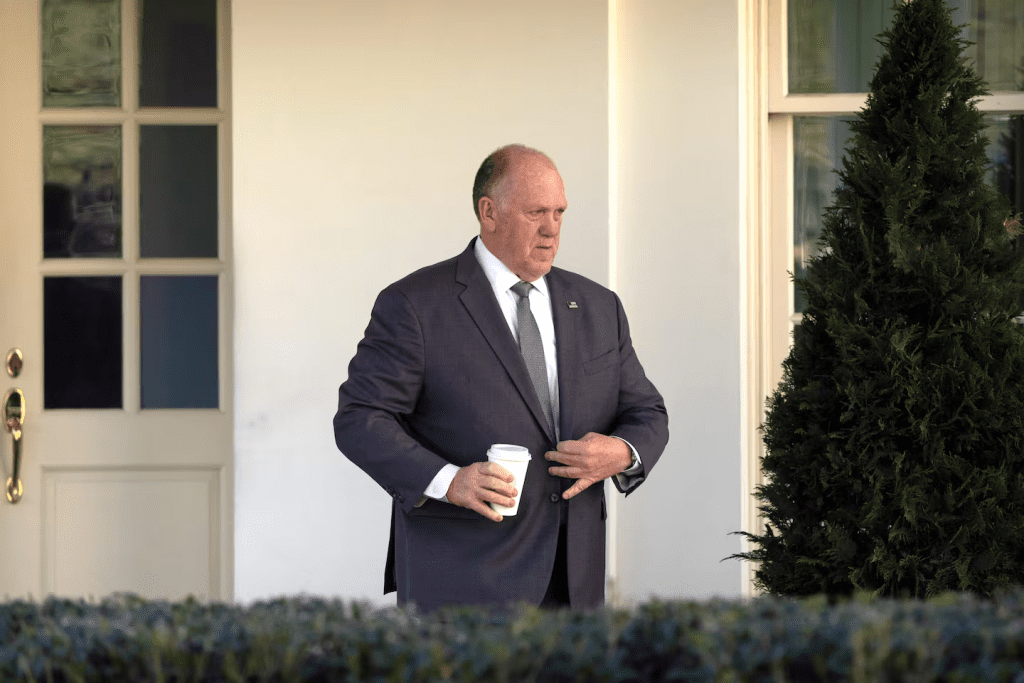
In a striking statement, President Donald Trump’s border czar, Tom Homan, has declared that U.S. Immigration and Customs Enforcement (ICE) must arrest 7,000 undocumented immigrants daily to reverse the influx permitted under the Biden administration. Homan, a veteran of immigration enforcement and a polarizing figure, made the assertion outside the White House, framing it as a necessary response to what he describes as a crisis left by Biden’s policies. As a journalist, I aim to unpack this ambitious target, its implications, and the challenges it faces in the context of America’s immigration debate.
Homan’s figure is staggering. With over 11 million undocumented immigrants estimated to be living in the U.S., his call for 7,000 daily arrests translates to roughly 2.5 million annually—an unprecedented scale of enforcement. He argues this is essential to address the “millions” he claims Biden released into the country, particularly those with criminal records or posing security risks. Homan, who oversaw ICE during Trump’s first term, insists the focus will start with “public safety threats” like murderers and sex offenders, but he has repeatedly stated that no undocumented immigrant is “off the table.”
The border czar’s rhetoric aligns with Trump’s campaign promise of mass deportations, a pledge that energized his base but alarmed critics. Homan’s plan, however, faces significant hurdles. ICE currently detains around 51,000 immigrants, a near-record high, but lacks the funding and infrastructure for such an operation. Homan himself has admitted that success depends on Congress approving more detention beds—at least 100,000, more than double current capacity—and hiring additional agents. With daily arrests averaging under 1,000 recently, scaling up to 7,000 seems daunting, even with Republican control of Congress.
Critics argue Homan’s approach risks sweeping up non-criminal immigrants, including those integrated into communities or attending legal immigration hearings. Data shows 47 percent of current ICE detainees have no criminal record, a figure that has surged under Trump’s second term. Advocates warn of humanitarian fallout, citing past policies like family separations, which Homan helped implement, as evidence of potential overreach. Protests, like those in Los Angeles against ICE raids, highlight public resistance, with some Democratic leaders vowing to shield their communities.
Supporters, however, see Homan’s plan as a necessary correction to lax enforcement. They point to government data claiming hundreds of thousands of undocumented immigrants have criminal records, arguing that prioritizing deportations restores law and order. Homan’s defiance—brushing off critics like Rep. Alexandria Ocasio-Cortez and warning against interference—resonates with those who view Biden’s policies as “national suicide.”
Homan’s 7,000-arrest goal underscores the deep divide over immigration. While his resolve signals Trump’s aggressive stance, the feasibility and consequences of such a plan remain uncertain. As ICE ramps up operations, the nation watches: will this be a targeted crackdown or a dragnet that reshapes communities?