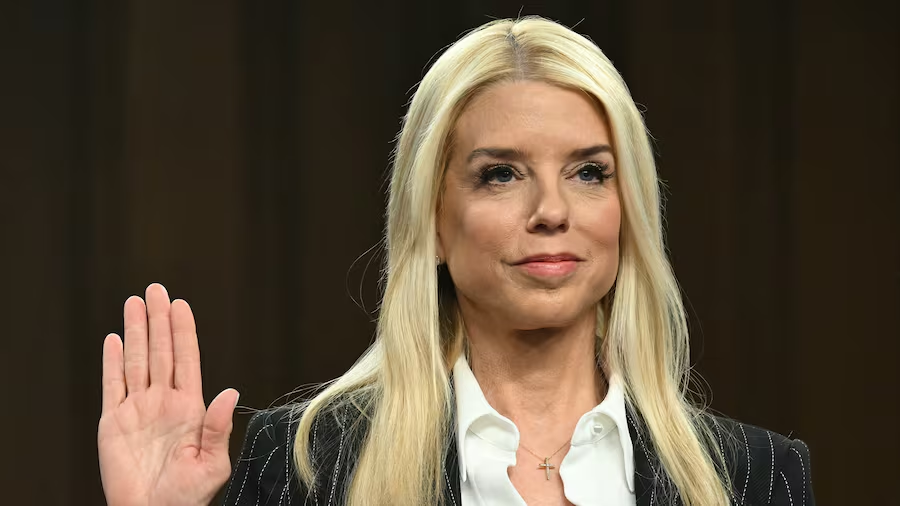
Attorney General Pam Bondi is under fire after claiming that documents related to Jeffrey Epstein’s notorious case were “on her desk,” a statement that has sparked intense public scrutiny. The remark, made during a February 2025 press conference, suggested imminent action on the long-sought Epstein files, fueling hopes for transparency about the financier’s high-profile associates. But months later, with no significant releases, critics are calling out Bondi, arguing she shouldn’t have raised expectations if the documents weren’t ready—or didn’t exist as promised.
The controversy centers on the public’s relentless demand for the so-called “Epstein list,” a rumored roster of powerful individuals tied to Epstein’s sex trafficking crimes. In February, Bondi’s Justice Department released 100 pages of files, including flight logs and a heavily redacted contact book, but these fell short of revealing new bombshells. Bondi’s assertion that more documents were on her desk implied further disclosures were forthcoming. Yet, a July 2025 DOJ memo dashed hopes, stating no “client list” exists and citing victim privacy for ongoing delays in releasing thousands of remaining pages, including videos under FBI review.
The backlash is fierce. Many Americans, already skeptical of institutional cover-ups, see Bondi’s comment as a misstep—or worse, a deliberate deflection. The Epstein case, involving over 200 underage victims and connections to figures like former Presidents Bill Clinton and Donald Trump, has long bred distrust. Previous releases, like the 4,553 pages from Virginia Giuffre’s 2019 lawsuit against Ghislaine Maxwell, named over 150 people, mostly victims or staff, not perpetrators. Bondi’s desk remark, intended to signal progress, instead amplified accusations of stonewalling when no follow-through materialized.
Critics argue Bondi invited the criticism by speaking prematurely. If the files weren’t ready or didn’t contain the anticipated revelations, her statement set unrealistic expectations. The DOJ’s claim that no incriminating list exists has only deepened suspicions, with 63% of Americans believing powerful figures are being shielded, per a 2024 Rasmussen poll. Lawmakers like Rep. Dan Goldman have joined the chorus, demanding unredacted releases, while Bondi’s defenders argue she’s navigating a legal minefield, balancing victim rights with public pressure.
The episode underscores a broader tension: transparency versus accountability. Bondi, a Trump appointee, faces the challenge of restoring trust in a case mired in conspiracy theories. Her desk comment, meant to project control, has instead painted a target on her back. If the files are as limited as the DOJ claims, she risks being seen as overpromising; if more exists, delays could fuel perceptions of a cover-up. As calls for the full Epstein files grow louder, Bondi’s credibility hangs in the balance. The public’s message is clear: don’t promise what you can’t deliver, especially when justice is at stake.