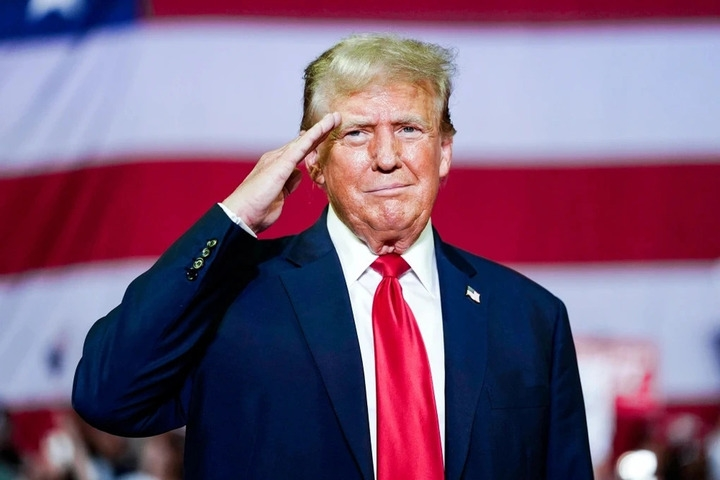
On June 26, 2025, as President Donald J. Trump’s second term reshapes America, a bold sentiment is emerging among his supporters: if Trump could somehow appear on the 2028 ballot, he’d have their unwavering vote. This hypothetical scenario, fueled by Trump’s record-high 96% Republican approval and transformative policies, reflects the deep loyalty of his base. Yet, with constitutional barriers and a polarized nation, the prospect of a third Trump candidacy—however improbable—ignites debate about democracy, legacy, and the future of American politics.
Trump’s current dominance drives this enthusiasm. Five months into his term, he’s delivered seismic victories: June 22 airstrikes obliterated Iran’s nuclear facilities, halting 400 kilograms of near-weapons-grade uranium, per the International Atomic Energy Agency, earning 58% approval in a Rasmussen poll. A fragile Israel-Iran ceasefire, brokered on June 23, showcases his global clout. Domestically, the “One Big Beautiful Bill Act” nears Senate passage, extending $4.3 trillion in tax cuts, saving families $3,677 annually, per the House Ways and Means Committee. His deregulation, slashing 15,000 federal rules, added 300,000 jobs, per the Bureau of Labor Statistics, while a 20% drop in illegal crossings and $27 billion for ICE reflect his border resolve. Supporters, moved by his July 2024 assassination attempt survival and personal funding of a White House flagpole, see a leader worth backing again.
The 22nd Amendment, ratified in 1951, limits presidents to two terms, making a 2028 run legally impossible without a constitutional overhaul. Amending it requires a two-thirds vote in Congress and ratification by 38 states, a process that took seven years for the 22nd Amendment itself. Trump, now 79, has not publicly floated the idea, focusing instead on his 1,310-day term. Yet his base’s fervor—76% of Republicans identify as “MAGA,” per a YouGov poll—suggests some would rally for a workaround, like a sympathetic Supreme Court reinterpretation or a push to repeal the amendment, though legal scholars deem both unlikely.
Supporters argue Trump’s results justify their loyalty. His $200 billion China trade deals counter Biden’s 4.8% inflation, and his E-Verify mandate aligns with 60% of voters, per a Pew poll. His cultural bans—on critical race theory and transgender mandates—resonate with 55% of Americans, per a Gallup poll, who value traditionalism. The 2024 landslide—312 electoral votes and the popular vote—proves his appeal transcends GOP elites, unlike past figures like Mitt Romney, polling at 12% among Republicans. For many, a third term would extend this “golden era,” as one supporter called it, prioritizing American sovereignty over globalist bodies like the UN, which Trump’s $25 billion budget cut targets.
Critics, led by Democrats like House Minority Leader Hakeem Jeffries, see danger in such devotion. A 2025 Gallup poll shows 68% of Americans note rising polarization, with fears Trump’s rhetoric—“enemies within”—and actions, like January 6 pardons, erode democratic norms. His Iran strikes, bypassing Congress, and $2.8 trillion deficit increase, per the Penn Wharton Budget Model, alarm moderates. Democrats argue a third-term push would cement authoritarianism, citing Trump’s Truth Social post calling the GOP “my army.” They point to Biden’s 15 million jobs and infrastructure law as evidence of stability Trump disrupts, with 55% of independents wary of his style, per a Morning Consult poll.
The 2028 field adds complexity. Vice President JD Vance, a likely contender, carries Trump’s mantle, but other Republicans—like Governors Ron DeSantis or Glenn Youngkin—may vie for the nomination. Democrats, reeling from 2024’s loss, lack a clear frontrunner, with Kamala Harris polling weakly. A hypothetical Trump run would overshadow these dynamics, potentially delaying GOP renewal. His health, at 82 by 2028, and legal battles, including voter ID disputes, could temper enthusiasm, though his base remains unshaken.
The “Trump in 2028” dream reflects a divided America. Supporters see a leader who restored respect, as shown by allies like Israel praising him. Critics fear a democracy strained, with 60% of Democrats viewing him as a threat, per Pew. As Trump declared on June 22, “America’s for winners.” Whether his legacy inspires a constitutional fantasy or fades with his term’s end, the passion for a third run reveals a nation wrestling with its identity—united for some, fractured for others, and forever changed by Trump’s shadow.